Credit: Unsplash CoWomen
Are we seeing the end of traditional pathways into a career in presenting?
In a world where everyone is purchasing ring lights, setting up tripods and publicly filming “Day in the Life” vlogs, it’s easy to assume the pathway to a full-time career in presenting is straightforward.
But as social media has evolved, the market has become increasingly saturated and the route to a sustainable career in presenting has never been more complicated.
Presenting itself comes in many forms: radio, broadcasting, vox pops, UGC, branded content and beyond.
There is no formal qualification required, and many presenters will tell you they simply “fell into it.”
But that open door cuts both ways, it makes the industry accessible to anyone, and brutally competitive because of it.
In 2026, the scale of the content creator economy makes it feel both achievable yet more daunting than ever.
UK media and entertainment jobs have had a nearly 3% rise year on year, growing over 313,000 positions in the sector.
The lines between being a content creator, influencer and presenter have never been blurier, which as it turns out is an opportunity and an obstacle.
The Traditional Route Reimagined.
Credit: Kaylee Goulding
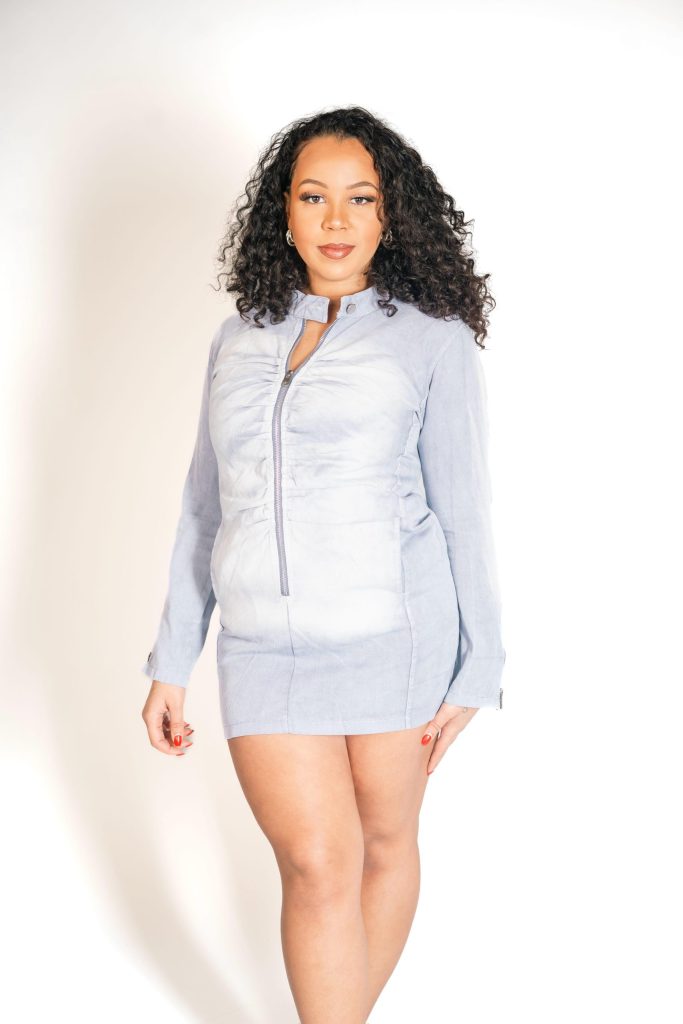
Kaylee Goulding, presenter at BBC Radio represents the road less travelled in 2026, which is the traditional one and yet her trajectory is far from straightforward.
“I studied broadcasting at college, then radio and digital production at university,” she explains.
“Alongside that I was doing community radio, Beat London, Reprezent Radio.
“I was just going to try everything and hope that one of the ways worked.”
Her breakthrough came through the Student Radio Association’s demo competition, a format she described as “like the X Factor, but for radio.”
“I got a golden buzzer and was offered a pilot for BBC One Extra when I was
around 19,” Kaylee recalls.
“Nothing came from it immediately, but it was a great way to meet people.
“I kept sending demos.
“Eventually I was offered a show.”
What makes Kaylee stand out as a presenter is, by her own admission, not what you might expect.
“I’m not the presenter with the perfect voiceover voice.
“I have a strong Birmingham accent, I have a lisp, I stumble on my words but I lead with personality, warmness and joy.
“People find a friendship in me.”
It is a clear reminder that the industry’s idea of the “right” presenter voice is shifting and Kaylee is working proof that personality will always outlast perfection.
On the question of whether aspiring presenters should go the traditional route or build their social media first, her answer is refreshingly practical.
“Not using social media would be very silly, it’s a free marketing tool and a free way to show proof of concept that you are a presenter.
“But for me, university was one of the only ways I was handed the opportunity to financially move to London and pursue my dreams.
“Do both.”
The Niche Specialist
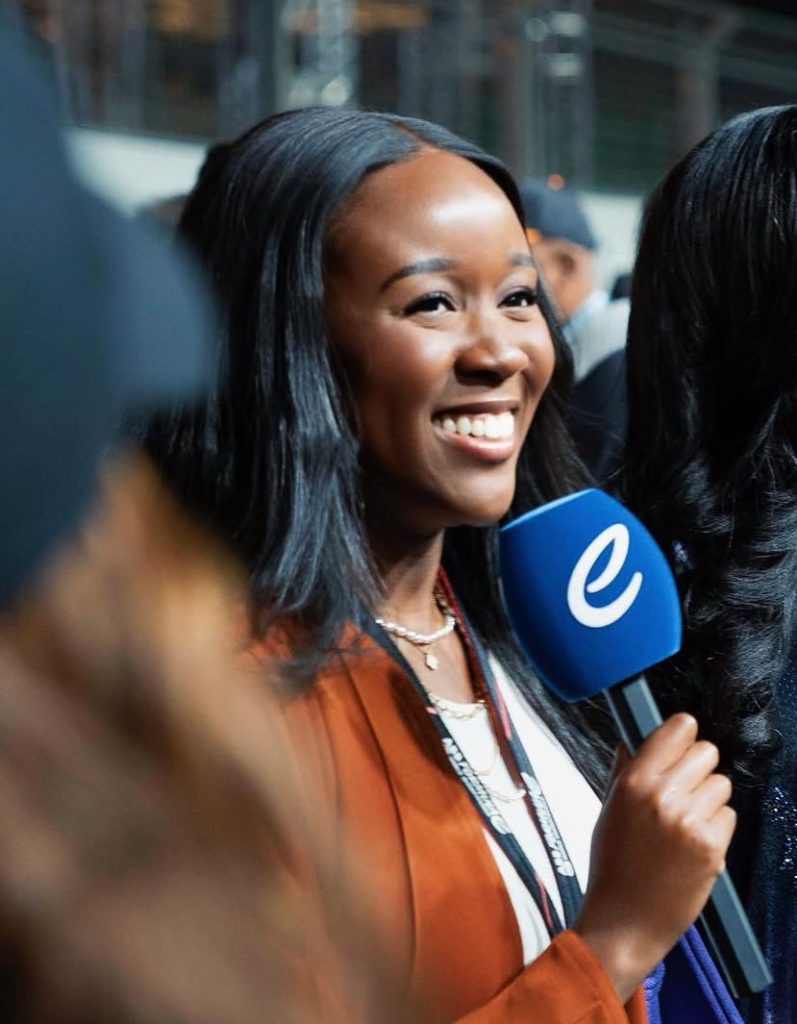
Credit: Derin Adetosoye
Derin Adetosoye’s route into presenting in perhaps the most unexpected way of them all.
She is a British TV Presenter, Live Events Host and Content Creator, familiarly known for her roles as Presenter of F1 Academy on Sky Sports F1.
“I got my start in sports through the Formula E Open Talent Call for Presenters, a random competition I saw on Instagram in the middle of COVID,” she says.
“Compared to the traditional route of studying journalism and working your way up from local news, that definitely wasn’t my story.”
What made Derin’s entry into Formula E particularly interesting was that expert knowledge and previous experience was not a requirement.
“In my role, they were very keen to have the perspective of a new fan to bring similar new fans into the sport.
“We were on a journey together, my reactions guiding the viewer through our understanding of the sport.”
From there, word of mouth, agents and her growing social media presence opened more doors.
But in her reflection and analysis of presenting in 2026 she responds, “It is not just enough to have the skills and the passion, you also need to be very tech savvy with social media.
“You don’t just focus on your role as a presenter anymore, you have to immerse yourself into the world of marketing and promotion as well”
On the debate of niching Derin is measured.
“Having a niche is a great thing if you’re really passionate about it but we’re living in a time where the niche doesn’t have to hold you down.
“When you’re starting out, it’s a great way to establish yourself quicker.
“But as things grow, the niche is becoming less important.”
Accidentally Falling Into It.
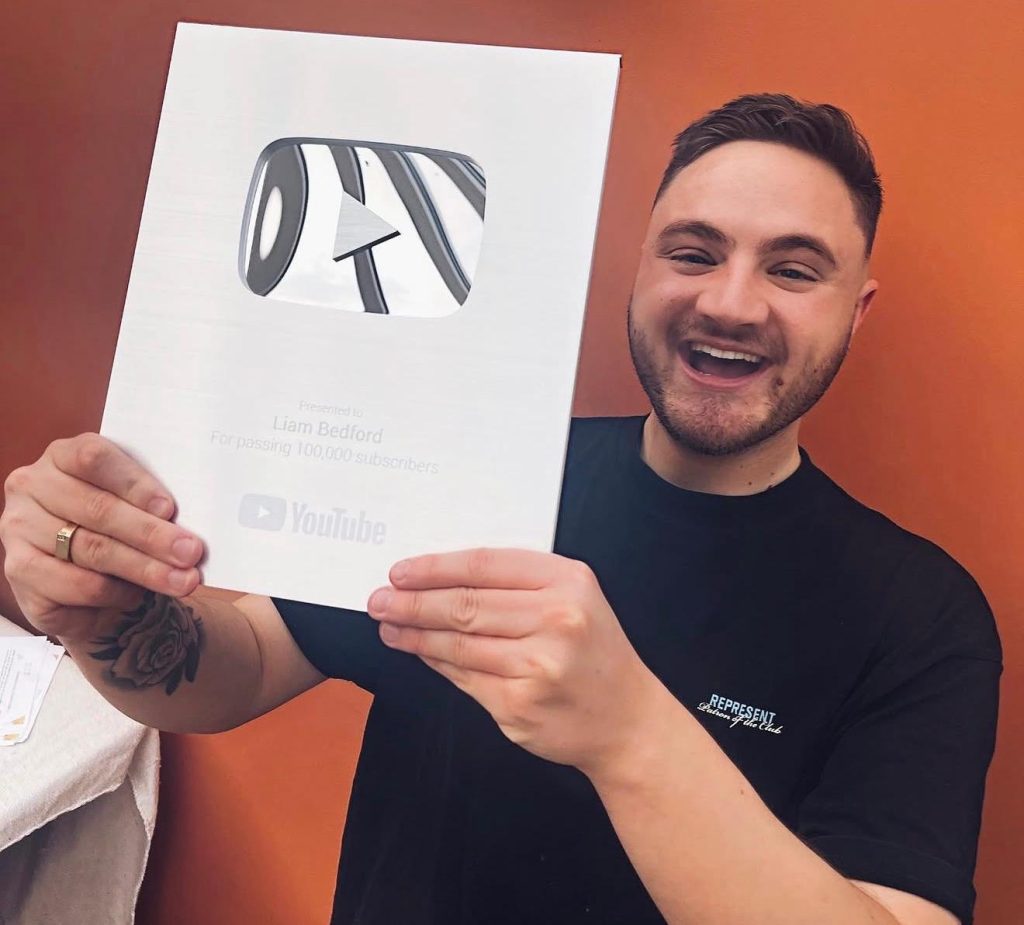
Credit: Liam Bedford
For Liam Bedford, a content creator and entertainment presenter based in the UK, the journey into presenting was anything but planned.
Liam has built his presenting career interviewing the public in vox-pop style videos.
His topic is focused on music, asking the public the best album of all time, their summer songs, top five listened artists, sparking real conversations in his comment section .
In 2023, he hit 100,000 subscribers on YouTube, which is no small feat.
“I kind of just stumbled into it,” he says.
“I did a media course at uni and was always behind a camera or behind an editing screen.”
It was only after joining a social media-focused company in his early twenties, filming YouTube challenge videos and appearing on camera that something clicked.
“It kind of re-sparked my interest.
“When I used to make YouTube videos back in 2006, I always felt like strangers were more interesting than me, so it was quite cool to see what would happen if I had a mic and a camera and just started interacting with the public.”
Liam’s path is one that will feel familiar to a generation of aspiring presenters, who grew up on the internet.
Long before brand deals and media kits existed, he was filming himself for fun, which eventually built the foundations of a career.
His biggest piece of advice to anyone starting out?
“You’ve got to develop this ability to not give a damn what anyone thinks.
“There are so many layers where you can be judged, being out in public with a mic, posting online, but if you’re happy doing it and it’s making you happy, why care what anyone else thinks?”
It would be impossible to write about presenting in 2026, without acknowledging the format that has quickly redefined what the job even means.
Podcasting, which was once considered a hobby pursuit, has solidified itself as a solid media platform.
Visual podcasting in particular has grown rapidly, with many studios spaces being built and investing heavily in video-first audio content.
For this new generation of presenters, it is not just a stepping stone, but the destination.
The shift has popularised the craft in ways that traditional broadcasting couldn’t; lowering the barrier to entry, whilst simultaneously raising audience expectations.
Listeners in 2026 aren’t just looking for information; they want connection, authenticity, and a host they feel like they actually know.
It is in many ways, what Kaylee describes when talking about the BBC: “At the BBC you have so much more space to be personality driven and have a better connection with your audience.
“Commercial radio is music and competition fuelled, at the BBC, it is very much about the presenter.”
Three presenters.
Three completely different routes and yet the same truth keeps resurfacing.
You do not need the perfect voice, or a journalism degree and you do not need to have it all figured out at the beginning.
What you need is resilience, a willingness to show up before you feel ready.
And in 2026, a working understanding of how to market yourself online.
Standing out is no longer about being good on camera, it is about being consistent, being authentic and as Liam put it, developing the superpower of not caring what anyone thinks.
The ring light is the easy part.
The rest is up to you.