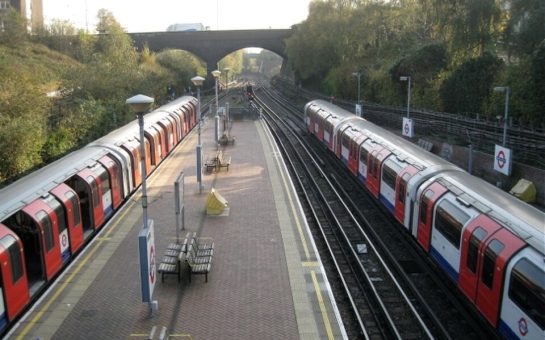
The Northern and Central lines make up more than half of complaints raised to TfL about the poor condition of the London Underground in the last three years, a Freedom of Information request has revealed.
It’s no secret that the London Underground is not the most sanitary mode of transport, proven by the number of complaints that TfL receive on a yearly basis about the sanitation and hygiene levels of their Tube lines.
Since 2023, the TFL customer service team has logged more than a thousand complaints from their passengers about the poor condition of the London Underground.
Moreover, the situation seems to be worsening, with the number of complaints rising year on year; there has been a 114% increase between 2023 and 2025.
In 2025, almost 500 complaints were made and 65 complaints already occurred within the first three months of this year.
The Londoners spoke to an architecture student at the University of the Arts London, who uses the Tube three to four times a week to gain perspective of it through the eyes of a commuter.
She said: “Once I got on the Hammersmith and City line and someone was smoking a cigarette on the train. The reason I get the Circle line is to avoid the Hammersmith and City line. That’s how bad it is.
“Public transport is so expensive. I pay £16.65 to get to uni every day. I would at least expect to feel comfortable enough to sit down.”
According to an FOI made in March this year, two Tube trains are cleaned per week, so over a 12 month cycle, all trains are visited once.
This means that, unless an urgent deep clean is issued, both the Northern and Central lines only get a proper scrub down once a year.
In March, a clip went viral on TikTok of a man stood up, urinating on a seat on the Northern line in the early hours of the morning and many people took to the platform to express their disgust in the form of reaction videos.
This UAL student was one of them.
She said: “I saw the clip and the next day the Circle line wasn’t running and that’s when I thought: I actually need to film this. I can’t keep this to myself.
“I was looking to find a community of people that also finds the Tube disgusting. TikTok gave me a safe space to talk about it.”
Some of the comments under her video say “what’s wrong with people”, “Ew!”, “this is the reason I never sit in the seats” and “London is disgusting now”, an unsurprising reaction to a sight that makes you think twice before touching a Tube seat again.
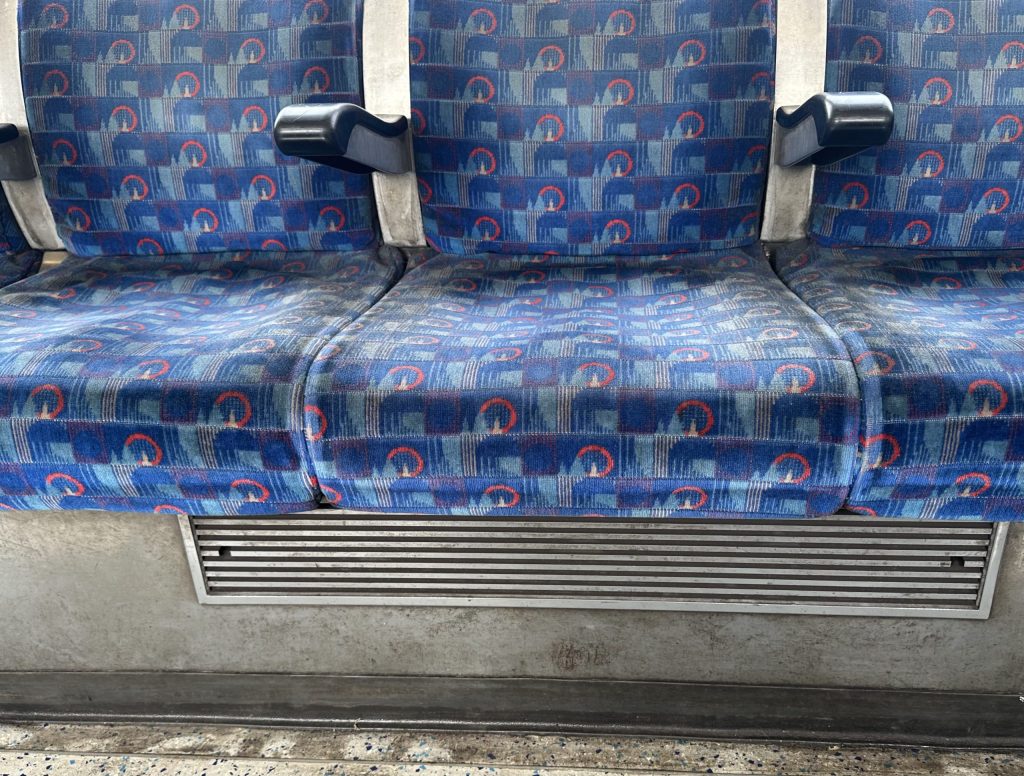
The student’s video gained traction on social media, with her viewers seemingly all relating in a shared disgust of what she fears is only “the tip of the iceberg”.
She added: “Only because someone was there and decided to film it, did people see it. It just really makes you think – what else?”
The student shared the data behind her video which had more than 300,000 views, 8,300 likes and over 3,000 shares since she posted it.
The level of engagement with the video demonstrates how the tubes reputation as unhygienic has spread.
The video reached international audiences with more than half of its viewers coming from countries outside of the UK.
Under the student’s TikTok video was a comment in German which she translated to read: “We got this train to the museum the other day and I was telling you how dirty it was!”
The student said: “It’s not just locals that understand how gross it is, but people visiting for a week or so will see it too.”
The Londoners spoke to passengers at a London Underground station to gauge public perceptions of the tube.
Miles, 23, who uses the tube around four times a week said: “On the Central line I’ve seen people throwing up, I’ve seen people urinating in the corner, I’ve seen rats on it.
“I remember I saw a rat the first time I went on it and decided I’m going to actively avoid that line.
“It’s always crammed, there’s not much ventilation, It can be very slow sometimes, and it’s just a bit grim.”
Sam, 25, said: “It’s filthy, it’s never clean. The seats need washing, and it just stinks. There’s no hygiene.”
Tia, 24, said: “I’d say the worst are the Central and Northern lines. The air quality in the Northern line is so bad, when I clean my nose after being on the tube, it’s like black on the tissue and that’s really disgusting.”
TfL data suggests overcrowding is in part responsible for the condition of the Northern and Central lines.
Many of London’s busiest underground stations – those with the highest annual footfall – are served by these lines.
As demonstrated by the graph below, in 2025, out of the top nine Tube stations with the most entries and exits annually, four of them have the Northern line running through them and four have the Central line.
The dip in the entries and exits to London Underground stations around 2020 can likely be attributed to Covid-19 and the effect this had on the level of footfall in each of the stations and also public attitudes to sanitation.
The UAL student revealed how her inclination to use the Tube has lessened since the Covid-19 pandemic.
She said: “My mum is a cancer nurse and she worked frontline in one of the first hospitals in the UK to tackle Covid without knowing very much.
“Ever since Covid, and now with the meningitis outbreak, It’s really made me scared of travelling through London and I’ve been very careful about my health and cleanliness.
“When I can’t help it, I’ll use the Tube, but it’s not my first choice and when I do, I try to avoid touching the handles – I’d rather fall over.”
Despite public frustration with the London Underground, it is undeniably central to life in London and has one very strong appeal as a mode of transport: its immediacy.
You can almost always bank on catching a Tube within 5-10 minutes of arriving on the platform, making it one of the most convenient ways to get around the city.
That efficiency, however, often comes at the expense of comfort and condition.
TfL acknowledges the poor state of some of the Tube lines, attributing it to the heavy footfall at London’s busiest stations, which require more attention to keep clean.
A TfL spokesperson said: “Millions of journeys are made by people using the Tube every day and services operate around the clock on some lines on a Friday and Saturday night, which reduces the available time to carry out additional maintenance.”
As of April 1 2026, Mitie has been appointed as TFL’s cleaning contractor, a challenging task that often requires many of Mitie’s 2,000 staff members to work evenings and weekends to clean the Tube network while the rest of the city sleeps.
As many Tubes are in constant use, cleaning has to happen in a very tight window and particularly during major events like the London Marathon a few weeks ago, it’s easy for dirt and waste to get out of control.
Moving forward, in order to combat the rising number of complaints, TfL and Mitie are introducing a new programme this summer: The Cleaning and Hygiene Centre of Excellence.
The Centre will be designed to replicate real London Underground station environments as a base to test new cleaning methods, equipment and technology before they are introduced in real life.
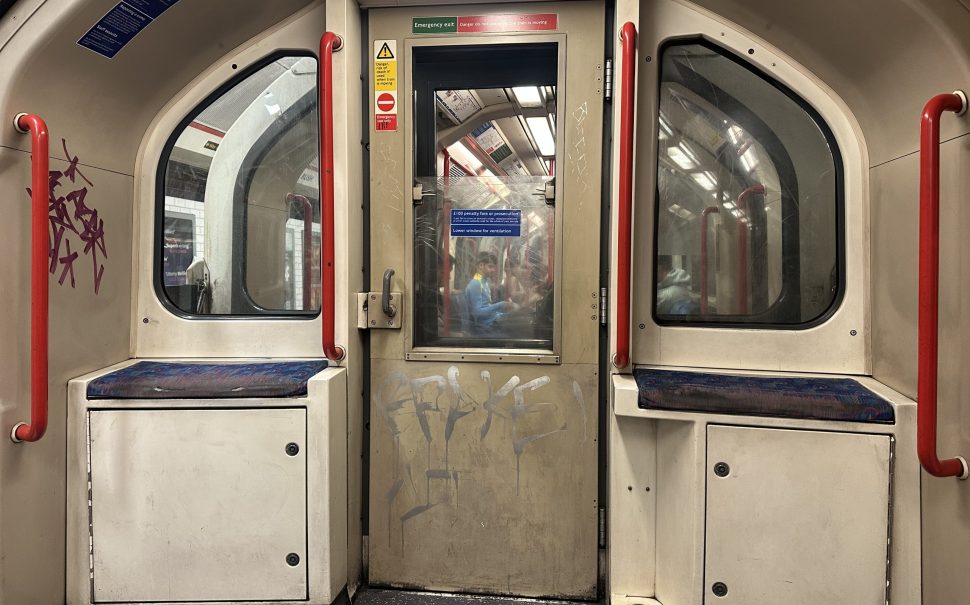
“Graffiti has been a consistent challenge on trains”, revealed a Mitie spokesperson.
But the two companies are hopeful that The Centre, featuring the trial of anti-graffiti protective coating “to speed up graffiti removal and reduce train downtime” will be the next step towards a cleaner Tube.
A TfL spokesperson said this is part of a scheme to “crack down on vandalism across London’s rail network”.
After raising these concerns to TfL and Mitie, it seems hopeful that we are facing a positive future that sees an improved commuter experience and restored public confidence in the network.
Feature image credit: Riana McConochie