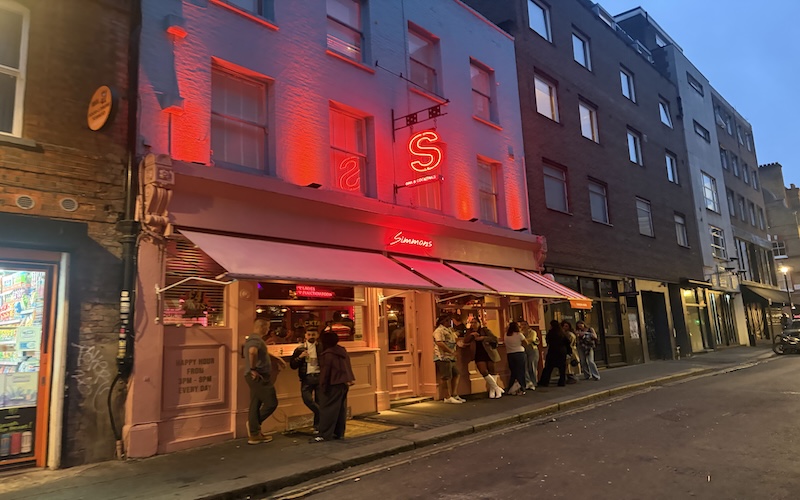
Soho businesses have warned Westminster’s licensing rules could make it harder and more expensive for venues to adapt and change their opening hours.
Simmons Soho, on Bateman Street, has recently applied to stay open until 2am on Thursdays and 3am on Fridays and Saturdays.
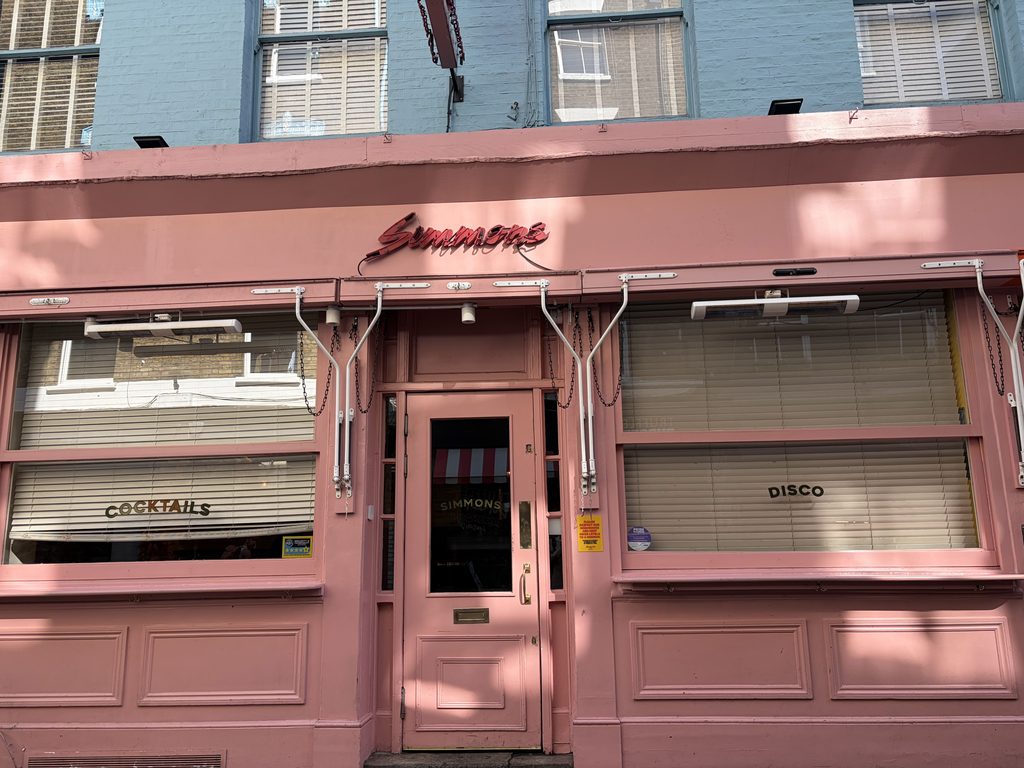
Simmons head of operations Kelsey Brennan said the company expected its application to be referred to a licensing hearing before it had even been considered.
“We knew that we would end up in committee,” he said. “That’s what I think is wrong about all of this.”
He estimates the application could ultimately cost around £15,000 once solicitors and preparation for a committee hearing are factored in, compared with roughly £2,000 to £3,000 for initially submitting it with legal assistance.
According to Westminster City Council, applications which receive relevant objections are referred to a Licensing Sub-Committee, while unopposed applications can be granted without a hearing.
Brennan argued that Westminster’s licensing policy should be one factor rather than determining the outcome of an application.
“Good operators should be treated as good operators. Bad operators should be treated as bad operators.”
The Soho Business Alliance has also questioned whether Westminster’s licensing framework gives businesses enough room to adapt.
Sam Mathys, from the alliance, said operators were already dealing with significant pressures and needed greater flexibility.
“What Westminster’s policy doesn’t do is afford businesses that flexibility,” she said.
The concerns come amid a wider debate over Westminster City Council’s approach to late-night venues and so-called “vertical drinking” – customers standing while drinking rather than being seated.
Westminster’s wider licensing policy acknowledges that West End venues with more seating can sometimes find it easier to obtain a licence, while extra seating can help reduce crowding.
Brennan said the way customers use a bar changes as the evening progresses, with Simmons providing seating earlier before creating more space for people to move around later.
“People’s reason for being there changes throughout the night,” he said.
“Having to be seated at a table means you stay within your own groups. You don’t go and meet other people. It creates a different environment.”
However, Sam Mathys of the The Soho Business Alliance welcomed Westminster’s commitment to review its licensing policy annually and said there was an opportunity to improve cooperation between businesses and Westminster.
She said it is “an excellent opportunity for us to really reset that partnership” and develop an approach that works for residents, businesses and the council.
Westminster, meanwhile, says more than 98 per cent of licensing applications are approved, but argues that the density of venues in the West End means some applications require closer scrutiny over issues including crowding, public safety and antisocial behaviour.
The council has also committed to annual licensing reviews and says it wants to work with businesses and residents while making terms such as “vertical drinking” and “cumulative impact” easier to understand.
The Soho Society, a community association for the neighbourhood, said it “is not opposed to hospitality or the night-time economy” but argues that the combined effect of large numbers of licensed venues on the area should also be considered.
For Simmons, the central issue is whether individual venues are being judged on their own merits.
“We shouldn’t be all lumped into the same thing,” Brennan said. “We should be treated individually.”
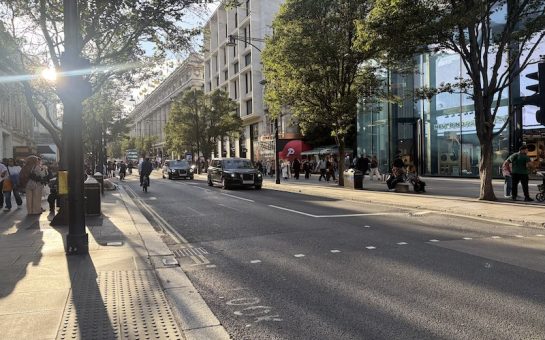
Feature image credit: Justin Bond



Join the discussion