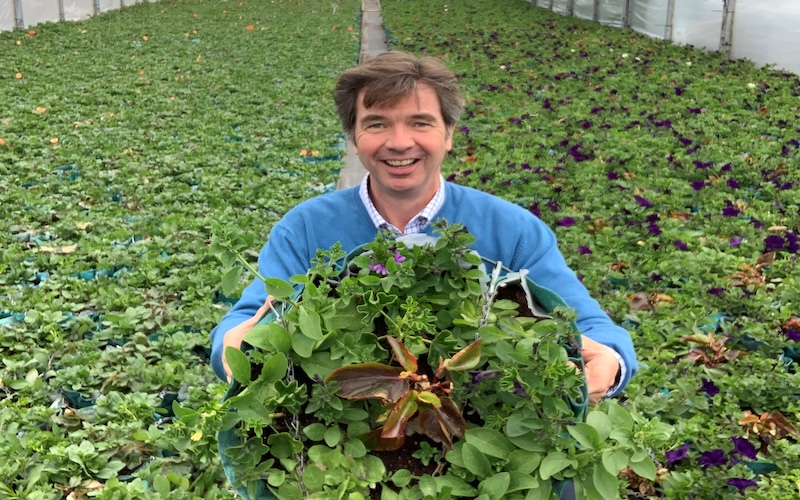
The story behind some of London’s most familiar flowers begins, improbably, with tiny wildflowers growing from the mortar of Colditz Castle, the German prisoner-of-war camp during the Second World War.
Alan Campbell, a British officer who would later become Lord Campbell of Alloway, said the flowers were one of the few pleasures of his imprisonment and helped lift his mood.
Recalling what Campbell told his brothers-in-law after the war, his nephew Miles Watson-Smyth said: “He said that you should start a business where you put flowers into bombed-out London.”
They began with surplus Second World War ammunition boxes, filling them with compost and flowers before installing them as window boxes outside banks, hotels, and other businesses across London. In 1947, Windowflowers was founded.
Nearly eight decades on, Miles has spent more than thirty years working in the family business.
Windowflowers now grows more than a million plants a year and maintains displays across Westminster and central London, from hotels and hospitals to skyscrapers and offices.
Its work has previously won praise from Westminster City Council, which described its “high quality hanging baskets” as contributing to London in Bloom awards.
In Marylebone, its work is particularly hard to miss: the company plants and maintains hanging baskets for Westminster City Council on streets like Marylebone High Street and Wigmore Street, while also looking after planters for major landowners such as the Portman Estate.
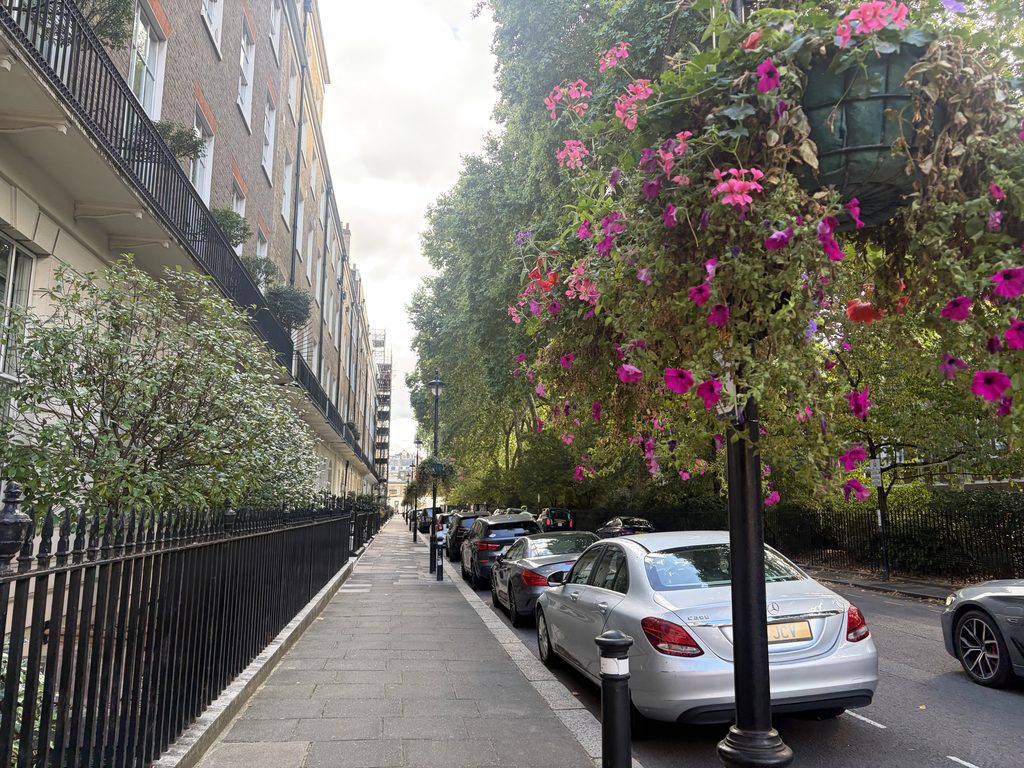
Miles estimates there are about 300 hanging baskets in Marylebone alone, alongside roughly the same number of window boxes and railing planters.
The work of watering and tending the displays begins long before most residents are awake.
He said: “We start at four in the morning in the hope that nobody gets wet!”
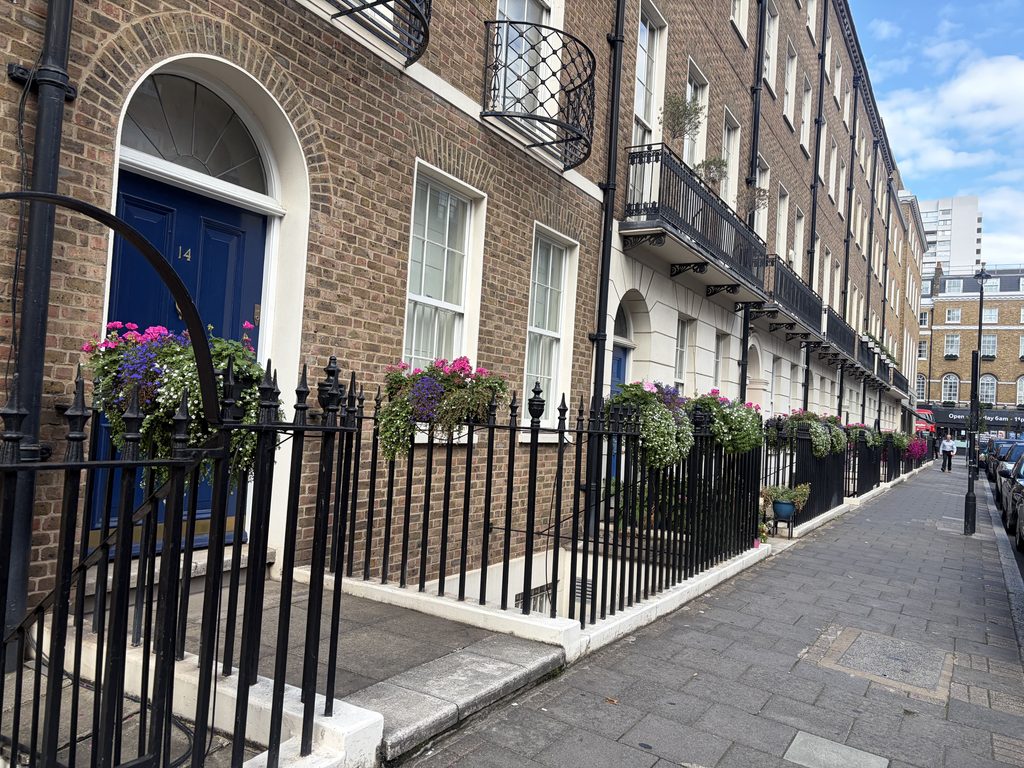
Keeping hundreds of baskets alive on central London streets requires careful planning and regular maintenance.
The planting is chosen not just for colour, but to attract pollinators and help address airborne pollution, while Windowflowers grows them slowly so they last longer once planted out.
Around Harley Street, one of London’s best-known medical districts, he sees another purpose: Windowflowers plants outside hospitals and consulting rooms, where he believes greenery can help create a warmer welcome for patients and improve their wellbeing.
“There’s more to it than meets the eye in that respect,” he said.
Decades in horticulture have also left him with firm opinions on flowers.
Pointing out the pink and purple ones cascading from one Marylebone display, he identified them as Surfinia petunias. They are vigorous, disease-resistant, and provide plenty of floral impact — perhaps too much of it.
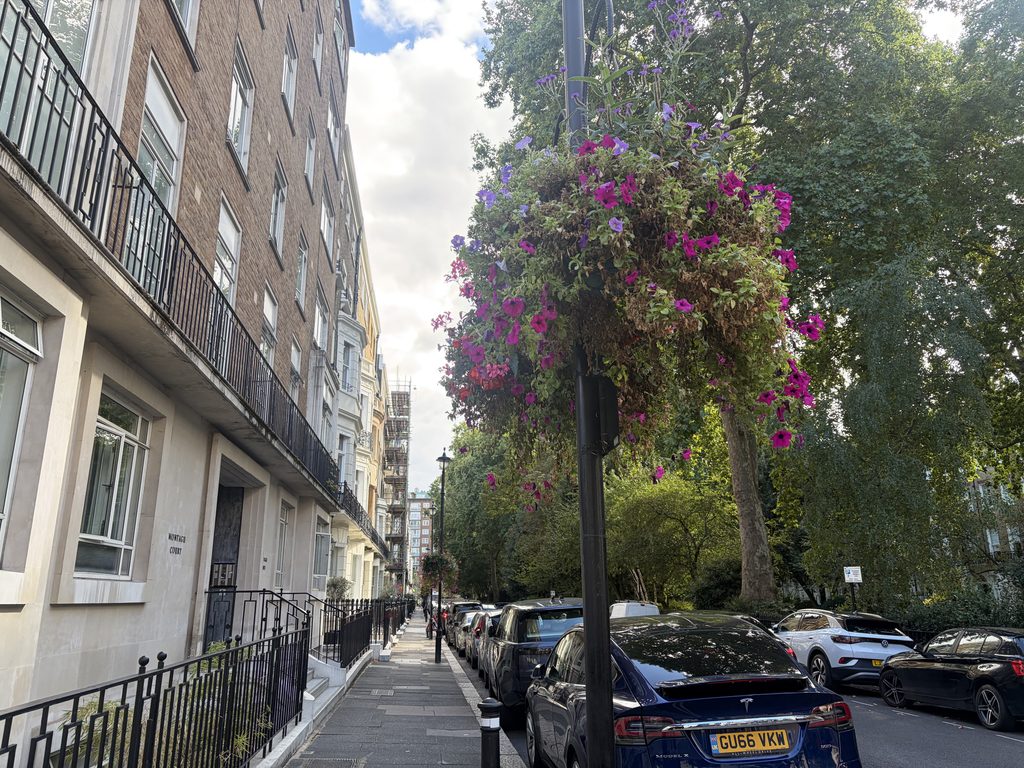
“It’s rather overused, and it’s seen outside a lot of pubs,” he said. “Maybe it’s time for something different.”
While Miles chiefly supplies flowers for businesses, the demands of private customers can be another matter.
He said: “You can do the Langham Hotel without a problem, but one three-foot window box outside someone’s front door can prove very difficult sometimes.”
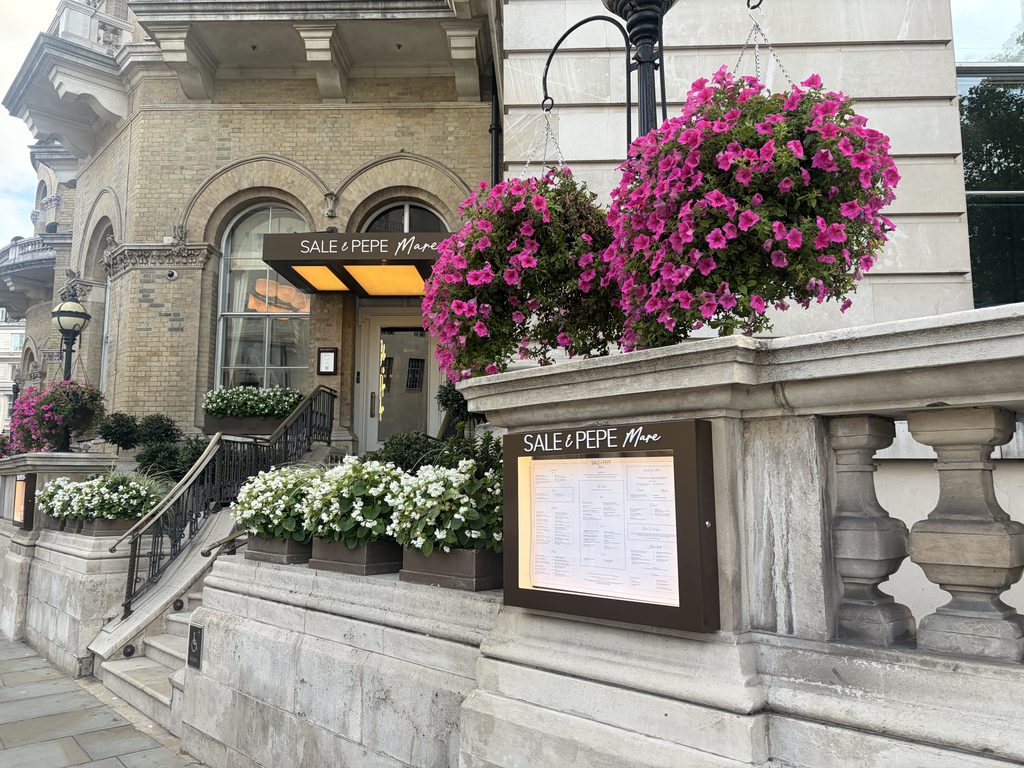
While a larger client is often happy to leave decisions to the horticulturists, individual residents, he explained, often have particularly precise ideas about colours and varieties.
The work has also opened some extraordinary doors.
Windowflowers has worked at Parliament and 10 Downing Street, while Miles has also found himself behind the scenes at Madame Tussauds and inside Buckingham Palace. The company received a Royal Warrant as Supplier of Exterior Plant Displays in 2025 for its work at James’s Palace.
Miles recalled one particularly memorable day during Tony Blair’s premiership, when he had a meeting at Downing Street, followed by another at the Treasury, before heading across London to the Vietnamese embassy.
“I thought if anybody’s watching me, what on earth do they think I’m doing?” he said.
For all its success, the company’s origins remain close at hand: two wartime ammunition boxes of the kind used when Windowflowers began still sit in Miles’s office.
From those improvised window boxes, the family business has spread across the capital. The idea that started it, however, that a little greenery can soften even the harshest surroundings, has proved remarkably hardy.
Featured image credit: Miles Watson-Smyth