Campaigners have renewed calls for the government to honour its pledge to ban farrowing crates, as polling suggests most Britons oppose prolonged confinement of mother pigs.
An animal welfare charity has renewed calls for a full ban on farrowing crates, amid concerns the government could allow temporary cages instead of phasing out the practice altogether.
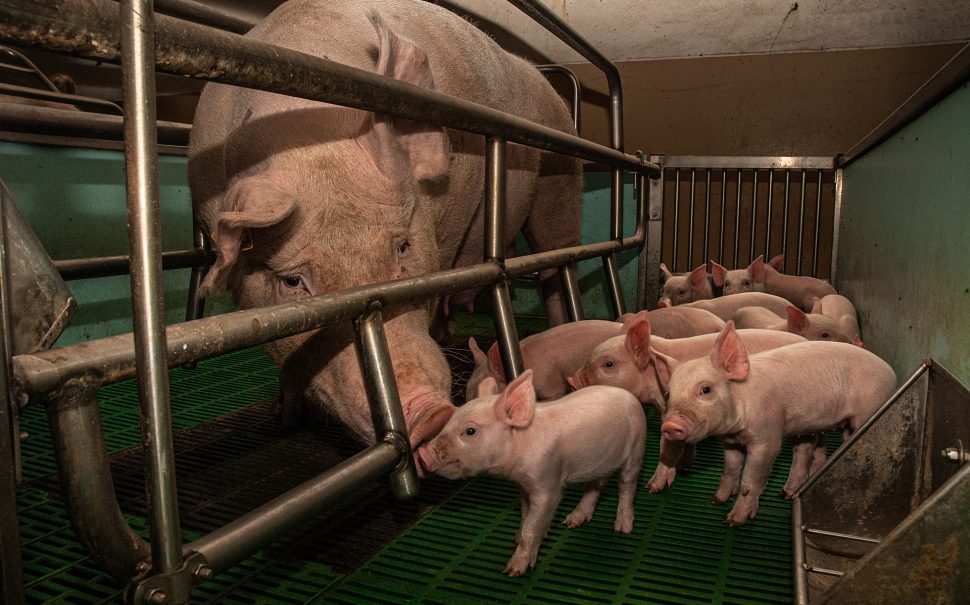
Farrowing crates confine a mother pig to a very restricted area, before and after birthing, often for weeks at a time, which farmers say helps prevent piglets from being accidentally crushed by their mothers.
Humane World for Animals UK, which has campaigned extensively on the issue, says crates cause significant suffering to sows and has urged ministers to follow through on commitments to ban the practice.
Joanna Randall, Senior Manager of Farmed Animal Campaigns at the charity, told the South West Londoner:
“It cannot be understated how overdue we are to phase out the use of farrowing crates in British pig farming. With around 200,000 mother pigs being routinely confined each year inside cages so small they cannot even turn around inside them while giving birth, a ban cannot come fast enough.”
Farrowing crates are just big enough to allow pigs to stand up and lay down, but they cannot turn around or engage in natural behaviours such as exploring and nest building.
Straw bedding is also not provided by farmers as it would clog up the industrial drainage system, so sores from pressure on the pig’s feet and limbs are common.
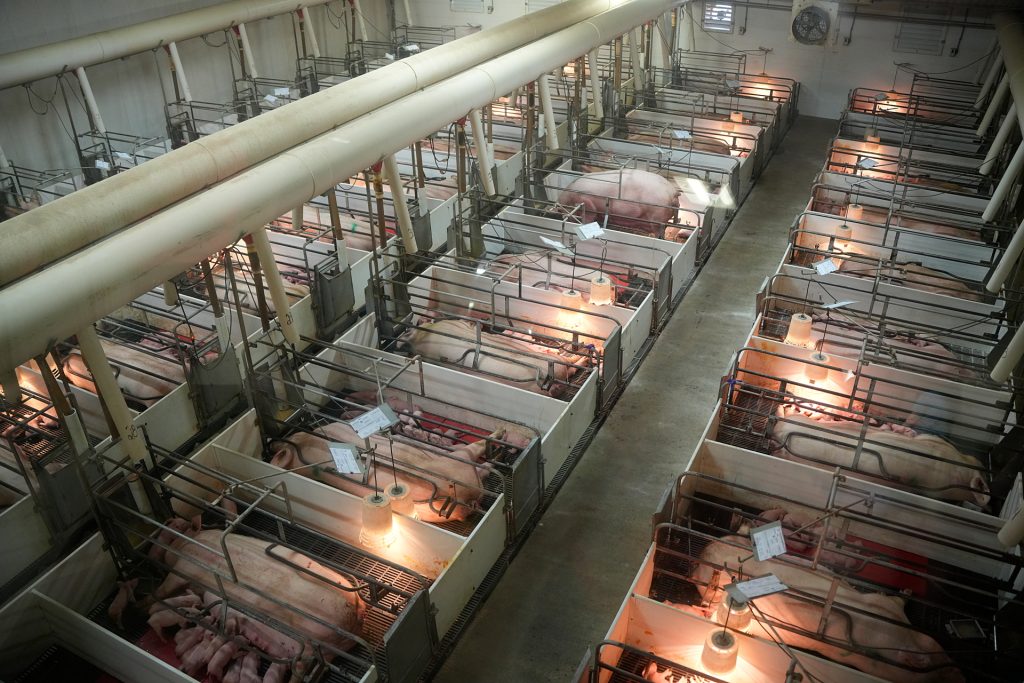
An intensive farm from above showing mother pigs in rows of farrowing cages. Credit: We Animals
Farrowing crates and public opinion
The majority of the British public are in favour of ending the use of farrowing crates for extended periods of time, according to polling commissioned by Humane World for Animals UK.
The poll, conducted last year, found that almost 70% of respondents believed mother pigs should only be confined for a few hours, such as for veterinary procedures.
Though fewer than half of the respondents said they had heard of farrowing crates before taking the survey, once given a description of the system, 69.4% said sows should not be created for extended periods of time.
Humane World for Animals UK says awareness and opposition to farrowing crating is growing, as as similar poll conducted in 2023 showed only 37% of respondents knew about the practice and just 51% supported a ban.
From then to now: the call to ban farrowing crates
Crates were first introduced to the UK in the 1960s, when pigs were typically confined for just three to five days around giving birth.
According to the Conservative Animal Welfare Foundation, the average British sow now spends around five weeks in a farrowing crate each time she gives birth, amounting to around 22% of her adult life.
Free farrowing means the sow is not confined in a crate during farrowing or lactation and is able to turn around, move freely and perform natural nesting behaviours.
Several countries, including Sweden, Norway and Switzerland, have already banned farrowing crates, with campaigners arguing the UK should follow suit.
Defra has stated its intention to “phase out” farrowing crates as part of a new Animal Welfare Strategy laid out at the end of last year.
A spokesperson at the ministry told the South West Londoner:
“Our Animal Welfare Strategy sets out that ending the use of cages and crates is a key priority for this government. We are firmly committed to maintaining and improving animal welfare and want to work closely with the farming sector to deliver high standards.”
However, experts have expressed concern that Defra’s wording in the strategy proposal allows for a transition to ‘flexible’ or ‘temporary’ farrowing systems, which involve using similar crates for shorter periods of time, typically around 7 to 10 days, rather than banning them altogether.
Dr Steven McCulloch, research fellow in veterinary policy at the London School of Economics and chair of Pigs Protection, says that these ‘flexible’ farrowing crates are a misnomer that only provide more flexibility for the farmer. He told the South West Londoner:
“From the point of view of the pig, the temporary crate is just the same as a conventional farrowing crate.
“The Defra strategy is giving the impression that they’re going to implement a full ban on crates, but at the same time it leaves the door open to temporary crates.”
Though ‘temporary’, or ‘flexible’, crates provide some additional space for the sow once outside of the cage mechanism, they still cause significant suffering to pigs because they restrict the sow from engaging in natural behaviours around farrowing.
There are further concerns around the difficulty of enforcing legislation on shorter crating periods, with critics pointing to the wide-scale proliferation of tail docking in the EU, despite there being a ban on the practice.
Animal welfare campaigners’ preferred replacement for farrowing crates, both traditional and temporary, is the free-farrowing system where pigs are allowed to roam more freely, either indoors or out.
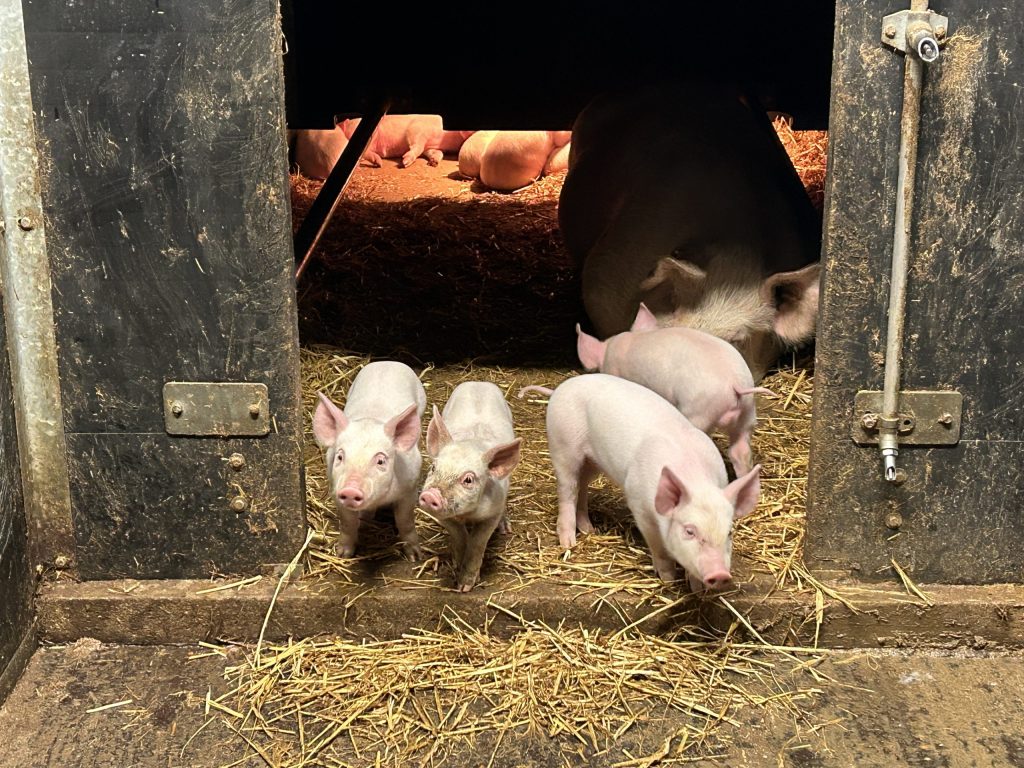
An indoor free-farrowing system. Credit: Claire Bass / Humane World for Animals
Free farrowing means the sow is not confined in a crate during farrowing or lactation and is able to turn around, move freely and perform natural nesting behaviours.
In response to these concerns, a spokesperson for Defra told the South West Londoner:
“As the strategy states, for pigs, we want to work with the industry to help them transition away from the use of farrowing crates to alternative systems: either flexible farrowing where the sow is confined for the crucial few days around farrowing, or free farrowing where there is no confinement during farrowing or lactation.”
The pig industry’s take
A total ban on farrowing crates has been met with resistance from representatives of the pig farming sector, despite the government’s pledge and public support.
Katie Jarvis, Chief Policy Adviser at the National Pig Association, told the South West Londoner:
“The NPA does not support an immediate ban on conventional farrowing systems, rather we wish to see a phased transition within a sensible timeframe, towards flexible farrowing systems which allow the sow more time without confinement.”
Jarvis argues that nationwide changes to the farrowing system cannot be immediate either. This is because significant investment is required and so reasonable time should be allowed by the government for a successful transition.
Jarvis added: “At an estimated cost of £5,000-£8,000 per place, the total cost to industry to install new infrastructure would be £300-480 million.”
The NPA did not provide separate cost estimates for flexible and free-farrowing systems.
Animal welfare campaigners fear that additional investment in ‘flexible’ farrowing crates, if the government allows it, will mean that the practice of caging mother pigs in restricted spaces will continue for years to come, just under a different title.
Joanna Randall at Humane World for Animals UK told the South West Londoner that Defra’s suggestion of anything but a full ban on farrowing crates would be contrary to what the majority of the British public was in favour of.
She said: “British consumers are rejecting the use of cages and crates across all sectors of British farming, and Defra should pay close attention to that, as well as the animal welfare science that supports free farrowing methods.”
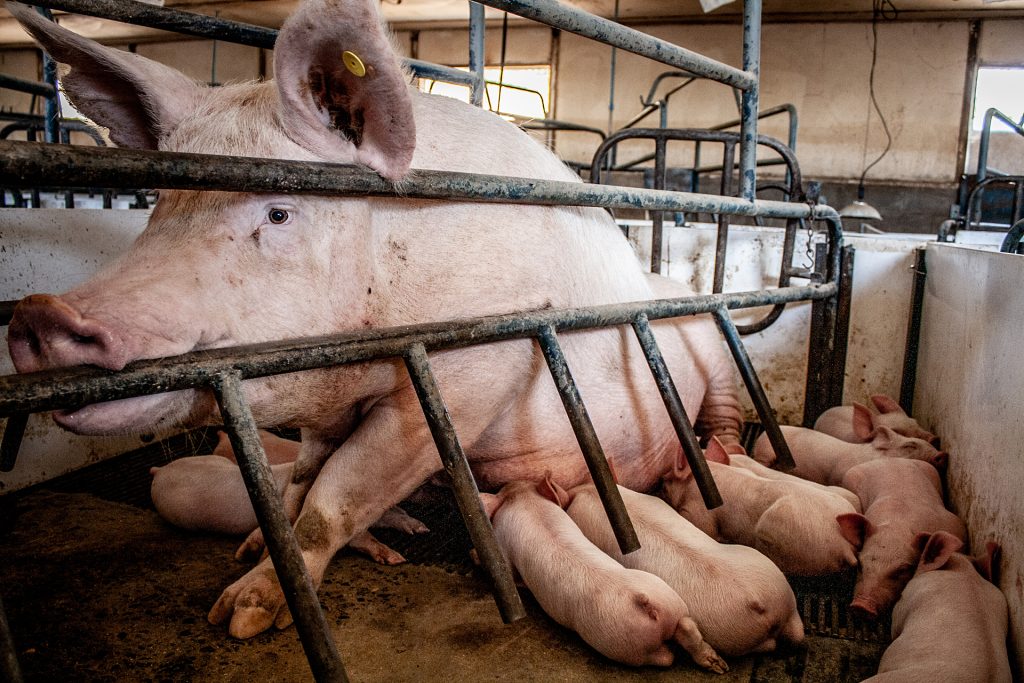
A typical farrowing crate in the UK. Credit: We Animals
Main image: a sow confined to a farrowing crate in which she will spend on average 5 weeks. Credit: We Animals