A petition against controversial council traffic schemes in Fulham is set to reach 5000 signatures following concern from residents that congestion is worsening around South West London.
Aiming to stop Hammersmith and Fulham Council ‘clogging up’ major routes, the petition is opposing plans for a meandering layout along Wandsworth Bridge Road.
Petition organisers have said that existing traffic schemes have increased congestion and have criticised the council’s responses to residents and businesses who have voiced opposition to the plans.
Petitioner David Tarsh said: “It’s about cordoning people off from what they would expect to be their normal liberties.
“It’s socially unfriendly. It’s economically destructive.
“The roads are public goods that everybody should be able to share.”
The proposal for the new road layout on the north side of Wandsworth Bridge aims to widen pavements and introduce four more raised zebra crossings to improve safety for pedestrians and cyclists, according to Hammersmith and Fulham Council.
The council said: “We believe requiring drivers, notably of HGVs, to slow down and drive more carefully to enable residents to cross the road safely is reasonable.”
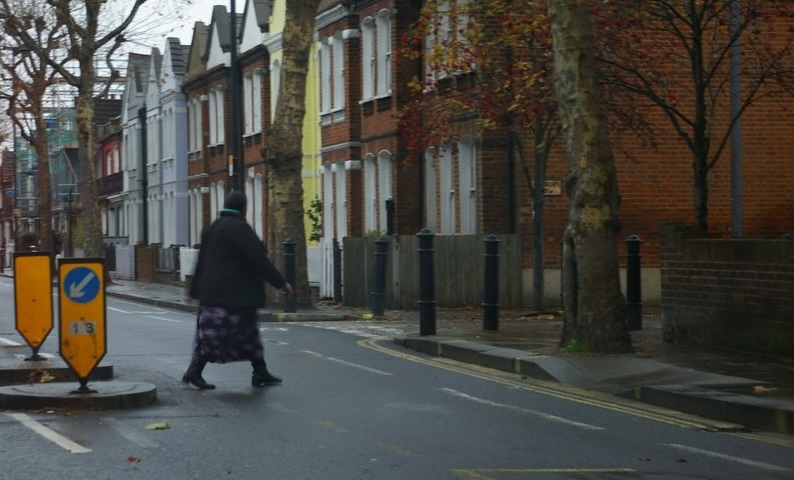
The proposals would be in addition to other measures currently in use in Fulham such as ‘planters’ – large wooden boxes used to narrow roads and slow traffic – and Low Traffic Neighbourhoods (LTNs) to the east and west of Wandsworth Bridge Road.
Petition organisers claim that the current measures have increased congestion along Wandsworth Bridge Road by preventing drivers freely using other routes and increasing journey times in the area.
In December 2025, a letter written to petitioners on behalf of London Assembly Member James Small-Edwards said that the Clean Air Neighbourhood scheme has been the ‘primary factor’ for increased congestion along the road.
Transport for London (TfL) data reveals that buses travel at less than 3mph during weekday peak times along some parts of the road, reaching a maximum of 10mph on other stretches of the route.
Hammersmith and Fulham emerged as the seventh slowest borough for average bus speeds at 6.76mph at the end of 2025 – down from 7.53mph at the start of the year.
This data coincides with London TravelWatch evidence suggesting people are less inclined to use buses due to low speeds, with petitioner Caroline Shuffrey saying that cars are essential to people’s interconnected lives when they cannot rely on buses.
She said: “It’s somebody who’s going to a hospital visit that day, or somebody who’s visiting an elderly parent.
“They’re not doing it because they’re petrol heads, they’re doing it for a whole host of reasons.”
With thousands signing the petition and support from Putney MP Fleur Anderson, opponents of the scheme claim that Hammersmith and Fulham Council have not offered an adequate response to their concerns and are still seeking to implement the changes.
The petitioners say that the council has previously questioned opponents on whether they are climate deniers – suggestions both Tarsh and Shuffrey deny.
Shuffrey said: “It’s not about politics.
“I very much think that we need to reduce the traffic in London, but we need to do that with public transport and really sensible methods of traffic management.”
In March 2025, the Market Research Society found that a council survey conducted by Opinium on the traffic schemes breached four industry rules and did not ensure ‘residents were not led towards a particular view’ during consultations on the project.
However, the council said: “These are long-standing proposals – developed by working with residents – to transform Wandsworth Bridge Road from a highway into a high street for local people and businesses.”
Residents and businesses represented by the Wandsworth Bridge Road Association (WBRA) have supported the plans, saying that they have waited 4 years for changes that will improve safety for residents amid ‘scaremongering from the pro-traffic lobby’.
WBRA secretary Natalie Lindsay said: “Frankly as local residents we are astonished that there is push-back on this most basic safety design.
“Essentially people appear to be saying that they value their ability to speed down a residential road over the safety of our children trying to cross it.
“Chicaning the road and raised crossings do not stop people from driving down a road, they simply force them to do so more carefully.”
Despite the council’s aims to implement further measures, the road’s designation as a ‘London Strategic Route’ means that plans cannot go ahead without approval from TfL acting on behalf of the Secretary of State.
In October 2024, TfL said that they were unable to support the proposals in their current form due to lack of evidence that the changes would not cause further travel disruption.
A January 2025 update from TfL said consultations for the scheme are still ongoing.
Featured image credit: Christopher Hilton (cc-by-sa/2.0)