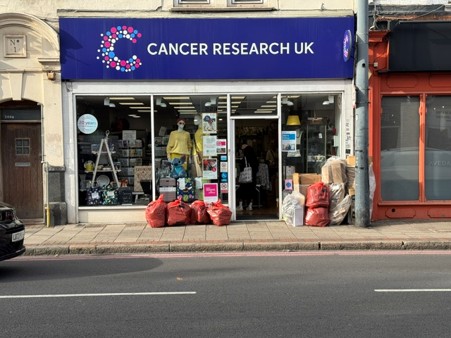
Charity shops in south-west London are attracting cost-conscious customers, but rising overheads and competition from resale apps mean increased interest does not necessarily translate into profits.
Second-hand shopping has become both more socially acceptable and financially necessary as households grapple with the cost-of-living crisis. However, charity retailers are facing their own pressures, including higher wages, rents and energy bills, as well as competition from platforms such as Vinted and eBay.
In a Cancer Research UK shop in East Sheen, Zack Zia was searching the rails for clothes for his four-year-old granddaughter.
“I have three daughters and four granddaughters, and I can’t afford to buy brand-new gifts for my family on my salary,” he said.
“I shop in more affluent communities to find better-quality items.”
A manager at FARA in East Sheen said the shop had recently become busier, although she could not confirm whether the increase was directly linked to financial pressures.
“I am not sure whether it is because of the increase in the cost of living, but definitely more customers are coming in at all times to look for things,” she said.
Charity retail remains a significant national industry. According to the Charity Retail Association, there are more than 9,900 charity shops across Britain, supported by thousands of paid staff and volunteers. The sector contributed more than £300 million to parent charities in 2024-25.
However, media reports in August raised concerns about the future of some shops after they reported that Oxfam was considering closing up to 100 of its more than 500 UK outlets.
Oxfam said it was reviewing its three warehouses in Batley, Bicester and Milton Keynes but denied having plans to close shops or warehouses. The charity described such reviews as standard practice but acknowledged it could not guarantee the future of every location in a difficult economic climate.
Oxfam’s shops, warehouses and online retail teams made a net contribution of £6.3 million to its humanitarian work in 2024 – 25. However, its trading arm recorded losses of more than £2 million for the second consecutive year, with sales falling by seven per cent, largely because recycling income declined.
A manager at Cancer Research UK in East Sheen said volunteers helped to limit staffing costs but added that revenue from recycling unwanted stock had declined.
Massooma, an experienced sales assistant at Fight for Sight, said online marketplaces did not necessarily deprive charity shops of donations because many sellers using those platforms wanted to make money from their clothes.
“We find that a lot of our donations come from people who are moving and can’t be bothered with all the work required for packaging and delivering items sold online,” she said.
Robin Osterley, chief executive of the Charity Retail Association, rejected suggestions that the sector was in crisis. He said physical shops offered an experience that online platforms could not reproduce, allowing customers to touch, try on and discover unusual items.
While some large charities have reduced their premises, Osterley said many organisations were moving into larger premises.
Charity shopping in SW14 reflects the national contradiction: charity shops appear popular with bargain hunters, yet maintaining that popularity while controlling costs remains the sector’s central challenge.
Feature image credit: Sylvie Richards




Join the discussion