A year on from the hit TV series Adolescence that sent the world spiralling, Louis Theroux brought us a deep dive into ‘The Manosphere’, and ever since, we’ve been left with more questions than answers.
The spotlight has largely fallen on the men who create and profit from content promoting hatred, abuse and harmful sexual attitudes towards women and girls.
But what about the consumer on the other side of the screen?
Research commissioned by Vodafone found boys are disproportionately targeted and susceptible to this content – with 69% having encountered posts promoting misogyny.
But how does this content they consume manifest in day-to-day life?
In classrooms across the country, teachers are increasingly finding themselves on the frontline of this, as 70% of teachers observed a rise in sexist language in the classroom over the last year.
The SW Londoner spoke to three female teachers from different school systems, who wished to remain anonymous, to understand this new reality.
All three described what they are observing as part of a wider “masculinity crisis”.
‘Every week, without fail’
For one secondary school English teacher, this problem is not theoretical.
“Being a female teacher, I’ve seen first-hand misogyny and sexism from male students towards female members of staff and female classmates”, she says.
After setting up a weekly girls’ group to listen to her pupils’ experiences, she says: “Every week, without fail, there was a story- girls being told to get back in the kitchen, that they don’t deserve to be here or that they are only good for certain things.”
“That same traditionalist, harmful rhetoric we hear time and time again is being regurgitated in classrooms by young boys who have been enabled to have these viewpoints because of content and algorithms pushing harmful ideas about women.”
And this experience is not isolated to the female pupils:
“There is a certain imbalance of respect for female teachers, I can attest to when you’re disciplining a young male student and their behaviour is vastly different to how they’d react to a male member of staff.”
“When students have an issue with a male, they don’t use gender-based terminology but when a female member of staff angers a student, it’s the first thing they use.”
“Young boys have increasingly started to refuse female teachers – More and more young men are being emboldened to have these views.”
A behaviour that seems to appearing in younger age groups too: “In year seven, the amount of misogynistic and homophobic language seems to be getting worse and worse the younger the students are, and currents in social media are pushing this.”
Schools are attempting to challenge these attitudes through PSHE lessons, assemblies and a broader curriculum exposing pupils to diverse voices and perspectives.
But she says the responsibility cannot sit with schools alone.
“I think it starts in the home more than anywhere else,” she says.
‘They’re so aware of gender from a young age’
The influence of rigid gender ideas can appear long before children are old enough to understand the politics of the manosphere.
An infant and primary school teacher says she is seeing gender divisions emerge among children as young as six.
“It’s so micro, it’s so subtle, which is scarier,” she says.
“They’re so aware of gender from a young age and apprehensive to engage in things that they think are girly or boyish.”
She gives the example of PE:
“I say, ‘We’re going to do skipping today in PE,’ and they’re not happy about it. They think that it’s just very black or white at the minute.”
But she has also encountered something more difficult to address: boys who appear unwilling to accept female authority.
“There were four or five boys in the school who don’t respond to any female authority,” she says.
“It’s really frustrating, is it my teaching style? Is it my voice? We try to think, ‘Tomorrow, when he kicks off again, I’m going to try and do it like this’.”
The influence of online culture, she says, is also reaching children at an age when many adults might assume they are still too young to encounter it.
“In year four they are 100% they were aware,” she says.
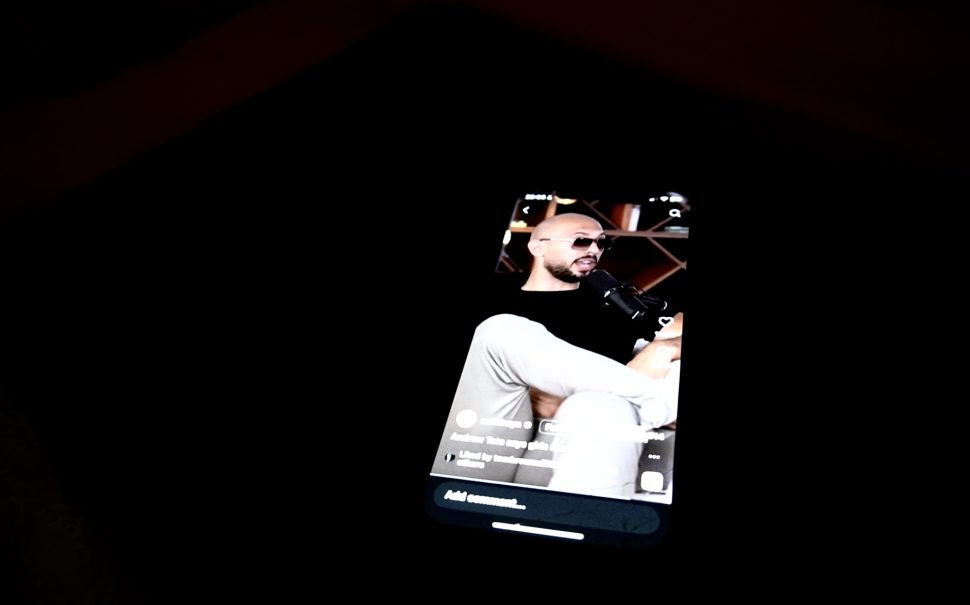
“They know who Andrew Tate is and Trump’s sexist remarks, they don’t understand what it means but they are saying it”
“They had really mature sexual interpretations; at only 8 or 9 years old, they were saying words I’d never even heard of as an adult.”
‘I first learnt about Andrew Tate in the classroom’
For one secondary school maths teacher its the small talk that contribute to this growing “masculnity crisis”.
“I first learnt about Andrew Tate in the classroom – you could call this my naivety perhaps but it became an ongoing theme” she says.
“I’d be teaching a Year 10 class and the male students would ask me, ‘What do you think about Tate? How do you feel about Tate?’”
She recalls being asked personal questions by male pupils while standing at her desk. “You’d be asked those questions when a young man was up at your desk, and you’d picture this desk cornered in, and they’d take that opportunity to ask questions like, ‘How tall are you without your shoes on?’”
“You love the kids you teach and there wasn’t a time I felt a direct threat, but dismissing these interactions as simply “small talk” risks missing the bigger picture.
“I’ve watched the way male students speak to female students and it’s different, its a stereotype and a habit and these small sexisms create the big ones.”
Recognsing these smaller behaviours that allow it to become normal.
“I do think steps are being made but unfortunately things are getting worse, and those two things can coexist,” she says.
She believes young people need to see more positive male role models and be given the space to question the ideas they encounter.
“You have to speak on behalf of the children; they cannot be silenced, because that will never help, we need to encourage open conversation with these young men and boys” she says.
As part of the Relationships, Sex and Health Education guidance the UK government has announced plans to address misogynistic online content; however, the teachers I spoke to believe this is not enough.
They firmly believe this starts at home, limiting access to harmful viewpoints that they can fall prey to and begin to internalise and actively challenging these stereotypes.
Increasingly, young men are too often falling into online echo chambers that promote hatred and abuse towards women and girls.
These accounts highlight how this can be both subtle and overt and if overlooked can manifest into harmful attitudes that become normalised long before they are recognised as a problem.
Featured image credit: Molly Finlay