Warning: This article contains descriptions of the practices involved in female genital mutilation, which some readers may find upsetting.
When Payzee Mahmod went in for a maternity check-up, her only concern was her unborn child.
That day would be the first time she would be asked about female genital mutilation – a question that would change everything.
Payzee is not alone.
She is among thousands of women who were subject to FGM as a child, who waited decades before this was identified, with most women only recorded in maternity settings, new NHS data has revealed.
This has raised concerns about the true scale of women living with FGM.
Female Genital Mutilation (FGM) or Female Genital Cutting (FGC) is a procedure that involves the partial or total removal of the external female genitalia for non-medical reasons.
Payzee, was only seven when she was subject to FGM.
She said: “I was asked about FGM the first time when I was pregnant. I was full of anxiety because it was asked to me for the first time only when I was pregnant, and I started worrying about my baby and my maternity health.
“I hadn’t thought about the impact of FGM on my body and I was being told for the first time by a health professional about what my body has lived through for over three decades.
“I should have been asked the question before.
“I was a child when I was subjected to FGM and since then so many opportunities of talking about FGM have been missed in health settings including several cervical cancer screenings and sexual health appointments.”
Recognised internationally as a human rights violation, FGM persists under the guise of cultural and religious tradition – most commonly in parts of Africa, Asia and the Middle East.
The invasive procedure has no health benefits and can result in severe bleeding, fertility issues and other lifelong physical and psychological issues.
According to the latest estimate from the 2011 Census, there are 137,000 women and girls living with FGM in England and Wales – and experts anticipate present figures to be much higher.
From 2020 onwards, there has been an increase in the identification of FGM cases and newly recorded cases.
Sema Gornall, CEO of the London-based charity Vavengers, committed to ending FGM and violence against women and girls, has called this a “healthcare crisis”.
Gornall added: “It’s very much amongst us, it’s a global war against women and girls, and nobody even wants to talk about it openly.
“We’re not looking for the intersections, we’re not looking for who survived this, and in a lot of situations, sometimes women don’t even know how they have survived FGM.
“We are not asking women in this country if they survived FGM. We need to ask every single woman, regardless of their racial background and age.”
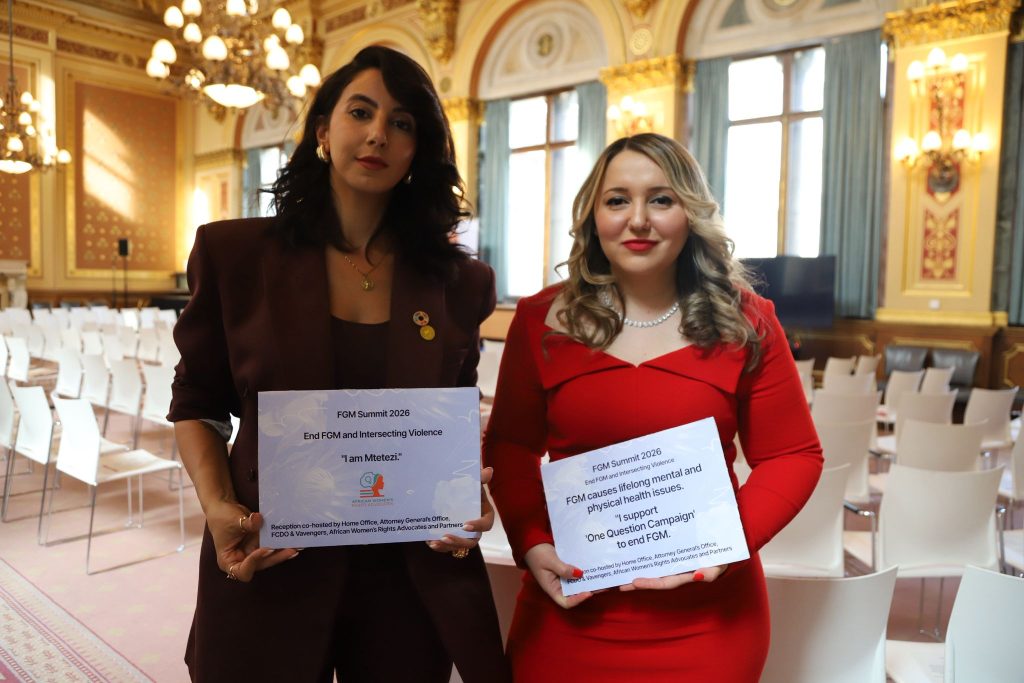
Sema and Payzee are advocating for a “one-question campaign” – encouraging healthcare professionals to ask one simple question: whether a patient has been subject to FGM.
If this question were routine, more accurate data would be available that would better reflect the number of women living with FGM.
What does the data show?
Across England and Wales, experts warn of inconsistent healthcare provision, with a “postcode lottery” of FGM treatment.
According to Professor Laura Jones, a study commissioned by the University of Birmingham with 44 survivors found pockets of support across the country but also revealed concerns about the lack of adequate mental, physical and legal support in other areas.
Analysis of the NHS England FGM annual dataset of 2024-2025 revealed the overwhelming majority of women were identified in adulthood from the ages of 25-40, accounting for nearly 80% percent of all cases.
Within this age frame, the highest levels of identification were among women aged 30-34, who accounted for 30% of all cases.
By comparison, only 60 attendances were recorded for girls under 18, accounting for 0.6%.
Despite women being identified most frequently in their 20s and 30s, data shows FGM is mostly inflicted during childhood.
Commonly carried out at a young age, it is falsely defended as a cultural requirement for marriageability, a rite of passage or a way to ensure chastity.
Many children are often unable to refuse or report it, meaning those who are responsible often evade charges.
The data points to a significant delay from when FGM occurs at infancy to when it is formally identified in adulthood, raising concerns that many women may be living with FGM for years — and in some cases decades — before it is formally identified.
As such, women miss opportunities for earlier support, safeguarding and intervention.
Although many women in diaspora communities may have undergone FGM in their home country, this does not account for under-identification in the UK, as cases are typically only detected during pregnancy or maternity care, leaving many adult women unidentified outside these services.
When women are identified in adulthood, maternity settings are the primary context of identification, with 80% of all FGM-related attendances occurring in midwifery or obstetrics.
With the highest recorded cases among women aged 25 to 39, coinciding with the typical ages of pregnancy.
Something Dr Jones’ independent study also confirms in her research paper.
The report reads: “We know that about 80% of women who have suffered FGM and go on to receive healthcare treatment are identified via maternity services.
“This study goes a long way to recognising that many FGM survivors aren’t coming forward for treatment until that point due to the significant barriers associated with accessing care in a maternity setting.”
Gaps in the data
It is clear that FGM is identified far later than it occurs. However, much remains unknown.
Analysis of such categories marked as “unknown” or “not recorded” reveals substantial gaps in FGM case details and safeguarding advice.
Records show key information was often missing, including age when FGM was carried out and if advice was given on illegality or health implications of FGM.
Antenatal appointments have become a pinpoint in identifying women affected by FGM and assessing potential risks to children.
However, if women are not entering these healthcare pathways or if professionals are not asking the right questions, survivors continue to be rendered invisible to the healthcare system.
The NHS introduced the FGM Enhanced Dataset to improve understanding and support safeguarding responses across the healthcare service.
However, it has revealed a fragmented national picture with gaps in identification and recording and behind the data are women living with the long-term consequences of FGM.
Campaigners believe these figures represent a small proportion of survivors – reflecting how women enter the healthcare system instead of how many women are living with FGM.
Looking forward
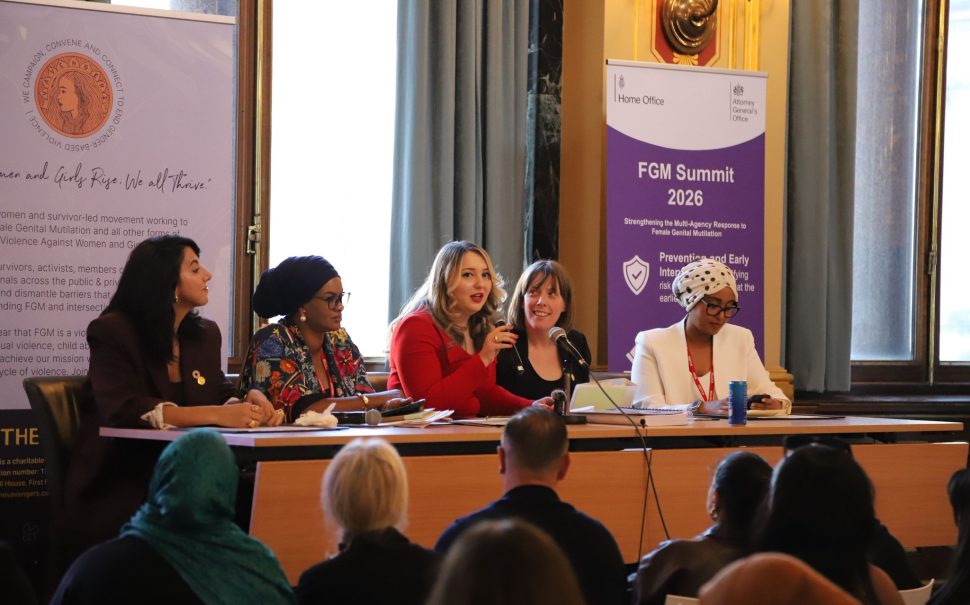
As of 29 April, following the first-ever FGM summit hosted by the UK government, new measures to protect women and girls have been accepted.
These measures will help identify girls at risk of being taken abroad for FGM, update protocol for case-building and training for prosecutors to improve expertise and handling of FGM cases.
These commitments will deliver on the government’s Violence Against Women and Girls Strategy, which sets out the ambition to halve violence against women and girls within a decade.
Every 12 minutes, a girl or woman dies as a result of FGM, often perceived as a distant issue; it is an urgent matter that is present within our own communities.
If you are concerned about a child at risk of FGM and need advice, please call the NSPCC FGM Helpline on 0800 028 3550.
Featured Image Credit: Stephen J. Gornall