Loneliness kills an estimated 100 people every hour worldwide, the WHO found in 2025. In Richmond, two programmes are fighting it on the same streets — but no formal link exists between them.
Allison Owen-Jones, founder of the Happy to Chat bench movement, suggested that Richmond GPs could help tackle loneliness simply by mentioning a park bench. The NHS had never contacted her.
The housing charity Anchor confirmed no formal link between its 930 chatty benches and social prescribing.
Yet Owen-Jones shared stories of people whose lives had been reshaped by something as simple as sitting down — including one woman whose GP told her to exercise, and who found belonging on a Happy to Chat bench entirely by accident.
Research by Professor Clare Rishbeth of the University of Sheffield, known as The Bench Project, found that for people marginalised by unemployment, ill health, or overcrowded housing, benches were not a luxury.
They were a lifeline.
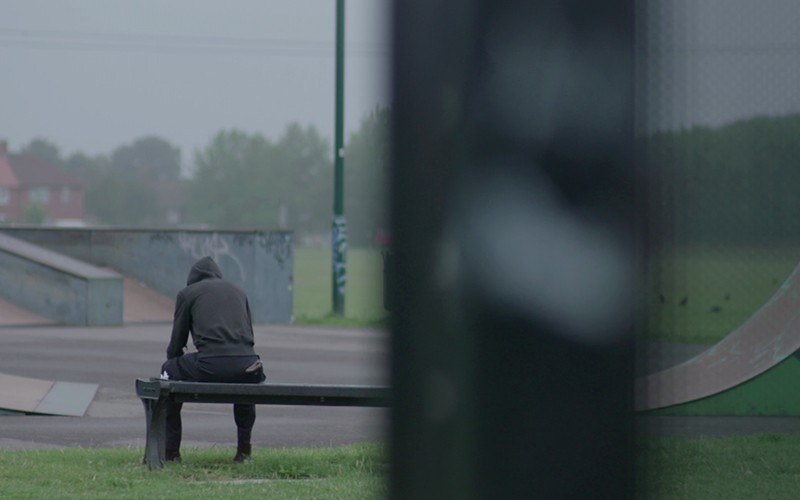
One participant, Bobby, put it simply: “Being home by myself all day is very depressing. I’d rather come out here, spend a couple of hours. That will improve my health condition and makes me feel more happy. I would not go home depending on sleeping tablets to sleep in the night.”
For Bobby, a bench made the difference — a couple of hours outside, a few faces, and a night without medication. It had no referral process, no waiting list, and no appointment.
The scale of the crisis
The World Health Organisation’s Commission on Social Connection 2025 report, found that loneliness was linked to more than 871,000 deaths a year. One in six people worldwide was affected.
Social isolation increased cardiovascular disease risk by 30%.
In England, 3.1 million people — 7% of the population — reported feeling lonely often or always in the most recent Community Life Survey, up from 6% in previous years.
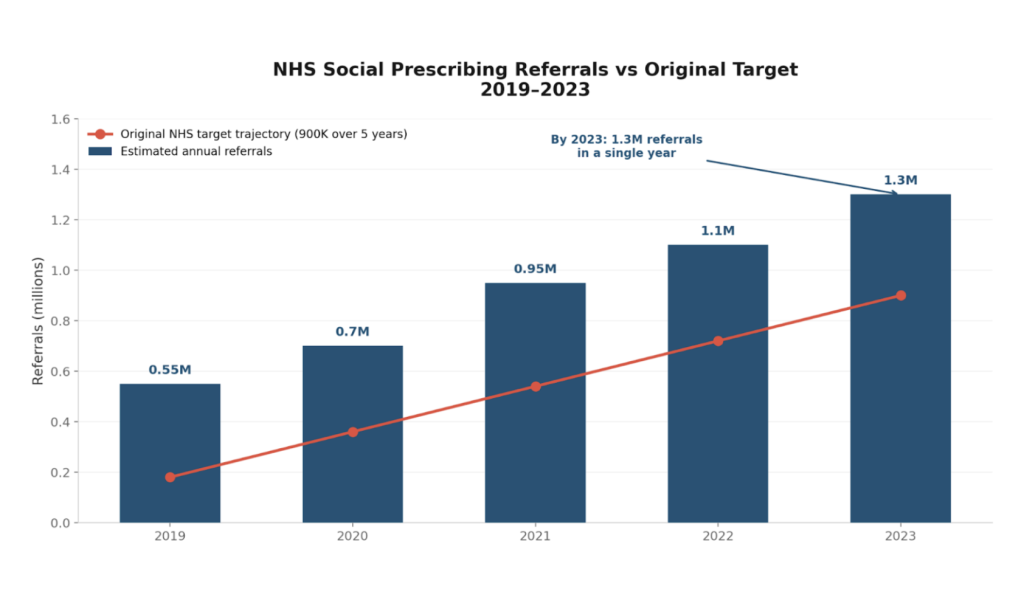
The NHS responded at scale. A landmark study in The Lancet Public Health, led by Professor Daisy Fancourt at UCL, found that 1.3 million people were referred to social prescribing in 2023 alone — far exceeding the original goal of 900,000 over five years. The study also suggested that people in less deprived areas were more likely to receive referrals — raising questions about whether the programme was reaching those who needed it most.
In Richmond, social prescribing is delivered by Ruils Independent Living in partnership with Richmond GP Alliance. Across the borough’s 15 wards, Richmond Council has installed 15 “acts of kindness” benches.
Both programmes exist on the same streets. Both are trying to solve the same problem.
Voices from the bench
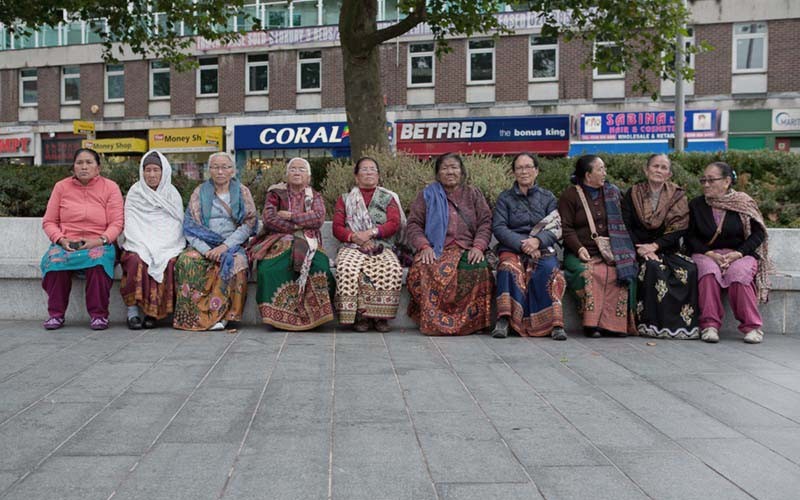
For the Nepali elders of Woolwich — ex-Gurkha families largely isolated by lack of English — the benches of Gordon Square served as a daily gathering point.
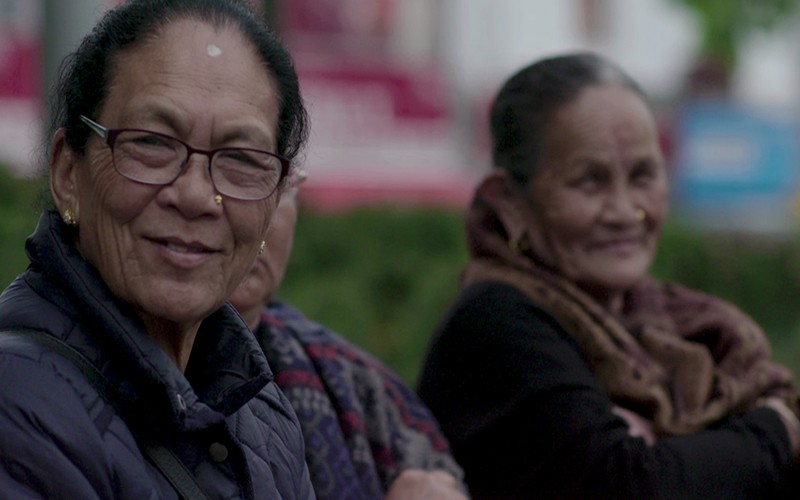
One woman, Sarita, said: “When I am outside with my friends, talking and laughing, I forget about everything else and feel at peace.
“If you see a thousand faces then it is good for you. My ancestors used to say that.”
Phil, at St Helier Open Space in Sutton, said: “Without benches, everyone would be a bit more lost, they wouldn’t talk as much. It’s face-to-face, good old fashioned face-to-face chat.”
A companion report, Benches for Everyone, found that benches were “valued as public, egalitarian and free” and functioned as a social resource “especially vital for people largely marginalised from other collective environments such as work, cafés, educational or leisure facilities”.
The conclusion was “resoundingly pro-bench”: the researchers recommended “comfortable benches, longer benches, and simply more of them”.
The first peer-reviewed study of Happy to Chat benches, found they successfully created a welcoming space for casual and meaningful conversations. But it was conducted on a university campus, not as a healthcare intervention.
What the institutions say
In Frome, Somerset, the connection between benches and social prescribing had already been made.
Charlotte Osborn-Forde, CEO of the National Academy for Social Prescribing, pointed to Health Connections Mendip, where a “talking bench” allowed people to drop by and meet a link worker who connected them to services.
“This is part of a wider programme involving health professionals, link workers and volunteer ‘connectors’ working closely together,” she said.
But such examples remained rare. Osborn-Forde said link workers had “the time to understand the social factors affecting someone’s health and wellbeing — including loneliness, isolation or problems with debt or housing — and connect them to support in their community.”
Thrive LDN, the Mayor of London’s mental health programme, said it had supported an Act of Kindness Bench pilot in March 2020, inspired by Zimbabwe’s Friendship Bench scheme. It was cut short by the pandemic and never re-established.
A spokesperson said the London Borough of Newham had “attempted to pilot this with alignment to Community Link Workers” — suggesting at least one London borough had tried to connect benches with social prescribing.
NHS England was contacted for comment.
Young people, new parents and the benches that reach them
Owen-Jones told the SW Londoner that she believed GPs were already good at detecting loneliness — even when patients did not name it.
“I imagine the GP is very good at picking up on what they’re seeing,” she said. “They might not come out and say ‘I’m lonely,’ but the GP might say, ‘who have you met with this week? Who did you see in the last couple of days?’
“Some people, bless them — it’s only the person in the shop.”
She said benches were not only for elderly people. More and more young people were using them, particularly at universities.
“It seems like everyone’s having fun but you,” she said. “Everyone knows what they’re doing, and you’re thinking, what am I doing wrong?”
UCL installed four Happy to Chat benches on its campus in 2022. More universities have followed.
Owen-Jones also noted that other organisations had already begun making their own connections. Mind, the mental health charity, set up chatty benches in Dorset. English Heritage introduced benches for young parents — with toggleable signs indicating whether they were looking for a chat.
“They pointed out specifically that young parents of young children, both men and women, can be terribly lonely,” Owen-Jones said.
“You think, all I want in my life is a baby, and when you get them, and they’re healthy — oh, you’re craving adult conversation.”
The man in Roath Park
Owen-Jones still thought about the man who started it all.
“He was very, very elderly,” she said. “And it looked like he’d made a real effort to try and get out, maybe from an old people’s home nearby, to come out by himself on a fine spring day.”
“I still look back with regret that I didn’t go and just spark a chat with him.”
Asked what might have happened if she had, she said: “Maybe this time it would be a bit easier, and he would have felt better about leaving his home.”
Five years later, her sign had travelled from Cardiff to Kraków, from UCL to the World Trade Center. More than 700 benches carried her words. Fifteen of them sat in parks across Richmond, a few minutes’ walk from GP surgeries where link workers helped lonely patients find connection.
Owen-Jones reflected on who the benches were really for.
“It could be the elderly, but it could be a youngster too,” she said. “Anyone who just needs suddenly an acknowledgement that they’re not invisible.”
Richmond Council’s 15 acts of kindness benches are listed here.
The Bench Project film, Alone Together, directed by Esther Johnson, is available here.
Featured image credit: © Esther Johnson/Blanche Pictures