The campaign group to improve Wandsworth Prison wants to change public opinion and raise awareness about why the failings of the prison matter and the impact on wider society.
Although improving the prison conditions is at the heart of Wandsworth Prison Improvement Campaign (WPIC), the group argues that changing the prison culture is also more likely to lead to better rehabilitation and consequently successful reintegration of released prisoners into local society.
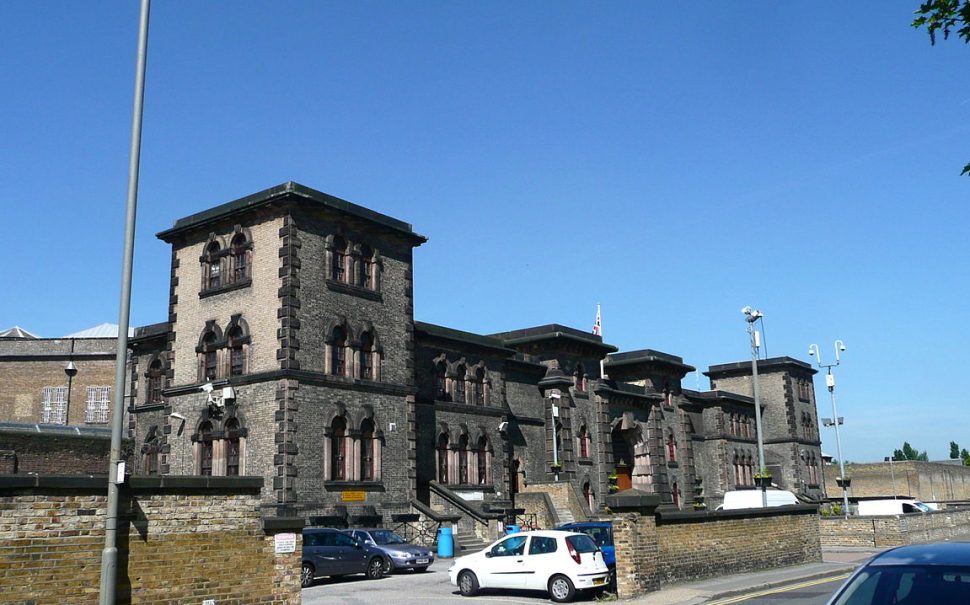
Wandsworth Prison has hit the headlines for all the wrong reasons over the last few years after being placed into special measures by the Prisons Watchdog in 2024 due to overcrowding, poor conditions and security failures.
This is in stark contrast to the borough’s otherwise affluent surroundings, prompting residents to worry about the prison’s conditions.
Member of WPIC and South West London resident, Deborah Lamb, said: “It struck me how the prison is on our doorstep and it is a public institution, however unlike schools and hospitals, you really don’t know what goes on behind the walls.
“The more you learn about how shocking the conditions are and how ineffective the system is, you realise it is absolutely outrageous and people should know about it.”
Although the most recent inspection report in October 2025 by the Independent Monitoring Board (IMB) noted some improvements, particularly under the leadership of new governor Andy Davy and since the prison was given £100 million funding, understaffing still remains a significant issue.
The Wandsworth Prison Improvement Campaign was launched by Elizabeth Bridge in 2023 who was previously a Quaker chaplain in the prison, with the primary aim of improving the safety and living conditions in the prison.
Bridge said: “There are smells that you don’t know until you’ve worked in a prison and it is very visceral, the smell of blood or vomit, something that doesn’t come across through the television.
“Wandsworth has always been a prison that men talk about as the bottom of the pits, and historically the fear of being sent there would have been used as a deterrent to discipline people in other prisons.”
Central to their campaign are what the group call their ‘five simple asks’ for prisoners, which include having access to clean clothes and a shower, to receive the medication they need and to be able to go to the library.
Diane Hay, also a member of WPIC said: “These are simple things that we would expect most people in Wandsworth would take for granted and they don’t cost hundreds of millions of pounds to get right.”
The prison was built in the 1850s for 850 men however it now currently holds 1450 meaning that most cells are shared and prisoners spend an average of 23 hours daily inside them.
Hay added: ”The ultimate aim is for the men in the prison to have a humane and stable regime where they can get out of their cells and do something, whether that be work or receive training.”
According to a report by the Criminal Justice Joint Inspection, addressing the mental health needs of prisoners is a significant issue in UK prisons.
Their data indicates that 52% of prisoners self-reported mental health problems during the pandemic.
In more recent statistics provided by the Ministry of Justice, there was a 9% increase in self-inflicted deaths in UK prisons in the 12 months to September 2025, a 33% increase since 2020.
The HM Inspectorate of Prisons noted in its May 2024 inspection of HMP Wandsworth, seven self-inflicted deaths had occurred in the last 12 months.
WPIC have been invited into the prison on numerous occasions and liaise with the new prison governor who the group acknowledged is working to build up morale and experience in staff and create a better working culture inside the prison.
As part of its year as London Borough of Culture, Wandsworth Cultural Micro-commission chose artist Reuben Abraham to bring creative outlets to the residents at HMP Wandsworth, helping to expand access to meditative practices.
One of the campaign group’s main advocacies is to change public opinion surrounding the prison and have highlighted the need for collective responsibility from local people and government as the state of the prison has repercussions for the local area.
Speaking to the group, they highlighted several key areas that needed to be improved within the prison which they said would ultimately lead to a more successful rehabilitation and therefore better reintegration of released prisoners back into society.
Bridge said: “Whilst understandably everyone is victim-focused and very concerned about their own safety, ultimately most prisoners will be released at some point and will come back into our community.
“We have to ask ourselves, what state do we want to see these people coming out in?
“Do we want them to have no home, no job, no education and with nothing to do?
“We want to appeal to the local population that they can’t hide away from this.”
Over the last few years the campaigners have collected second-hand library books, jigsaws, clothing and stationary for the prisoners.
Bridge added: “One of the most precious things you could be given is a notebook and a pencil.
“Most human beings can keep themselves sane by writing a diary or a letter.
“The pleasure of escaping in a book is also life-changing and in a very poor prison, reading is a skill you can teach people cheaply.”
The group highlighted the need for prisoners to develop skills during their time in prison as stable employment, skills and community are critical to successful rehabilitation and reintegration.
Social enterprise Redemption Roasters shares a similar outlook and believes that improving culture and opportunity inside prison has a direct impact on outcomes after release.
Their mission is to reduce reoffending rates through coffee.
Founded in 2016, the initiative runs barista academies in several prisons including HMP Wandsworth, where they provide training, support and employment to help prisoners gain skills needed to secure meaningful employment post release.
In 2025, they ran 25 training courses across four prisons and employed 42 participants across their 12 London coffee shops, equating to 29% of their shop workforce.
Amongst those they employed, they recorded a 0% known reoffending rate.
According to Redemption Roasters 2023 Social Impact Report, 42% of prisoners in England and Wales go on to commit another crime within one year of being released, costing the Treasury an estimated £4.5 billion every year.
Additionally, 36% of prisoners manage to find work within two years of being released and those who do are 50% less likely to return to prison.
Although Redemption Roasters focus on technical coffee skills, central to the initiative is the development of confidence, routine, and a sense of purpose, attributes which they believe are often absent from prison environments but essential for successful rehabilitation into society.
WPIC also highlighted the importance of prisoners being able to maintain a network through communication with friends and relatives, into which they can be absorbed post release and therefore aiding longstanding rehabilitation.
In HMP Wandsworth there should be a working phone in every cell, and prisoners have to pay for calls which are set at 5.5p a minute to call a mobile.
The group stressed that phone calls allow people to keep in touch and offer support in what is otherwise a very isolated existence.
On their upcoming visit to the prison next month, the group hope to see the new ‘Scandi Wing’, which was part of plans by the Ministry of Justice for wings in Wandsworth and Pentonville to adopt a Scandinavian approach, focusing on rehabilitation through fostering normalization rather than dehumanisation.
A recent report by Healthwatch Wandsworth, stated that the prison has also developed its provisions to support those who are neurodivergent through employing specialised workers to support people with identified ADHD, Autism and other learning disabilities in the prison.
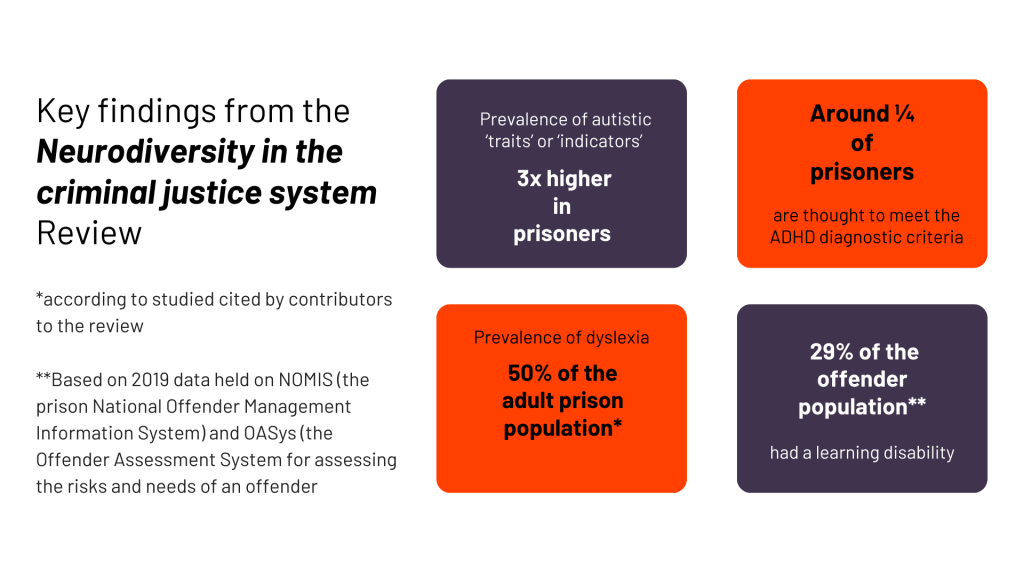
In 2021, the HM Inspectorate of Prisons produced a review of Neurodiversity in the criminal justice system which highlighted a lack of comprehensive reporting as neurodiversity was not specifically included in the national data set for police and sat under the umbrella of mental health.
The review concluded that the prevalence of neurodivergence is higher in the criminal justice system than in the general population and given the prevalence estimate for dyslexia alone, they stated that it would not be unreasonable to suggest that up to half the adult prison population experiences some kind of neurodivergence challenge.
In response to this review, the Ministry of Justice launched an action plan for Neurodiversity in the Criminal Justice System in 2022.
Since then, there has been an increase in screenings to identify the needs of neurodiverse offenders and a Neurodiversity Support Managers (NSMs) scheme has been rolled out nationally.
Their role is to raise awareness of neurodiversity in prison and provide tailored strategies and reasonable adjustments for those in need, in the hope that this leads to better rehabilitation and prevents reoffending.
Nevertheless, whilst welcoming the improvements to Wandsworth Prison, WPIC have criticized the funding available for the new provisions as they state that the annual budget for the neurodiverse unit was £1500.
The campaign group are hopeful that they can help aid people’s understanding of Wandsworth prison and raise awareness as to why they believe it is beneficial to the wider society to readjust the balance between punishment, protection and rehabilitation in the justice system as a whole.
WPIC believes that the issues at Wandsworth are indicative of a wider problem.
Diane Hay said: “Wandsworth is the canary in the system that is failing so many prisons.
“The more we have learnt over the last few years about how prisons work, we have become more aware that some of the issues at Wandsworth are not within the governor’s control.
“They are ubiquitous to the whole system.
“A functioning prison is one with the right staffing, the right number of people, it’s got the resources it needs and it provides education.”
Wandsworth Prison Welfare Trust is a charity which supports the work of the campaign and was also established by Elizabeth Bridge.
It works to provide prisoners with basic amenities and services, to give prisoners the best chance of rehabilitation and successful reintegration into society.
WPWT created a ‘release cupboard’, which contains items of donated clothing the men can wear when they are released.
The cupboard forms part of their ‘release system’ which supports the men after they initially leave prison helping them reestablish themselves with things such as finding housing and a mobile as a first step to support prisoners with their transition back into society.
The group has called on people to donate second-hand coats (preferably waterproof), fleeces, jigsaws and playing cards which can be left outside 13 Fawe Park Road, Putney.
They have also encouraged people to find out more about the campaign by joining their next meeting, details of which can be found on their website.
Matthew Andrews, Chair of the Independent Monitoring Board at HMP Wandsworth, said: “The improvement in the prison’s performance after the disastrous situation last year is welcomed and has been reflected in the largely positive conclusions of HMIP’s Independent Review of Progress, conducted in April.
“However, until the serious staffing issues are properly addressed the prison’s efforts to improve further will be severely hampered.”
Feature image: Herry Lawford from Stockbridge, UK via Wikimedia Commons (CC BY-SA 4.0)