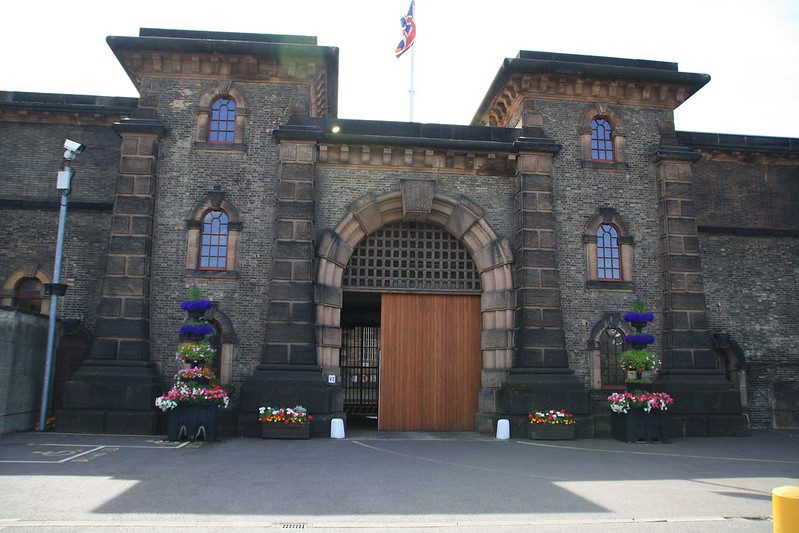
HMP Wandsworth has received the worst overall performance average across prisons in England and Wales, as well as one of the highest staff sickness and staff resignation levels across London, according to data released by the Ministry of Justice.
Recent data demonstrates that HMP Wandsworth has received the worst overall performance average across prisons in England and Wales, as well as one of the highest staff sickness and staff resignation levels across London.
The Victorian prison had a ‘catastrophic’ inspection in 2024 and was therefore given £100m funding to address the serious issues of overcrowding and understaffing.
A report published in October 2025 from the Independent Monitoring Board (IMB), based on a monitoring period between 1 June 2024 and 31 May 2025, has highlighted that although some improvements have been made, understaffing remains a significant issue.
The report found that the prison, which holds nearly 1500 men, was often managed by fewer than 85 officers.
Elizabeth Bridge, former prison chaplain at HMP Wandsworth and a current member of the Wandsworth Prison Improvement Campaign, said: “It is a really serious comment on the prison that, after being in the news so much, the annual report of the IMB shows it to still be in a really very poor condition.”
The Wandsworth Prison Improvement Campaign is a charity that is dedicated to putting pressure on those with influence over HMP Wandsworth to improve its safety and decency.
Bridge reported that staffing issues remain her top concern following the report.
The latest figures from the Ministry of Justice on the Annual Prison Performance Ratings 2024/25 show that HMP Wandsworth has the lowest Overall Performance Score at 38.9%.
Pentonville achieved an Overall Performance Score of 43.7%, Wormwood Scrubs got 45.8%, Feltham B got 46.3%, ISIS got 49%.
HMP Belmarsh scored the highest Overall Performance Score in London at 57.4% and HMP Hatfield scored the highest in the country at 94.7%.
The average in England and Wales was 61.4%.
Data has also shown that Wandsworth has the fourth highest outturn in the UK for staff sickness at 17.1%, with the average across England and Wales being 11.02%.
Pentonville scored 10.8% for staff sickness, Belmarsh scored 12%, Wormwood Scrubs scored 13.2%, ISIS scored 16.1% and Feltham B scored 16.7%.
Of the six major London prisons investigated, Wandsworth had the second highest resignation rate at 12.7% and Belmarsh had the lowest at 4.3%.
The average resignation rate across England and Wales was 7.5%. Feltham B had a resignation rate of 21.8%, ISIS was 11.2%, Pentonville was 7.9%.
The IMB report stated that, on average, one third of Wandsworth staff were absent every day, and those who were present were described as inexperienced and demotivated.
Bridge said: “The staff need much more training and when they experience trouble, they need much more support, and that support may need to extend to saying ‘it’s time you came back to work’.”
Bridge spoke about the difficulties in bringing the disorder in HMP Wandsworth to public attention.
She said: “The prisons are in such a poor state that nobody wishes to speak about it and very few people have access to seeing what’s happening, except prisoners.
“And when they come out and talk about it, nobody believes them because people think prisoners exaggerate and society thinks that the customers of prisons deserve what they get. This report shows that they don’t.”
Matt Andrews, Chair of the IMB at Wandsworth, said: “There is inevitably a direct correlation between the number of staff on the wings and the regime.
“When wings or other units are understaffed, there is a reduction in the amount of time spent by staff with prisoners, which in turn impacts prisoner well-being, morale and ultimately potentially the safety of the prison.”
“Staff are often ‘cross-deployed’ from other areas of the prison to the wings which leads to a reduction in service in other areas from which staff are transferred, such as education, activities and the library.
“In addition to the numerical shortage of staff, many are inexperienced and do not therefore have the experience of dealing with prisoners- so-called jailcraft.
“It is a question of quality as well as quantity.”
Tom Gaymor, ambassador for DIVERT London which is a custody-based program using youth workers to reduce recidivism in 18-25 year olds, attended HMP Belmarsh last week and spoke to staff about issues they face at work.

Out of all the London prisons, Belmarsh received the highest overall performance average of 57.4%, compared to Wandsworth which scored the lowest at 38.9%.
Gaymor said: “Belmarsh seems to be quite well funded, and staff morale was reasonably high, because if you have a good number of staff you can go about your operational duties in an efficient way, which has a positive effect on the inmates.”
He added: “Even though Belmarsh is housing some of the UK’s most dangerous criminals, the prison staff I spoke to felt really safe there.
“If you have staff shortages you can’t take prisoners out of their cells because of safety ratios, which affects the quality of day that the inmates have, which has a knock on effect on behaviour.”
Gaymor spoke of how understaffing can lead to a perpetual cycle, in which understaffing increases negative prisoner behaviours, which then leads to further staff shortages as staff experience burn-out.
When attending Belmarsh, Gaymor witnessed some conflict between a prisoner and staff in the exercise yard which he explained might be increased if prisoners are subject to long waiting times in cells due to staff shortages.
He said: “One minute it’s sunny and the next minute a tropical storm rolls in and it can change the prisoners’ behaviour so quickly – depending on their state of mind and whether they have been locked away for a long time, that tendency increases.”
Andrews said: “The staffing shortfall affects every area of the prison. Given that this is the case, the board is reasonably satisfied that the governor and his senior management team are doing everything that they can to deploy their limited resources as effectively as possible.”
A Prison Service spokesperson at HMP Wandsworth said: “We are pleased the IMB has recognised the progress being made at HMP Wandsworth.
“But we know more needs to be done, which is why we have increased staffing levels and are investing up to £300 million to improve conditions and keep prisons safe and secure.”
HMP Wandsworth has said that the prison is now fully staffed for prison officers since the IMB monitoring period and the department is carefully monitoring resourcing levels to ensure that they are able to manage current staffing levels and make accurate predictions around future needs.
Andrews reported that local recruitment of staff, as opposed to central recruitment, has been trialled at prisons such as HMP Berwyn, thereby opening the possibility for employees at Wandsworth to be given further involvement in the interviewing and selection of staff in the future.
Andrews also said that the board is now reviewing the progress of Enable, an initiative providing training-on-the-job to officers with less than two years’ experience, to evaluate its efficacy.
External agencies such as StandOut, which provides men with life skills for when they leave prison, were also described as outstanding ways to complement Wandsworth prison staff by Andrews.
Featured image credit: diamond geezer via Flickr