Charity shops across the country are heading in a new direction by going online and increasing their number of superstores, as rising overhead costs make profitability a challenge.
While shops have been at increasing risk of closure as charities consolidate resources, research by the Charity Retail Association (CRA) suggests the industry is having to adapt its approach as the demand for second-hand items still grows.
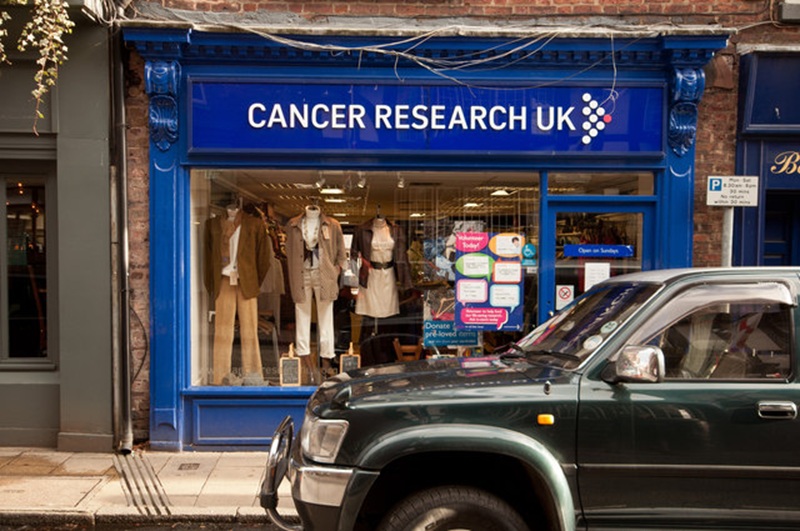
Cancer Research UK and Scope were the latest victims of store closures, announcing at the end of 2025 their plans to close around 200 and 77 shops respectively.
However CRA believes the industry is still thriving.
Its chief executive Robin Osterley said: “Although it has been a tough time for the charity retail sector, trading is still very strong.
“People still love to donate to and buy in charity shops and they are a great place to shop sustainably where you’re making less of an impact on the planet and you’re putting money into the hands of good causes.”
The CRA is the trade association for charity shops with around 460 members who represent almost 90% of the 10,000 charity shops in the UK.
The association offers members guidance and training as well as working closely with the government and local authorities on their behalf.
It also provides quarterly market analysis, surveying 60 of its member charities which, according to their Q3 report for 2025, covered a total of 4,248 shops.
This is just over a 6% drop since the start of 2024 with a closure of 285 shops.
Nevertheless, despite the drop in shop numbers and although the latest figures for Q4 2025 are yet to be released, income has so far been up every quarter in 2025, compared to the respective quarter of 2024, which can partially be attributed to inflation.
However, this suggests that despite charities having to rethink their real estate, demand for charity shopping is still strong and donation numbers remain high, with clothing and accessories making up over two-thirds of donated items.
According to the CRA, between 2022 and 2023 there was a period of rapid growth in charity retail, in part due to pent-up demand after the Covid-19 pandemic and the rise in conscious and sustainable shopping.
However this charity shop boom has not been sustainable.
Osterley said: “They were probably the best years that charity retail has ever had and a lot of people were hoping and assuming that it would continue this way.
“There’s a significant amount of cost pressures on charity retailers due to inflationary rental and utility costs, as well as the impact of the increase in National Insurance (NI) which came into effect in April of last year and the increased National Living Wage.
“Many people in charity retail work part-time and so they have been swept up into the NI regime for the first time and that has impacted our members.
“As costs have gone up, profitability has become a crucial issue and as a result of that, a lot of our members have looked very carefully about whether they can afford to sustain some of their less profitable shops and have consolidated their resources.”
One such charity which had to make this decision was Wandsworth Oasis, who for more than 30 years have raised funds for people living with HIV.
Last month, it announced the closure of four of its eight shops that were no longer financially sustainable.
CEO Raewyn Jones said: “This has been a very difficult decision, but one we believe is necessary to protect the long-term mission of Wandsworth Oasis.
“By focusing our resources on our strongest shops, we can continue raising vital funds to support people living with HIV.
“We are deeply grateful to our staff, volunteers, and communities who have stood with us, and we remain committed to our vision of a world where HIV does not stand in the way of health, dignity, and equality.”
Despite the number of charities having to rethink their retail approach, the picture isn’t wholly negative, but the nature of charity shopping is changing.
The CRA has highlighted several trends in charity retail they predict will be at the forefront of the change over the coming year.
Firstly, the continuing growth in the number of superstores.
Although some charities have had to scale back on their real estate, in some cases this has been to amalgamate several stores to create a larger, department style superstore.
The aim is to create a more experienced based store where shoppers can spend more time and have access to a greater choice of items.
Despite a slight dip in the number of superstores in the last quarter, the general trend is that charities are looking at them more favourably as a solution to rising overhead costs, with an 11% increase in superstores since 2023.
Beckton in East London is home to a Cancer Research superstore, which opened in late 2023.
The charity has continued to drive the superstore trend as it opened five new ones between 2024 and 2025.
Further afield, homeless charity Emmaus opened a giant superstore of 120,000 square feet, occupying the former Debenhams location in a Preston Shopping Centre, indicating how charity retail is at the forefront of the mainstream shopping experience.
Another key trend over the last year is the number of charity shops consolidating their online retail presence.
According to the CRA data, online income made up almost 5% of all total charity retail sales for every quarter Q1 2024 to Q3 2025, across their member’s shops.
For the British Heart Foundation online sales grew 15% to £17 million in the last year.
It was a similar picture for Oxfam where their online sales amassed £11.2 million, continuing growth trends and increasing total sales by 6.5% and making up 11% of their total retail income.
Osterley also indicated how AI could have an impact on the charity retail sector.
He said: “One really interesting development is the use of AI to list items on websites and other platforms such as eBay.
“This means it will become easier to sort through donations and they can be listed online quicker, drastically enhancing their ability to sell.
“I think that’s a trend we’re definitely going to see over the next few years as that software becomes more sophisticated.”
Although charity shops have had their home on the high street for many years, research by the British Heart Foundation has attributed their growth in popularity to the rise of Gen R, a generation of conscious shoppers who are leading the Reuse Revolution.
Their consumer survey by Censuswide, found that 42% of shoppers consider buying secondhand first, with a third citing sustainability as their motivation.
One organisation which shares this vision of sustainable shopping in South West London is Sustainable Merton, an environmental charity which shares different ways to bring sustainability into people’s lives, to benefit the communities and the environment.
The charity promotes this through The Wheel Project, which encompasses initiatives such as their Community Fridge, Preloved Studio and their most recent event, a clothes swap at the Wimbledon Quarter.
Franki Appleton, The Wheel Project Manager at Sustainable Merton said: “The Wheel is all about promoting a circular economy, which essentially is a way to value the materials that are already in existence through second-hand shopping and creating a sharing economy.
“There is a lot of information about sustainability that can be overwhelming and difficult to digest but simple things like buying secondhand, coming to a repair cafe, they’re all enjoyable, community-focused things that have a real impact and change your way of thinking about it.”
Sustainable living is not the only driving force behind the second-hand shopping boom, but rising costs of living and stagnated wages have meant more people are making them part of their regular routine.
Charity shops are beneficial for the consumer, offering an alternative to fast fashion and allow people the opportunity to make a difference in the world, but they are also community hubs and provide sources of work and volunteering experience for those who need it
Whilst charities are having to adapt to an increasingly difficult financial climate through reassessing their retail strategies, the popularity of second-hand shopping means shops won’t disappear from the high street just yet, as the sector is keen to hold on to their vital social value role.
Feature image: Roger A Smith via Wikimedia Commons (CC BY-SA 4.0)