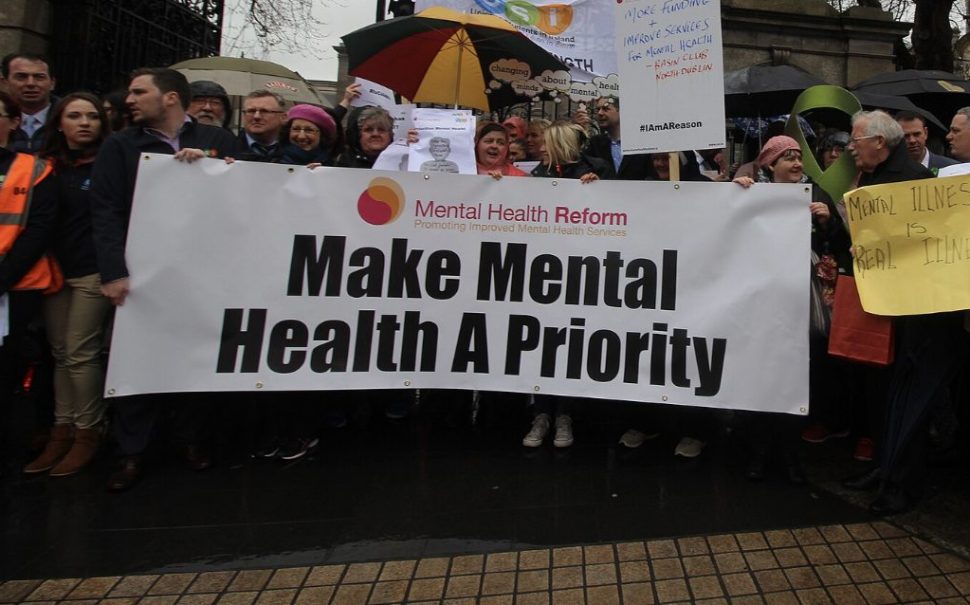
With mental health funding set to lose out on £137 million this year, young people will be among those hit hardest, experts have warned.
NHS guidance for 2026–2029 has introduced a ‘pause’ in the Mental Health Investment Standard (MHIS), a decade-old funding safeguard created to protect a parity of esteem between mental and physical health.
The policy pause has resulted in a £137 million loss for national mental-health support funding.
However, as the latest available data shows, over half a million under-18s in England will be on an NHS list awaiting mental health support, this ‘pause’ continues to garner significant controversy.
The most recent figures released by the NHS show 30,615 more children are being referred to mental health services every month than there were four years ago, an almost 40% increase from 2021.
GP Steph Nguyen said: “We’re seeing record numbers of young people needing mental health support.
“The figures are staggering, and will only get worse with this pause in the Mental Health Investment Standard.
“And what is truly worrying is that these figures do not even tell the full story – thousands of children struggling with their mental health don’t even get seen by a professional because they simply do not meet the threshold.”
In 2025, roughly 50% of referrals to Child and Adolescent Mental Health Services (CAMHS) were rejected because the young person ‘did not meet the threshold’ for care – even in cases of self-harm or suicidal ideation.
Layla*, 46, shared with the Londoners: “My daughter, 15, was rejected for not meeting the threshold for CAMHS treatment in July last year.
“She then experienced a psychotic break and was put on an NHS waiting list. She attempted suicide two months later, still on the wait-list.
“After it all, we were given the choice of either sectioning her, or taking her back home where she could attempt again.
“It’s a heart-breaking choice for any parent – and it’s not one we should have to make.
“So, when I hear about funding being cut, I just cannot describe my frustration – there’s already not enough doctors around to help kids seriously struggling with their mental health.”
Health Secretary Wes Streeting has previously defended the decision, claiming the proportion of mental health spending is ‘almost exactly the same as last year.’
However, while the proportion may not be outlandishly different, critics have maintained that the loss represents a significant depletion of frontline capacity, equivalent to the annual salaries of roughly 2,800 senior mental health nurses.
This cut to frontline services will also affect Early Support Hubs, where support for all 24 centrally-funded hubs in England is set to expire in March this year.
Thomas*, 17, who regularly attends group therapy sessions at an Early Support Hub in South Yorkshire told the Londoners: “I don’t know what I’ll do if I can’t come here anymore.
“I don’t think people realise the value of therapy, I don’t think people realise what a difference it can make.
“My family doesn’t have the money for us to get things like therapy privately, and getting to the top of a waiting-list here just seems impossible.
“But it looks like I’ll just have to hope for the best.”
A survey conducted by Youth Access found that half of these Early Support Hubs expect to close entirely due to the pause, with the remaining majority planning significant reductions in services.
While the government is working to launch replacement ‘Young Futures Hubs’, only eight pilot sites are scheduled to be active by March 2026, leaving a concerning geographical gap for thousands of young people who currently rely on existing hubs.
Tom Pollard, head of policy, public affairs and campaigns at Mind UK, said: “The Mental Health Investment Standard has been a key mechanism for addressing historic underinvestment in mental health services.
“The recent changes are extremely concerning and as a result, children, and young people’s mental health services, which we know are already overwhelmed, may struggle even more to keep up with demand.
“The government needs to show it is serious about mental health and bring government, the voluntary sector, frontline services and clinical leaders together to build a comprehensive plan to strengthen mental health services.”
Wes Streeting’s office were contacted for comment
*Names have been changed to protect anonymity
Featured image credit: Sinn Féin via Wikimedia Commons