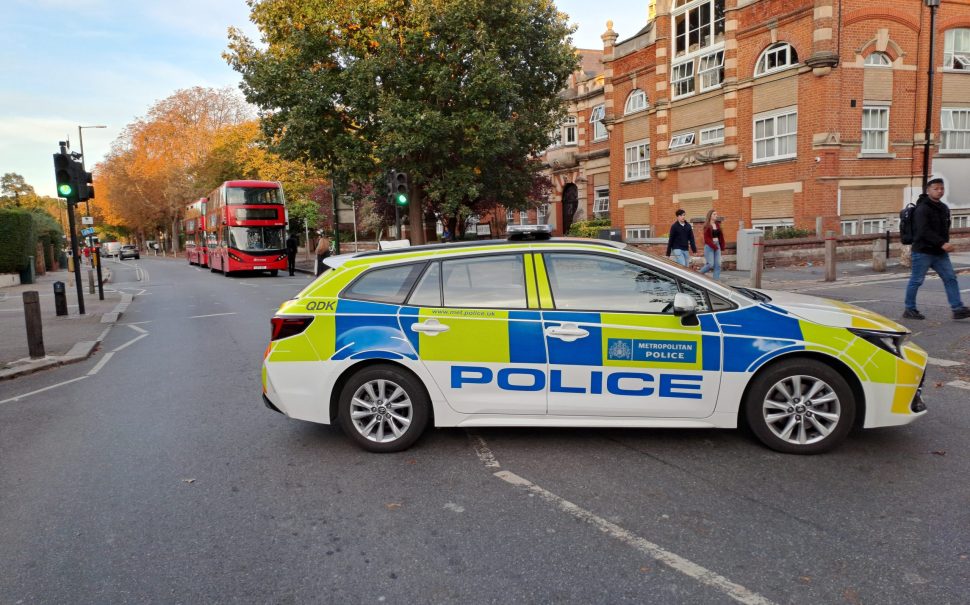
Metropolitan Police officers are using force on people with mental health concerns at the highest rate since the current recording system was introduced in 2017.
More than one in five recorded uses of force in 2024–25 involved a subject flagged by officers as having mental health concerns, according to data published by the Greater London Authority.
The trend has continued despite the introduction of the Right Care, Right Person framework, a national policy rolled out in 2023 to reduce police involvement in mental health crises except where there is an immediate risk to life.
Despite the policy’s aim, the proportion of Met use-of-force incidents involving people flagged with mental health concerns has risen year on year.
Gemma Byrne, a policy manager at Mind, the UK’s largest mental health charity, said the figures highlighted the risks of relying on police responses in situations rooted in health need rather than criminal behaviour.
Byrne said: “Use of force should always be a last resort, because it can be traumatic and can worsen distress rather than resolve it.”
She added that officers are often left with few alternatives when mental health services are unavailable.
Byrne said: “When community and crisis services are overstretched or inaccessible, officers are left with very limited options.”
The data also shows a sharp rise in cases where police use of force resulted in detention under the Mental Health Act, increasing from 3.2% of incidents in 2019-20 to 5.9% in 2024-25, an increase of more than 80%.
Arabella Kyprianides, a senior research fellow at University College London who specialises in policing and mental health, said the trend reflected systemic pressures rather than changes in the behaviour of people experiencing crisis.
Kyprianides said: “This is not a story about more dangerous people, but about police increasingly becoming default crisis responders as mental health services withdraw.”
She said mental health crises are typically characterised by fear, confusion and loss of control, while policing environments are shaped by authority, urgency and coercive legal powers — a combination that increases the risk of escalation.
Kyprianides said: “When you put heightened distress together with power imbalance and enforcement, it creates a higher likelihood of force, even when officers are acting professionally.”
Overall use of force by the Met has fallen in recent years, peaking during the pandemic in 2020–21 at more than 178,000 recorded entries, before dropping by almost 40% to just over 110,000 in 2024–25.
While force is being used less frequently overall, a growing share of those encounters involve people experiencing mental health distress.
Byrne said restraint during a crisis can be particularly damaging for people with previous experiences of trauma or abuse, even when no lasting physical injury occurs.
Byrne said: “Being restrained during a mental health crisis can be frightening and re-traumatising, especially for people with previous experiences of abuse or coercion.”
For some Londoners, police involvement during a mental health crisis can intensify distress rather than reduce it.
An anonymous woman who experienced police intervention during a mental health crisis said being surrounded by officers worsened her condition rather than helping to stabilise it.
She said: “Having multiple male officers around me in a small space felt threatening rather than supportive, and made my distress much worse.”
She added that she was already experiencing suicidal thoughts when police arrived, and felt the situation escalated because she no longer felt safe.
She was detained under Section 136 of the Mental Health Act and taken to the hospital after a friend contacted emergency services out of concern for her safety.
For others, police presence can carry an emotional weight even when no physical force is used.
Chris, 29, who has experienced police involvement during Mental Health Act admissions, said officers often struggled to understand his condition during periods of acute distress.
Chris said: “It’s very hard to explain what’s going on when you’re in crisis. They are obviously stretched, but it felt like they didn’t really understand my condition at the time.”
Westminster recorded the highest number of use-of-force incidents overall, reflecting its size and footfall, while the highest proportions involving mental health concerns were recorded in Richmond upon Thames, Hounslow, Wandsworth and Islington.
The figures also show an increase in Taser involvement, with 6.12% of use-of-force records in 2024–25 involving a Taser being drawn, aimed or discharged, with higher usage in incidents flagged with mental health concerns.
Kyprianides said the rise in force should not be interpreted as a failure of individual officers, but as evidence of wider structural gaps in crisis provision.
Kyprianides said: “Police are not mental health specialists, but they are always available.”
She added that responsibility does not disappear when health services are unable to respond, but instead shifts to policing by default.
Kyprianides said policies such as Right Care, Right Person have exposed long-standing weaknesses rather than creating new problems.
Kyprianides said: “The policy didn’t cause these problems, but it has made visible failures in mental health provision that existed long before it was introduced.”
Byrne said the focus must now move beyond data collection to meaningful change.
Byrne said: “If we are collecting this data and seeing a concerning trend, we need to ask what is being done about it.”
The Metropolitan Police were approached for comment and confirmed receipt of the findings, but did not provide a response.
Featured image credit: Amelie Claydon