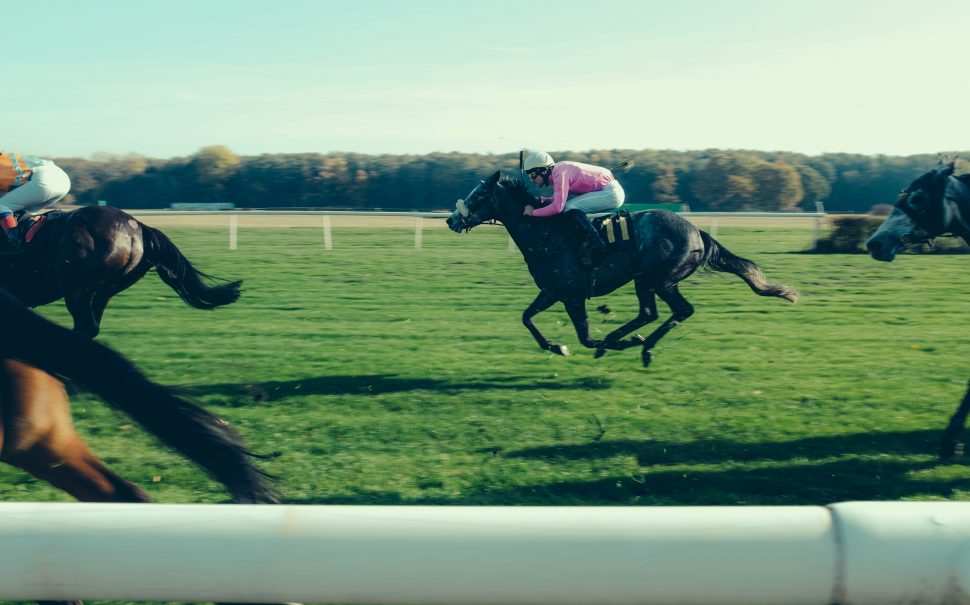
Some horses turn up at the big festivals, run their race, and never quite fire in that company again.
Others return year after year and deliver at the highest level, regardless of who lines up against them.
The difference between the two is rarely as simple as raw ability.
With the summer festivals approaching, it’s a question that shapes how punters and professionals alike approach the card.
Whether you’re studying the form or looking at the fancies from today’s racing action, understanding what separates a festival horse from a one-off performer is one of the more useful things you can carry into a raceday.
It comes down to several factors, most of which never appear on the racecard. Here’s what to look for.
Course suitability runs deeper than you’d think
Every major festival has a track profile that suits certain types of horse and exposes others.
Cheltenham’s undulating climb to the finish line rewards stamina and jumping accuracy.
Ascot’s straight course advantages horses with a high cruising speed.
Goodwood’s sweeping bend and camber filter out horses that don’t handle undulation well.
A horse that has won at a track before is not simply ‘course form’. It’s evidence that their physical make-up handles those specific demands.
Stradivarius won the Goodwood Cup four times between 2018 and 2021, and each victory made the next one more likely, because the track never stopped suiting him.
Big-field experience
Festival races are not like midweek handicaps.
Fields are often larger, pace judgement is harder, and horses that lack the temperament to race in traffic tend to get swallowed up in the straight.
Horses that have navigated busy fields before, and shown the ability to find gaps or race wide without losing ground, carry a clear advantage when the draws are tight and the crowds are loud.
Temperament is a significant part of this.
A horse that settles well in a large group and travels without pulling can make a move at the right time.
One that fights its jockey for the first mile often has nothing left when the race begins in earnest.
Ground versatility
The British and Irish summer can do almost anything.
The going for the 2026 Epsom Derby went from firmer conditions to good to soft in the build-up after 20mm of rain.
A horse that can only operate on fast ground, or only on soft, is inherently at the mercy of the weather forecast.
The horses that return to festivals most reliably tend to handle a range of conditions.
It’s not about a horse performing identically across all surfaces. It’s about them having enough physical resilience to run their race even when conditions shift slightly away from their ideal.
Trainers know which horses have that adaptability. The form book shows it clearly enough if you look for it across several runs.
How they peak through a season
The best festival performers are rarely flat-out from January.
Trainers who place their horses well build towards a peak, running them through conditions races or minor Group races to sharpen them up without over-exposing them.
When they arrive at the festival, they’re at the top of their form rather than the tail end of it.
Aidan O’Brien’s Ballydoyle operation, for example, has used the Curragh and Leopardstown prep routes for decades to time its Group 1 horses to peak in June and July.
Charlie Appleby’s Godolphin runners often follow a similar pattern through the Dubai spring season before arriving at Ascot with several race-fit runs behind them.
Distance accuracy
Festival races are run at fixed distances, and the best horses for those races tend to be horses whose optimum trip falls almost exactly on that distance.
A horse that’s slightly too short for two miles or not quite stamping out a mile and six furlongs might win once, but it rarely repeats at the same track because the margin for error is so small at the top level.
When you see a horse return to a festival and win a second or third time, the distance is almost always one of the reasons why.
They’re not just good horses. They’re good horses at the right trip, on the right track, at the right time of year.
Feature image: Free to use from Unsplash