
Ten years on from the Brexit referendum, state school language study at GCSE level has fallen by 8%, analysis of Department of Education data has shown.
The legislative aftermath of the vote exacerbated the maelstrom of problems schools face, such as difficulties in recruiting teachers, inadequate funding, and student apathy towards taking foreign languages.
Between the 2015/16 and 2024/25 academic years, around 25,000 fewer students have sat foreign language GCSE exams, but this period has also seen a greater concentration in high attainment, with approximately 30% more of the highest grades being achieved (A* or 9 respectively).
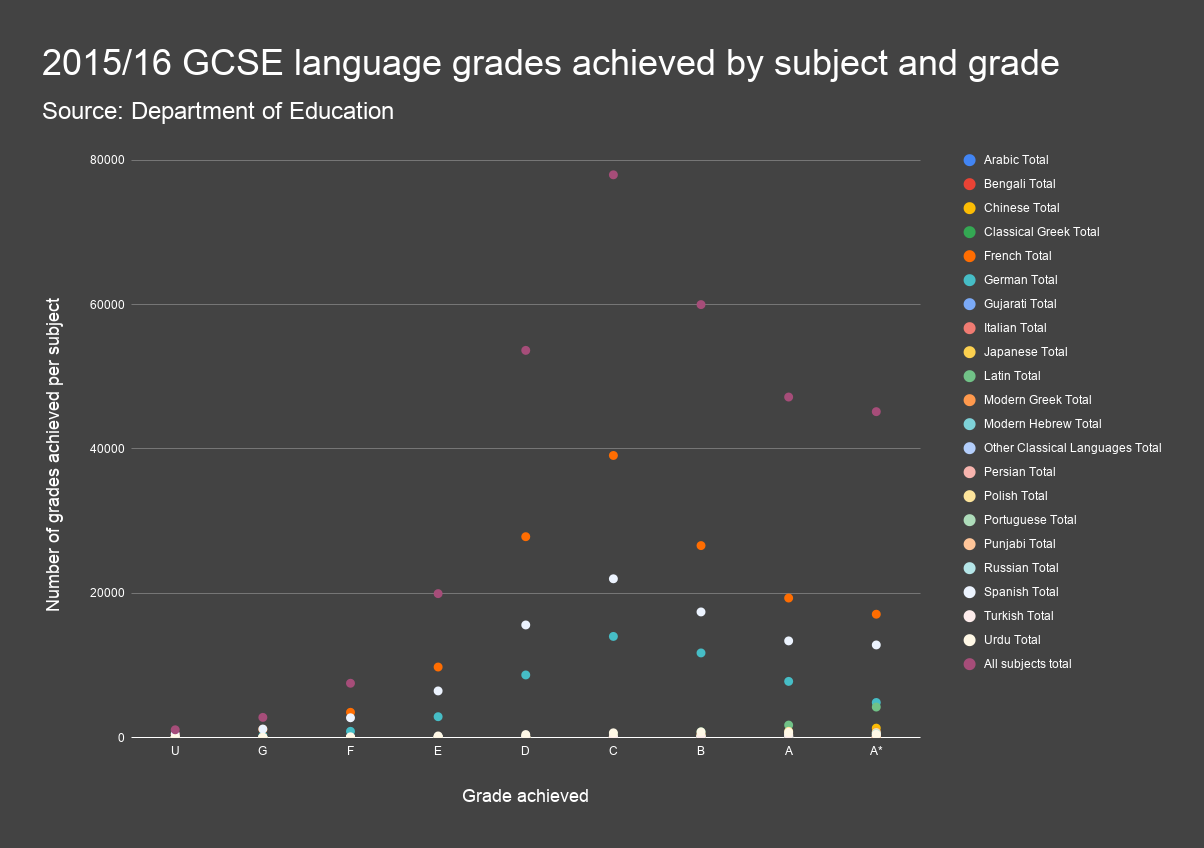
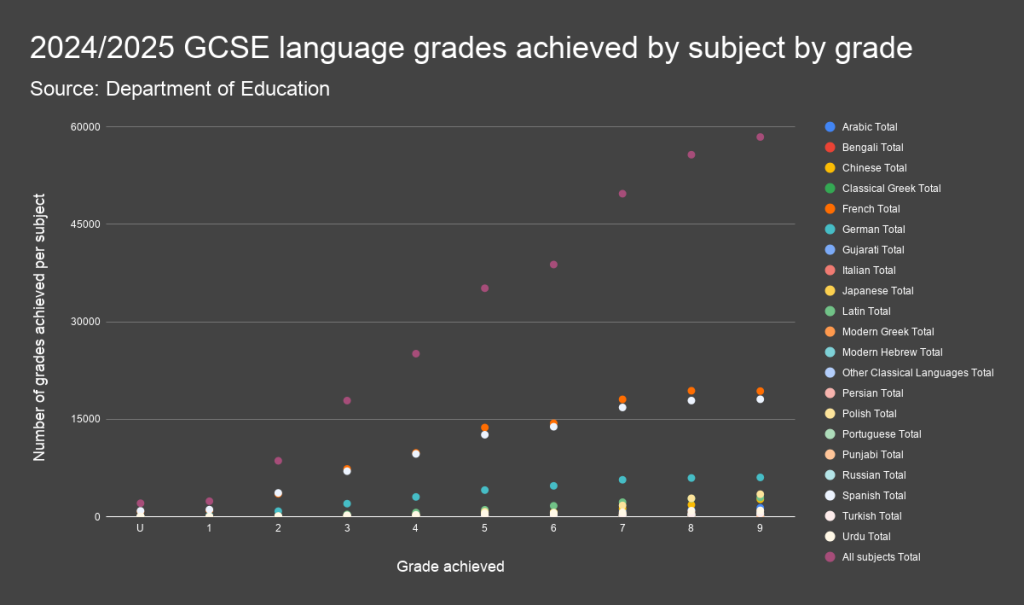
British Council Modern Foreign Language lead Vicky Gough noted less enthusiasm for language GCSEs, and the fact teacher shortages have fallen into a vicious cycle of decline, are two main reasons for the decrease in participation.
She said: “When we voted to leave the European Union, anecdotally, lots of students’ response was ‘I don’t have to learn languages anymore, so I won’t bother’.
“If we’ve had more people doing GCSEs, we’d have more doing A-levels, we’d have more going into university, and more going into teacher training.
“But as the number has declined, the numbers of home grown students have gone down.”
The number of entrants into postgraduate initial teacher training have recently been far from meeting targets set by the government each year, and while numbers in 2025/26 are actually higher than ten years ago, other means of recruiting foreign language teachers have been impeded by Brexit.
“We’ve needed to look overseas to recruit those language teachers, and often it can be really great having a native speaker in the classroom that can bring cultural knowledge,” Gough continued.
“But first of all, if they want to train here, they have to pay overseas students fees, and then it might be very difficult for them to get a visa to get a job in a school.
“Visa issues have made it very difficult for schools to employ people who don’t have right to remain.”
The post-Brexit incentives and opportunities for non-UK teachers to find employment have vacillated. As of May, initial teacher training (ITT) bursaries for the next academic year will only be available to those eligible for student finance, excluding many foreign teachers.
Additionally, the international relocation payment scheme, which gave eligible non-UK teachers a £10,000 payment towards visas and other costs, ended at the end of May.
A 2025 report by the Higher Education Policy Institute showed the the percentage of Year 11 pupils studying a language for GCSE was 20 percentage points lower in poorer areas than affluent ones, and with visa sponsorship seemingly the only remaining viable option to fill the gap in recruitment, this could make the discrepancy worse.
In a 2024 parliamentary report, the Education Secretary was said to have “reassured [the education committee] of the importance of international recruitment to the Department for Education, as well as the potential to integrate international schemes into the recruitment and retention strategy.”
Another economically significant trend is the downturn in German GCSEs being sat, as German is widely reported as the most economically valuable language for Britons to be able to speak.
As schools across the country reduce language provisions as a cost-cutting measure, German is often the subject that is cut in favour of its more popular counterparts, Spanish and French.
“We know that in some schools they’ve gone down from teaching three languages to two, or two languages to one, narrowing it down to save money and to consolidate low numbers,” Gough said.
“German is the language that they have dropped in schools, and you can see the numbers speak for themselves.”
In the last nine years, the number has reduced by around 19,000 students, as the subject remains the third most-popular behind Spanish and French, but has progressively lagged behind.
She continued: “There’s a perception that German is very difficult, and only the brightest will be able to learn German because it’s much more challenging for pupils.
“I think languages are perceived as being difficult and challenging, and in some schools, children are withdrawn from languages to concentrate on other subjects”
-Vicky Gough, British Council Modern Foreign Language Lead
However, experts are hopeful the UK’s return to the Erasmus+ scheme in 2027 will reinvigorate excitement in students to learn languages, as it may encourage more schools to establish partnerships with schools abroad.
Gough said: “Post-Covid and post-Brexit, there are far fewer schools with school partnerships, doing international activities with schools in other countries.
“Now we’re going back into Erasmus+, we are hopeful more pupils will have an international, intercultural experience, and hopefully that will provide additional motivation for language learning.
“When I did my school exchange at 12 or 13, it really brought language learning to life.”
Featured image credit: Louis Greaves