
The Westminster City Council leader has called for on-the-spot fines to tackle unlicensed street fundraisers amid concerns of pedestrians being intimidated across central London.
In a letter to Culture Minister Stephanie Peacock, Paul Swaddle urged ministers to overhaul century-old legislation under which unlicensed street collectors face maximum fines of £200.
Swaddle said he was raising “serious concerns on behalf of Westminster residents regarding the aggressive tactics being deployed by unlicensed charitable street collectors across our borough.”
The Fundraising Regulator said it was “aware of and acting on the growing incidence of poor fundraising practices” carried out by some Community Interest Companies (CICs).
CICs are companies established to benefit the community, but they are not necessarily registered charities.
A spokesperson from the Fundraising Regulator said: “While most CICs are well-run and bring social benefit, some have exploited outdated legislation to engage in poor fundraising practice.”
Westminster council’s intervention follows a Fundraising Regulator investigation into two CICs, Atoma Union and Youth Works Union, which found evidence of unlicensed collections and undue pressure on members of the public.
The Fundraising Regulator received complaints of verbal and physical altercations involving collectors representing the two organisations between May and December 2024.
Both Atoma Union and Youth Works Union had dissolved by the time the regulator concluded its investigation.
Swaddle warned that aggressive collectors were targeting pedestrians around Victoria and Marylebone stations and across the West End.
One London council reported seeing groups of five to ten collectors following pedestrians outside Farringdon station, while another identified unauthorised fundraising in Covent Garden, according to The Fundraising Regulator.
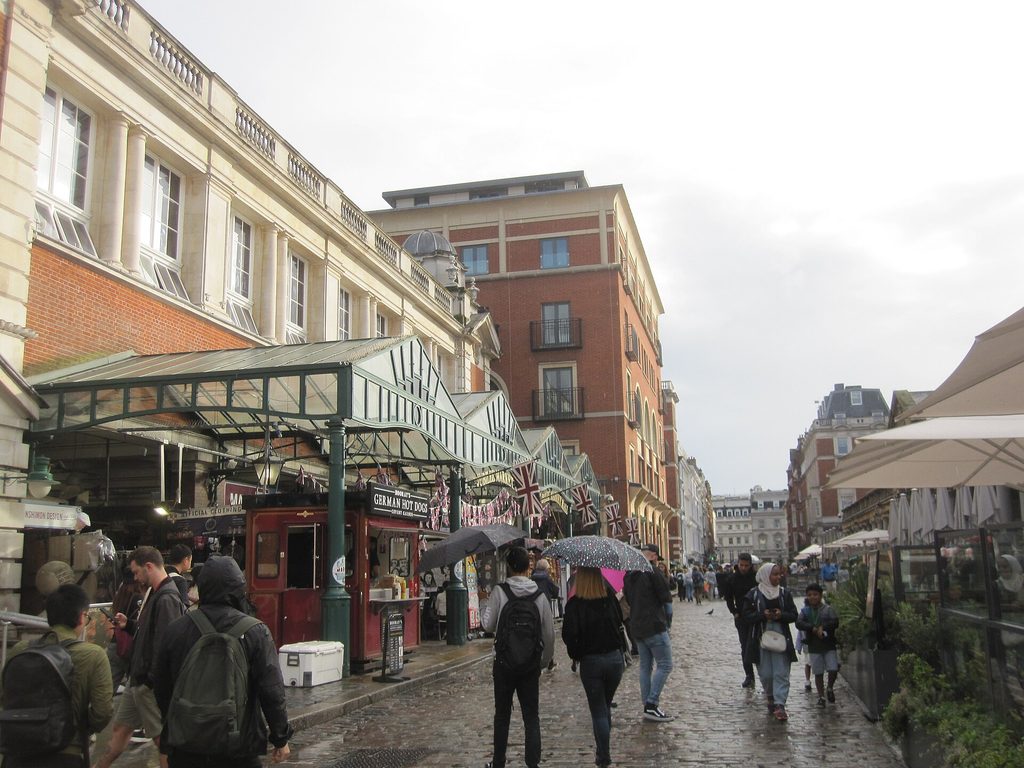
WEST END CONCERNS: Covent Garden was among the locations identified in a Fundraising Regulator investigation into unlicensed street collections. Image credit: DiscoA340 on Wikimedia Commons
In the letter, Swaddle accused some collectors of “preying on the good will of our residents and visitors” by raising money for emotive causes like veterans’ support and rough sleeping.
He also warned that donations to some CICs could go towards “paying director’s salaries rather than directly to the cause they are purporting to support.”
Street collections are governed by Section 5 of the Police, Factories &c. (Miscellaneous Provisions) Act 1916, which gives licensing authorities powers to regulate public collections for charitable purposes.
Currently, if an organisation breaks the rules, the licensing authority must gather evidence of the offence and then go through the courts to secure a fine.
The Fundraising Regulator described this as “cost-prohibitive and time-consuming”.
It added: “This has led to a rise in unlicensed charitable street collections, often conducted by non-charities.”
Swaddle said licensing authorities “should have the ability to issue Fixed Penalty Notices when CICs are caught operating without a licence.”
He added that Westminster officers had resorted to using other legislation, including anti-social behaviour powers, but that this approach had seen “limited success”.
The council also wants stronger protections for businesses whose premises are used by unauthorised collectors.
The Fundraising Regulator said it had convened a group of regulators, police and licensing authorities to address the problem and protect the public from unlicensed collections.
A spokesperson for the Department for Culture, Media and Sport (DCMS) said: “We are looking closely at the concerns raised by the Fundraising Regulator and working group in their letter, and will continue to engage with the Fundraising Regulator on their proposals.”
The department said it supported action against fraudulent collections, but did not say whether it would consider changing the legislation or introducing fixed-penalty notices.
Featured image: David Martin on Geograph




_08.jpg)

Join the discussion