Those receiving free school meals (FSM) in London are likely to score 12 points lower than their peers on their GCSEs, new data from the Department of Education has revealed.
According to city-wide “Attainment 8” results, a measure showing average academic performance across eight government-approved GCSE subjects, the disparity between students varies wildly per borough.
Schools across the city may also be missing out on key funding to close the attainment gap between disadvantaged students and their classmates as students qualifying for FSM go unregistered.
Lucy Roebuck, a teacher at a Tower Hamlets school said: “It’s really quite sad. How are you able to understand their home life?
“It’s hard to know just from a statistic of ‘this child is on free school meals’ what that actually translates to in their home life, unless they tell you.
“Especially in the afternoon, I notice more concentration for students across the board – it might sound silly, but it also helps with sitting down together and having the time to socialise.”
While the city-wide average between the years hasn’t changed, individual boroughs saw upwards shifts in their results between 2024 and 2025.
Richmond upon Thames saw a three point increase in the results of students on FSM, while Lewisham saw a two point increase of those not receiving FSM.
However, there’s a correlation far more pressing than change over time – that being a link between boroughs with a minimal difference in results, and the poorest places in the country.
Tower Hamlets, which according to the Trust For London has more than half of children in child poverty after housing costs, only saw a four point difference between the GCSE results of those receiving FSM versus those who aren’t.
This is minimal compared to places like Bromley and Havering, which respectively saw an 18 point and 15 point difference in their scores.
Seb Kobler, another teacher based in Tower Hamlets, linked the minimal difference in scores to the borough’s poverty and high percentage of children receiving FSM.
Kobler said: “I think it’s all about a correlation between poverty and a lack of ability for parents to offer support to their children in the same way that a child coming from a wealthier family maybe would experience.
“Every person, every student, is different. But if they are on free school meals, if they are from a disadvantaged background, then homework might not be the first priority for them or their family.”
Within schools, if a child is recorded as eligible for FSM at any point in the past six years, they qualify for “Pupil Premium Funding” (PPF).
This is a government stipend of more than £1000, not necessarily spent on the child who qualifies for PPF, which aims to close the attainment gap between students and non disadvantaged students.
As a result, students who are eligible for FSM are a key group for schools to index, but Roebuck argues in many cases pupils who would qualify for FSM aren’t registered.
This is either due to worries of being singled out as a child on FSM, or their parents not putting them forwards despite qualifying – regardless, key PPF money is being lost.
This not only negatively impacts the pupil not registered for FSM, but the remainder of that money also doesn’t reach other pupils who could benefit from it.
In this respect, the amount of children on FSM and their correlating GCSE results is only an indicator of the much larger problem of how schools like Kobler’s prevent pupils slipping through the bureaucratic cracks, especially when there is government funding potentially available to them.
Kobler said: “My school has roughly 60% of students who are eligible for pupil premium funding, so 60% are classed as disadvantaged by the government.”
According to last year’s report from the Social Mobility Commission, by GCSE age, the attainment gap between disadvantaged pupils and their peers is equivalent to 19 months of development.
Only 26% of disadvantaged pupils achieve above a grade five in English and maths, nearly 30% lower than the result when all students are taken into account.
Regardless, both added that being an adult that these pupils can rely on is one of the main motivations for teaching, despite the concerns these figures raised.
Roebuck said: “I know that GCSEs are really difficult and high-stress for them, especially if they’re going home to quite challenging environments, but it’s nice to be able to offer them support that maybe some of them are not receiving at home.
“I know that for lots of them their parents don’t understand how serious the exams are.”
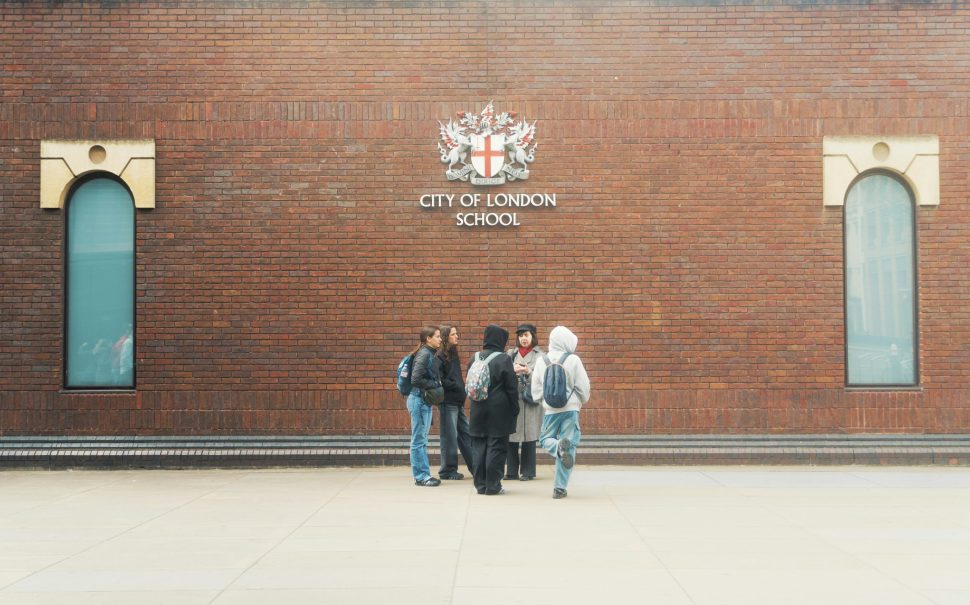
Featured image credit – Youssef Mubarak on Unsplash