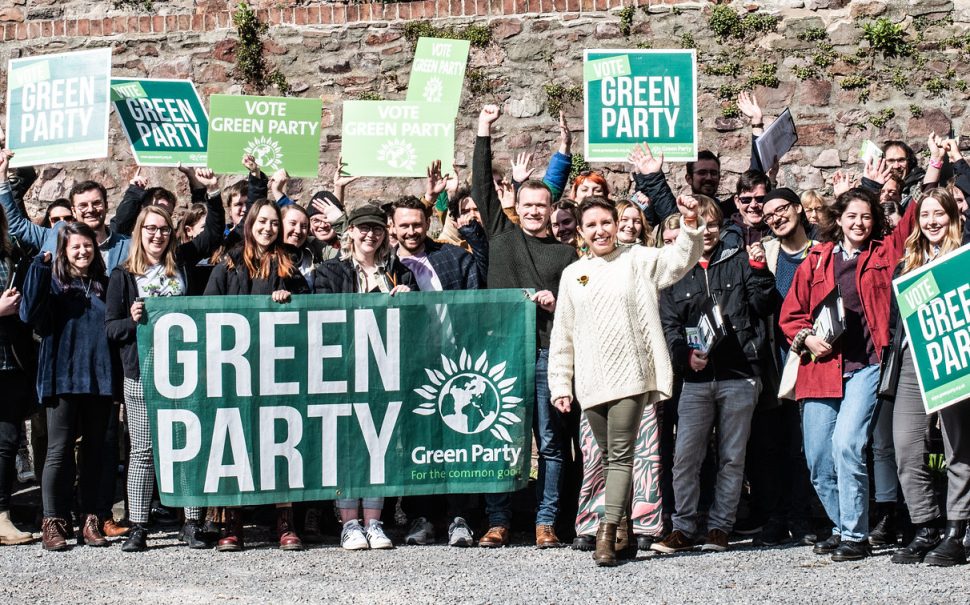
With the Greens emerging as the third-largest political party in the United Kingdom as of this morning, Polanski’s surge in popularity has seen the drug policing debate return to the forefront of British discourse.
Although the Greens’ manifesto outlines a plan for the regulated sale of all drugs, changes to current policing is broadly seen as the first step.
However, as the latest available data from the Office of National Statistics shows, drug-misuse mortality has almost doubled over the past 20 years, with the number of drug-related deaths in London reaching an all-time high.
Green Party policy on drug legalisation has therefore garnered significant controversy.
Zoë Garbett, a Green Party representative at the London Assembly, said: “Legalising drugs – it is all about getting control of an out-of-control drug market.
“Currently we have a system where people can profit off of organised crime, off of exploiting people in vulnerable situations, off of cutting substances with nitazenes that can be sold to anyone.
“This is about keeping people alive.”
The figures show that drug deaths have risen in nearly every London borough, with just over half experiencing twice as many fatalities as they did 20 years ago.
In spite of this, drug policing remains concentrated within London’s inner boroughs with the majority of possession charges being recorded in Westminster, Newham, and Tower Hamlets.
Despite other outer-London boroughs witnessing far sharper rises in drug-related deaths, they have not seen an increase in policing.
For example, Sutton’s drug-poisoning death rate is now more than ten times what it was in 2004, yet possession charges in the area remain relatively low.
These disparities have led critics to question why drug policing fails to reflect the increases in drug use over the city.
Despite the Metropolitan Police maintaining these statistics are driven by these boroughs containing major rail stations, commercial districts, or a burgeoning night-life — and therefore naturally demand a higher level of policing — critics cite racial biases as an equally prevalent factor in drug enforcement.
Borough-level figures show no meaningful relationship between overall ethnic diversity and drug-misuse mortality, considering highly diverse boroughs like Newham, Brent, and Redbridge sit in the middle or lower end of the harm spectrum.
A study conducted by the Mayor’s Office for Crime and Policing emphasised that race has a definitive impact on drug policing.
Data in the study highlighted young Black people are disproportionately policed, humiliated, and made subject to strip-searches under the pretext of narcotics enforcement.
Research conducted by The Londoners showed Black people are more than four times more likely to experience being stopped and searched than white people, in spite of data released by University College London highlighting that white teenagers are twice as likely to engage in recreational drug-taking compared to their ethnic minority counterparts.
The discrepancy between who uses drugs and who is policed for them, is one of the clearest indicators of discrimination in current approaches to drug-policing.
Charissa Thomas, project manager at UNJUST UK shared that more than 90% of stop and search cases she witnesses in her work have been conducted on Black people.
She said: “The narrative we’re working with is flawed – drug searches are often justified on the grounds of public safety, but they continue to be concentrated in poorer, more diverse areas, particularly in London.
“Black people are made subject to intrusive policing at a much higher rate, with little proven impact on reducing harm.”
Garbett also emphasised this: “We’ve had the same approach for 50 years, and it’s just not working.
“It not only unfairly shackles young, often Black men with criminal records, but it costs us so much — what’s the point in that?”
Nationally, government evaluations have put drug-law-enforcement spending in the billions, with individual crackdowns such as Operation Orochi having received £12.8 million this year alone.
Despite this investment, key indicators have continued to worsen.
Meanwhile, new analyses suggest alternative approaches could deliver far greater social value.
The London Drugs Commission 2025 report emphasises that the legalisation of marijuana alone would generate an annual tax revenue exceeding £1 billion, and would save the NHS an estimated £300 million.
The Green Party’s calls for the legalisation of all drugs, including class A drugs like heroin and crack cocaine, which would culminate in a complete policy U-turn.
Garbett said: “It is time for a change, because on any measure of seeing if our drug policy is a success, it has absolutely failed — it’s expensive, it’s discriminatory, and on top of it all, more and more people are dying — it’s ineffective.
“I think it’s now a moral failure not to take a different approach.”
Feature image credit: Matthew Phillip Long via Flickr