Children in the poorest parts of London are almost twice as likely to be obese than those in the richest areas, according to the latest government data.
Children in Newham, one of London’s most deprived boroughs, are almost twice as likely to be overweight or obese as those in Richmond upon Thames, which has the lowest levels of relative poverty at just 6%.
Notably, Richmond’s 25.1% — the lowest rate — still means no borough has fewer than one in four children who are overweight or obese
Factors contributing to child obesity are complex, but experts widely cite poverty as the leading cause.
Jonathan Wallcroft is the Senior Public Affairs and Research Officer at FareShare UK, an organisation which tackles hunger, food waste, and redistributes surplus food to those in need.
He said: “Poverty is absolutely the root cause of many of the issues we see.
“Most people are working multiple jobs and still cannot afford to feed their families sufficiently.
“The cheapest and easiest food options are often the unhealthiest.
“Soaring energy bills, mental ill health, and domestic violence can all be contributory factors too — the picture is complex.
“The problem is less that people don’t know how to cook, but more about not having a cooker in the first place.”
The organisation has its largest hub in Tower Hamlets and delivers to 273 locations within the borough, working alongside the local council.
Tower Hamlets faces significant challenges, with 43.1% of children overweight or obese and relative poverty rates close to 30%.
Kingston upon Thames, meanwhile, maintains the second-lowest rates after Richmond at just 29.5%.
But recent government measures could improve access to healthy food for 500,000 children.
In June, the government announced that from September 2026, any child in England whose parents receive Universal Credit will be eligible for free school meals.
Additionally, the Health Secretary Wes Streeting announced the government will be extending the soft drinks levy to cover milk-based sugary drinks in an attempt to give children a healthier start in life and take pressure off the NHS.
The government will also scrap the two-child benefit cap in full from next April, which the Child Poverty Action Group says will lift 350,000 children out of poverty.
Stephanie Slater MBE, Founder and CEO of School Food Matters, said: “Research highlights the stark inequalities faced by children in low-income households and shows how interventions like universal free school meals in London primary schools can make a real difference.
“For example, analysis from the University of Essex, of London borough-level data, indicates that younger children have seen reductions in obesity of up to 11%.
“The recent extension of free school meals to include families on Universal Credit and the roll-out of free breakfast clubs in primary schools is genuine progress.”
But housing instability is also blamed, with chronic shortages of affordable homes worsened by London’s erratic property market.
Andrew Boff has served as a London-wide Assembly Member since 2008 and is a member of both the health and housing committees.
He said: “Money that could support fresh, nutritious food and healthy activities is instead swallowed by the housing crisis.
“Families pushed into temporary accommodation or poor-quality private rented homes often lack adequate cooking facilities, safe outside space, or proximity to parks.
“These households are more likely to live in areas with high densities of fast-food outlets and fewer opportunities for active travel.
“The GLA’s failure to meet its own housing targets therefore has public-health implications.
“Until London’s housing shortage is addressed, childhood obesity will remain an entrenched inequality.”
A report was commissioned by the London Assembly Health Committee in March 2024 and the recommendations are clear.
It points to evidence that free school meals directly reduce childhood obesity rates and warns of the increase in likelihood that obese children will remain obese into adolescence and adulthood.
Other recommendations look to tackle fast-food advertising, unhealthy food retailers in TFL premises, and applying healthy food standards for free school meals.
But without urgent intervention, the link between poverty and childhood obesity threatens to further entrench health inequalities across London.
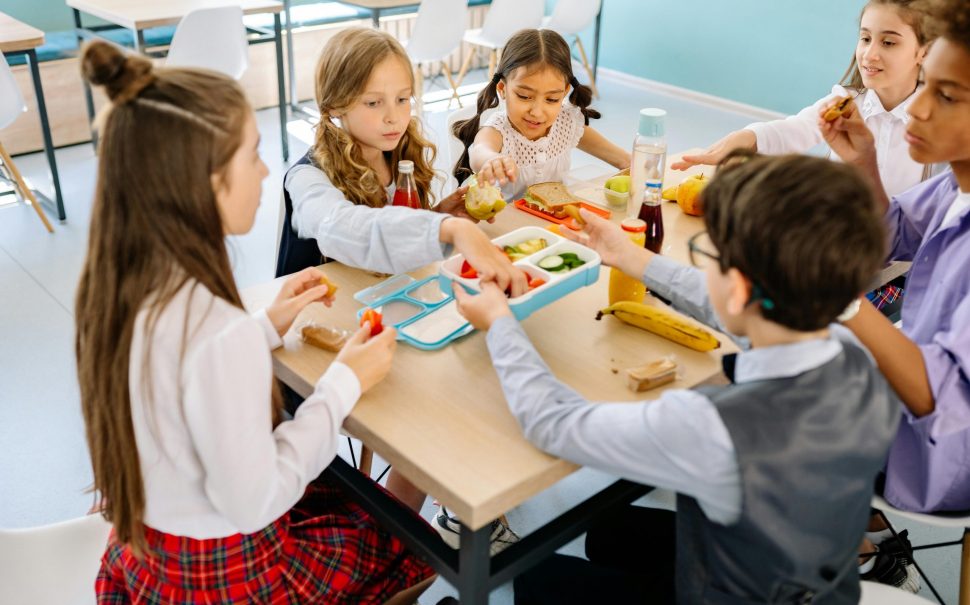
Featured image: Children eating school lunch. Credit: Yan Krukau, Pexels