
Domestic-abuse campaigners are calling on Ofcom and the government to better protect women and girls from extensive tech-enabled violence and abuse online.
A joint report by Refuge and The End Violence Against Women Coalition (EVAW) found a third of women in the UK have experienced some form of online violence or abuse.
The report published last week raised serious concerns about the safety of AI technologies, showing 1 in 6 women aged 16-24 have received inappropriate, unhealthy or unsafe advice from an AI technology on dating, sex and relationships.
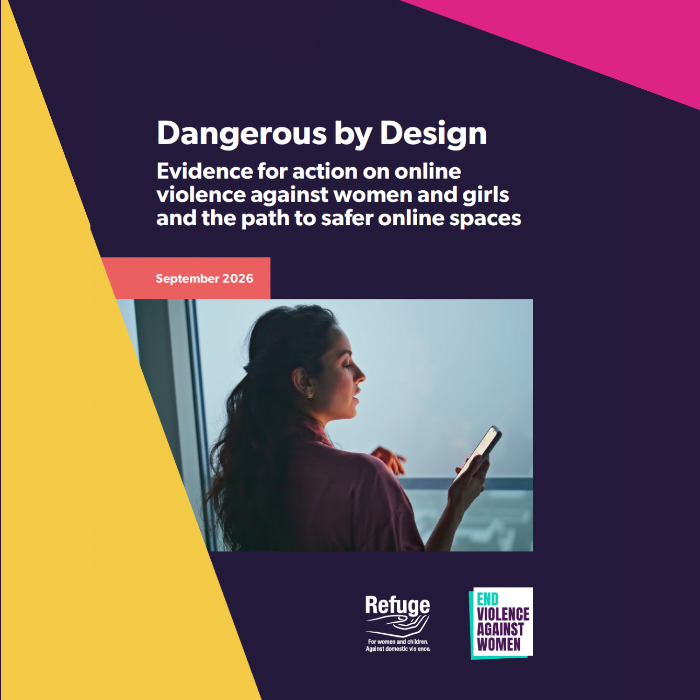
Last year Ofcom published voluntary best practice for technology companies to make platforms safer for women but, following their report’s findings, Refuge and EVAW are urging the government to make this guidance legally enforceable.
Gemma Sherrington, CEO of Refuge, said: “Voluntary guidance lacks the force needed to address the shocking levels of abuse and violence faced by women and girls online every day.
“Our report testifies to this, shining a light on the sheer scale of harm that women in this country are experiencing and the lack of confidence they have in tech companies, the criminal justice system, and policymakers to protect them.”
Of the 2000 UK women surveyed in the report, two thirds were concerned that AI enables abuse and violence against them, and the same proportion were not confident that the government is doing enough to regulate AI to protect women’s safety.
The report comes after the Mayor of London, Sadiq Khan, created a £6million fund to support victims of tech-enabled violence against women and girls (VAWG) in May this year, investing £318million to tackle VAWG since taking office.
Khan said: “Tech-enabled Violence Against Women and Girls is a global emergency, it transcends borders.
“It is turning doorbell cameras, social media, sunglasses and mobile phones into weapons used by perpetrators to target, harass and abuse in the digital age.”
Tara Steele, director of the Safe AI for children alliance, agreed AI regulation must go much further, citing there is little that women and girls can do themselves.
“Parental controls cannot prevent someone else from using a girl’s photograph to create sexualised images of her,” Steele said.
“Companies need to account for what their systems generate, encourage, and imply, as well as what a user directs them to do – they need to prevent the creation of sexualised images of children at source.”
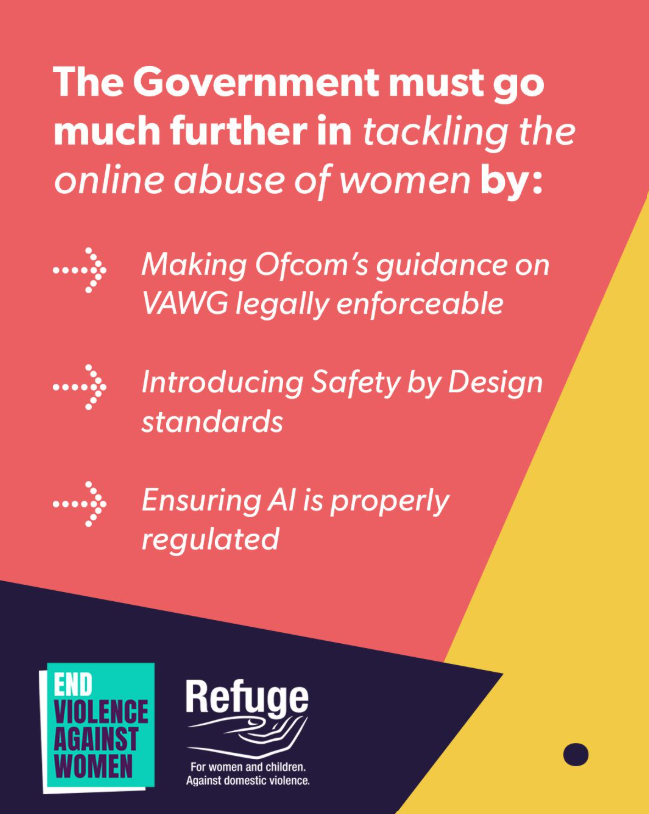
Ofcom launched a call for evidence in September to determine whether online companies have adopted their guidance, a Safer Life Online for Women and Girls.
An Ofcom spokesperson said: “We’re currently gathering evidence from, academics, survivor and victim support groups, to inform a report on the rate of progress made by the industry in reducing online harms to women and girls.”
Under the Online Safety Act, online platforms must remove illegal content such as intimate abuse imagery or face fines equivalent to 10% of the companies’ qualifying worldwide revenues or £18million, whichever is greater.
Although Ofcom can make formal recommendations to Government to strengthen the Online Safety Act, only government and parliament can make the guidance legally binding.
A government spokesperson said: “Tech companies must use the tools at their disposal to protect women, or they’re complicit in normalising abuse against women and girls online.
“This report lays bare the scale of the problem, and it is totally unacceptable.
“There is, clearly, more to do.”
Responses to Ofcom’s call for evidence can be submitted using this response form until 5pm on 4 November 2026.
For support with tech-facilitated abuse, visit www.refugetechsafety.org.
Featured image credit: Adobe Stock images