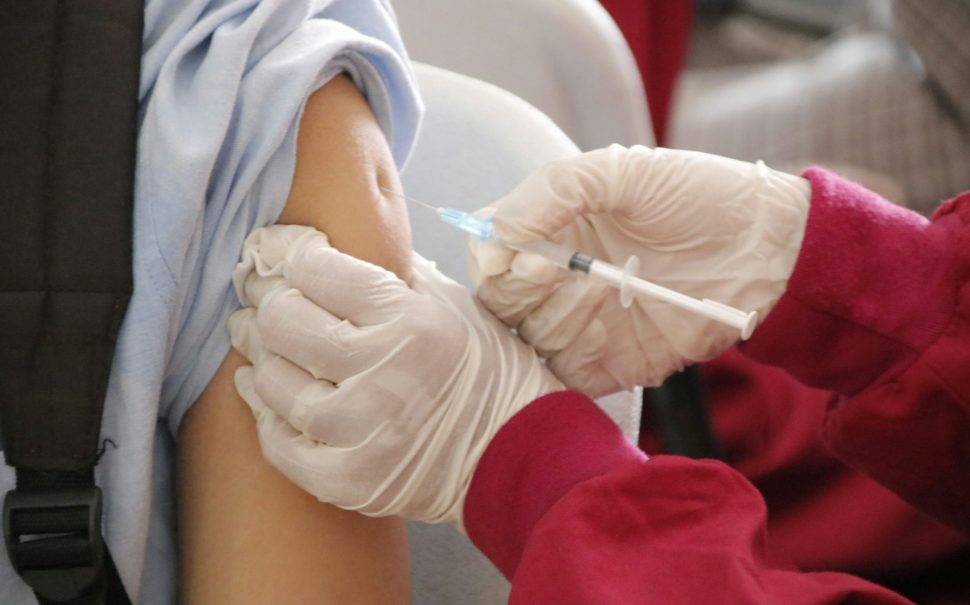
National uptake of the MMR vaccine has fallen well below the 95% needed for herd immunity, and in London, coverage is even worse.
Just 73% of children in the capital are fully vaccinated with two doses of the MMR vaccine by age five, compared to 85% nationally, leaving large numbers vulnerable to preventable disease.
London consistently underperforms, with the ten lowest-performing local authorities for first-dose (primary vaccination) MMR coverage all in the capital.
Some London boroughs record even lower second-dose coverage, with the weakest areas reporting rates around the 60% mark.
Hackney is the worst, sitting at 60.8% for full immunisation by the fifth birthday, meaning more four in ten children are not protected against measles, mumps and rubella.
This kind of clustering effect in low uptake communities, with a nearly 26 percentage point difference between the best and worst areas, allows for what experts call “immunity gaps”, leading to localised outbreaks, which can drive larger, national outbreaks.
Dr Matt Tse, a GP in Hackney, said: “A couple of years ago, we had a measles outbreak in the UK, and already this year hundreds of measles cases have been reported – which is a shame, when this is a disease which we had thought we might eradicate in this country.
“The parents I work with consistently cite the things they’ve seen online as the reason they’re worried about vaccination. Often, when presented with the facts, they do change their minds and get their kids immunised, but not always.”
He added it is increasingly recognised that convenience plays a role in whether children receive both doses of the MMR vaccine as families juggling multiple commitments struggle to prioritise follow‑up appointments even if not vaccine sceptics.
Bringing services closer to communities, through schools and pop‑up clinics, can significantly improve uptake.
But Dr Tse stressed that the way information about vaccinations circulates is one of the key factors driving the decline.
Parents are often exposed to a constant flow of health content online, where unverified claims can spread quickly and appear persuasive, often appealing to emotion.
This can heighten anxiety, particularly in areas where parents are likely to have a lower standard of medical literacy.
Dr Tse added that areas like these require careful and well-thought out outreach programmes which can cut through the noise online, without making parents feel judged for the decisions they’ve made.
A mother contacted through a London based “vaccine sceptics” facebook group, who wished to remain anonymous, said that she allowed her son to have his first dose of MMR, but decided against giving him a second dose.
She does not identify as a conspiracy theorist, but added: “When it comes to your child’s health, you don’t just go in blind and trust what people tell you.
“I’ve seen horror stories of people who won’t be able to walk again because of the jabs. I’d take measles over that – even if it’s a rare side effect, it does happen.”
The NHS reports measles can lead to pneumonia, meningitis, blindness and seizures.
Molly Bartlett’s parents didn’t vaccinate her as a child, but she elected to get immunised as an adult after doing her own research into vaccination.
She said: “I don’t blame my parents for not vaccinating me, they were making the decision they thought was right at the time, with the information and understanding they had.
“But after COVID, I looked into the risks and the benefits, and the decision was clear. It wasn’t only for my own health – speaking to an immunocompromised friend widened my perspective on this, and made me realise that I am part of a national picture which relies on everyone taking part.”
The key finding in this data, is that vaccine coverage is not uniform across the UK.
While the 95% number needed for herd immunity is being met in a handful of areas, pockets of critically low uptake act as transmission hubs for the rest of the country.
Experts say that more must be done to provide outreach for communities who may not always be hardened vaccine sceptics, but who have concerns which can be productively addressed.
This way, London’s most vulnerable communities can be helped to protect their children from preventable diseases, and the rest of the country from outbreaks.
Without targeted intervention, these gaps are unlikely to close.
The data suggests that improving uptake in already high-performing areas will have limited impact compared to focused outreach in the low-coverage boroughs that average less than 70% coverage.