Despite often being labelled the “online generation”, many young people across the UK are still unconnected.
Around one in ten people aged 18–24 have limited internet access, and the same amount lack basic digital skills, figures from Ofcom and Lloyds Banking Group show.
Ofcom’s 2024 Demographic Deep Dive into Internet Adoption report showed 14% of young adults – many of whom are entering an increasingly competitive job market – have limited or no internet.
This includes those relying solely on mobile data or external connectivity.
After those aged 75 and over, the data indicates that 18-24 year olds are the second least connected generation.
Lloyds Banking Group’s 2025 Essential Digital Skills Report has also reported that around one in ten of those in this age group do not have foundation-level digital abilities – the basic skills needed to access and navigate online services.
The figures challenge assumptions that all of the younger generation are digitally confident using technology.
“Assuming that someone, because of their age, has the digital skills or has had the opportunity to develop them is really misplaced,” said Cat Smith, founder and chief executive of Community TechAid.
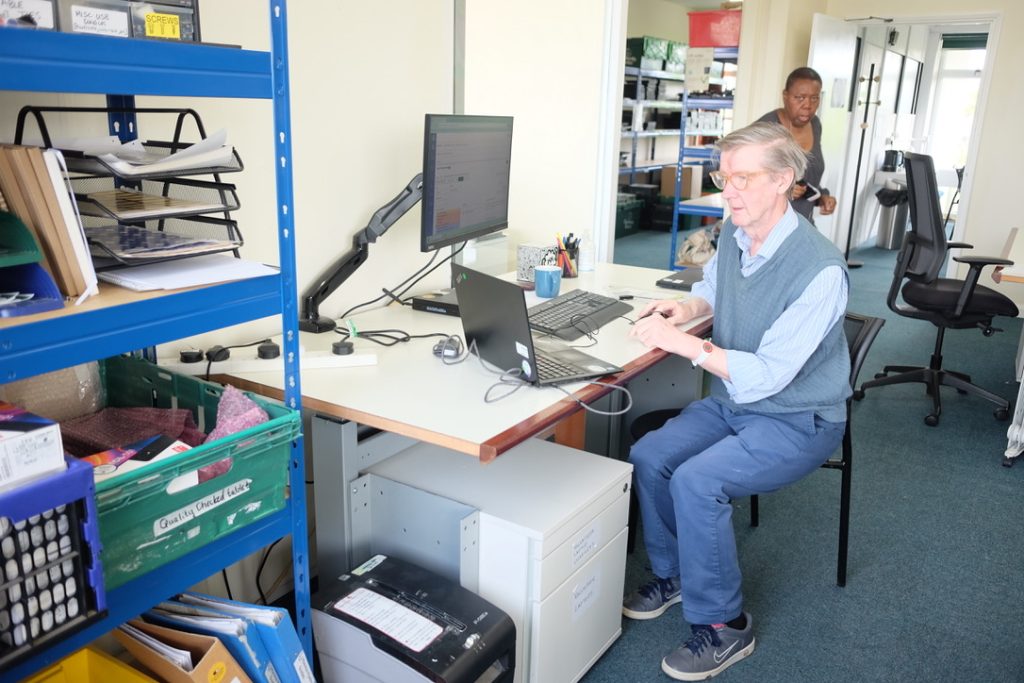
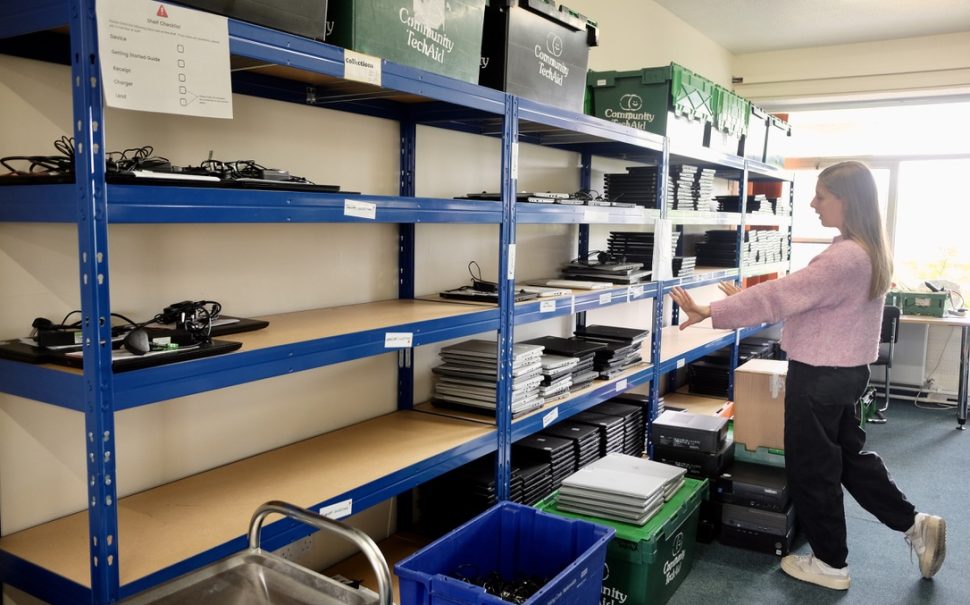
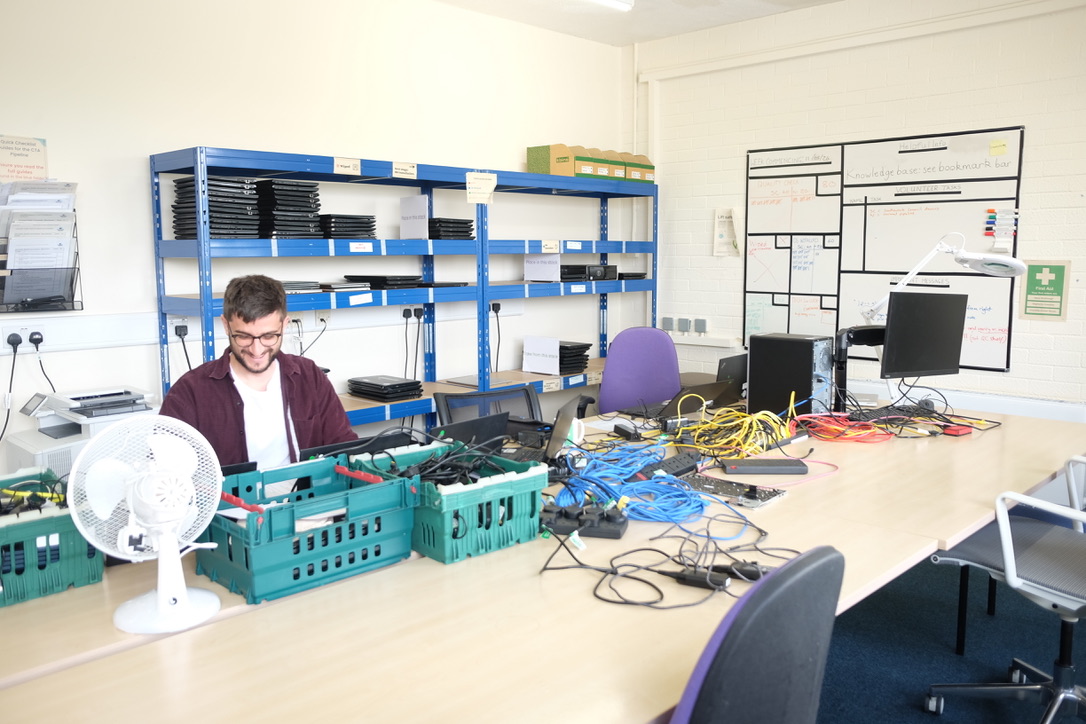
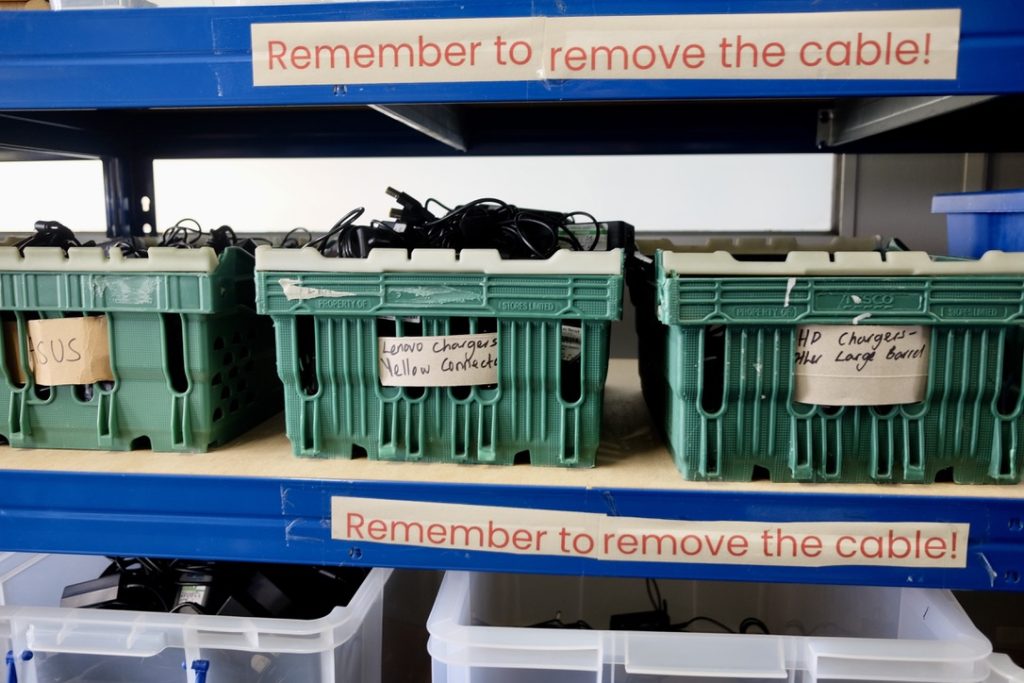
The Brixton-based charity is tackling the digital divide across Southwark and Lambeth while simultaneously reducing e-waste by repairing old devices.
Smith launched the initiative during the pandemic to help young people transition to online learning, but found that demand continued long after lockdown restrictions ended.
“Digital exclusion, isolation – however you frame it – is something that we will likely all experience at some point in our lives,” she said.
As more essential services move online, concerns are growing that young people without reliable internet access or equipment are being essentially locked out of education, employment opportunities and even social interaction.
Smith said: “There’s not a single part of daily life that doesn’t involve being online in some way, shape or form. Whether that’s Universal Credit or watching a film.”
The consequences can be severe in a labour market increasingly dependent on digital proficiency.
Job applications, banking, studying and communication now often require consistent internet access and confidence using technology.
Smith said: “I’ve spoken to people who say they’re embarrassed because they feel like they should have these skills and they don’t.
“That’s just not the way that anyone should be experiencing learning a new skill.”
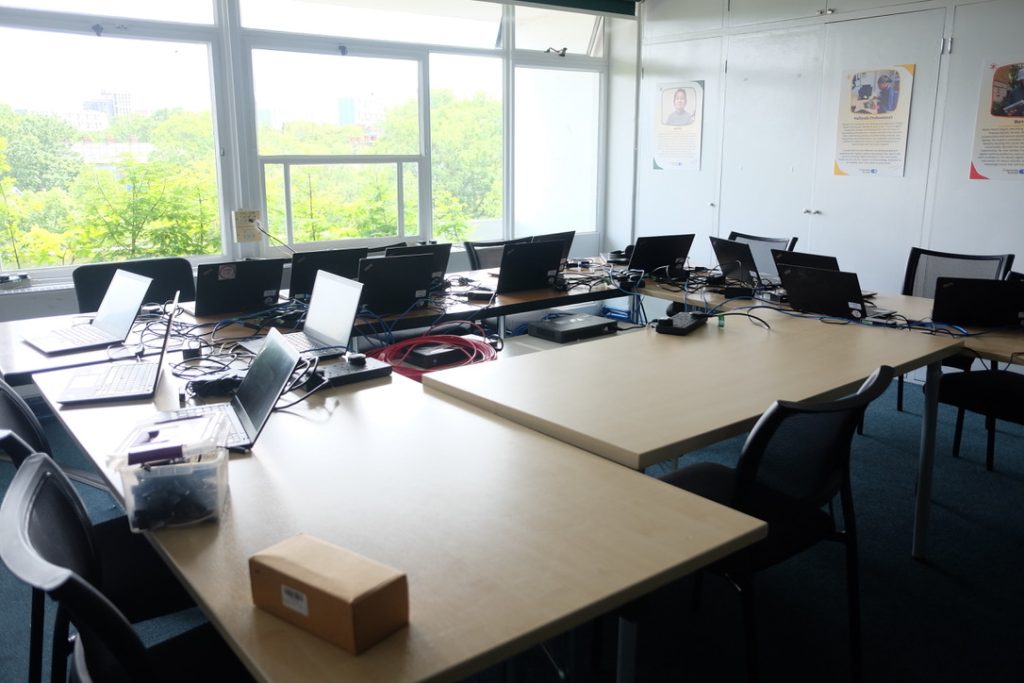
Community TechAid focuses on building confidence around technology giving people devices.
“There’s something about ownership and agency,” Smith explained. “Confidence really comes when someone feels like it’s okay to make a mistake because this is theirs – they don’t have to give it back.”
Smith recalled one college student who struggled to keep up in lessons because he was the only person in his class without a laptop.
She added: “His lecturer would say, ‘if you can all click on this link’, and he was trying to do everything on his phone.
“He was really struggling to keep up and it became quite a stressful experience.”
Figures suggest young people from lower socio-economic backgrounds are significantly more likely to lack the digital expertise increasingly required for education and employment.
According to the Lloyds Essential Digital Skills Report 2025, people earning more than £75,000 a year are 30 percentage points more likely to possess all foundation-level online skills than those earning up to £13,499.
The report also found that people who own devices are 65% more likely to have foundation-level digital abilities than those without any technology, highlighting how limited access to devices can quickly become a wider expertise gap.
According to the Lloyds 2025 Consumer Digital Index Report, more than a third of 18–23-year-olds surveyed already feel their digital knowledge needs improving.
The findings suggest that even among young people with internet connection, there is growing pressure to keep up with the increasingly advanced digital proficiency required for work and everyday life.
These inequalities can create a cycle in which young people already facing economic or educational disadvantage are also more likely to have lower digital skill levels, leaving them increasingly excluded from jobs and opportunities that now depend on digital confidence.
On a nationwide level, the Good Things Foundation works with a network of more than 8,000 community organisations delivering internet inclusion support.
Partnering with companies including Virgin Media O2, Vodafone and Three, the charity distributes SIM cards, devices and digital skills support to people struggling to stay connected.
Natasha Earley said the charity has seen rising demand for SIM cards, suggesting affordability issues are being intensified by the cost-of-living crisis.
She said: “People who aren’t online feel left behind. They feel locked out of essential services. Those SIM cards are a bit of a lifeline for people who otherwise wouldn’t be able to afford connectivity.”
Cost remains one of the biggest barriers.
Ofcom Technology Tracker data from 2023 to 2025 shows that 30% of people aged 16–64 without internet at home cite affordability as a key reason for not getting connected, while half of those respondents specifically pointed to broadband set-up costs.
The Good Things Foundation also works on policy and research around digital exclusion, challenging assumptions about who is affected.
Earley argues that as more public services move online, there must be more done prospectively.
She added: “Consider whether people can afford to access this and consider whether people can have the confidence to access this.”
Earley said tackling virtual exclusion requires approaching the issue from multiple sides.
“You need all three: you need connectivity, a suitable device, and the skills support when you need it,” she said.
Both organisations warn that online exclusion can no longer be treated as an issue that must shape the way services are offered and not remain as an afterthought.
Earley concluded: “Digital inclusion needs to be baked in and not bolted on.”
Feature image credit: Izzy Titherington