Access to creative education and extracurricular activities has significantly declined over the past decade in some of London’s poorest boroughs, new data reveals.
A strong indicator of this drop is the fall of GCSE arts-related subjects, including Drama, Music, and Dance, alongside the closure of youth centres and a measurable class division emerging in creative education.
According to a report by the Culture Learning Alliance, between 2010 and 2022, there was a 42% decline in entries in creative and technical subjects, showing a major long-term decline.
Adina Balan, a parent in east London who has two teenagers, said: “My daughter’s school no longer offered the option for Drama GCSE last year, my husband and I had to fork out an excruciating amount of money so that she could pursue her hobbies.”
Participation fell sharply in London’s poorest boroughs that have the highest child poverty rate, including Hackney, Islington, Newham, and Tower Hamlets, data obtained through an FOI dataset from the Department for Education shows.
Between 2021 and 2025, the total number of pupils entered for Music, Drama and Dance across these boroughs fell from 2,044 to 1,768.
In Hackney, Music GCSE intake from 2021/22 – 2022/23 fell significantly from 305 pupils to 213, a total reduction of 30%.
Throughout 2017 and 2018, Hackney entered only seven pupils for Dance, a stark contrast to Bromley, a more affluent borough, which recorded 101 entries.
On a national level, during the 2022/23 academic year, 42% of schools in England no longer entered pupils for Music GCSE, 41% for Drama GCSE, and 84% for Dance GCSE – meaning these subjects were effectively not offered at exam level.
Teacher recruitment in music has been persistently below government targets for more than a decade, with recruitment reaching only 33% of the target in 2023/24 and targets being missed in 13 of the last 14 years.
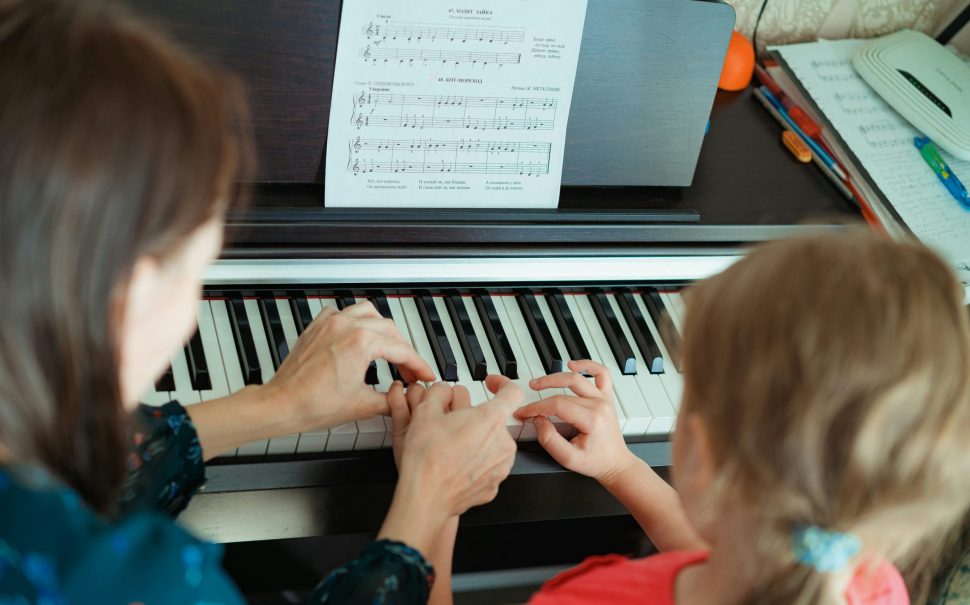
Katie Padilla Jones, a music teacher at Frederick Bremer School in Waltham Forest, said: “A child who is not flourishing at their other subjects will sometimes excel in music or other creative subjects, and we are effectively making this inaccessible for anyone who can’t afford it.
“I often hear students say things like, ‘What’s the point in music?’ – no doubt because they constantly receive the message that it isn’t important.”
Music Hubs are local partnerships that deliver music education to young people, funded by Arts Council England.
Waltham Forest received £28m funding through this programme between 2018 and 2026, the biggest amount in London and a massive comparison to its neighbouring boroughs.
Academies, state-funded schools that don’t have to follow the national curriculum, create a postcode lottery in access to music, with provision varying widely between schools due to exam and accountability pressures, according to the House of Lords Library briefing on music education.
In 2019, government research stated that children who come from disadvantaged households are ‘much less likely’ to enrol in music classes or creative extracurricular activities, fuelling the idea that this is a class issue as opposed to a preference.
According to UNISON, 1,243 council-run youth centres across England and Wales closed between 2010 and 2023, leaving only 581 remaining and reducing young people’s access to support services.
Youth spaces create an inclusive environment for children from all backgrounds to gain affordable opportunities, especially for families who can’t afford private lessons or clubs.
Young people in poorer areas relied more heavily on youth centres, making the cuts another factor widening social and class inequalities in access to opportunities.
A report by the Department for Culture, Media and Sport conducted that local authority funding for youth services in England fell from £1.06 billion in 2011 to £408.5 million in 2021, a whooping reduction of 64%
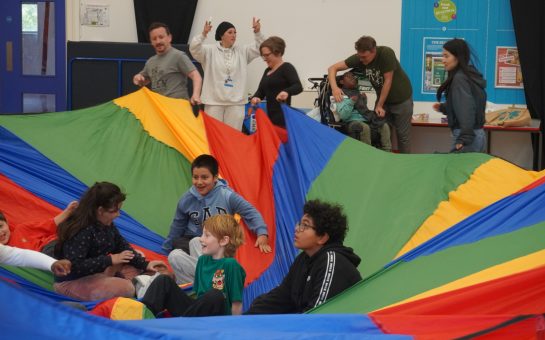
Helen Perry, the branch director of Worth Unlimited, a youth charity that works with young people between 8-18, said: “I think there’s a lack of insight into how important the creative sector is for children, especially for neurodivergent children whose experiences are enhanced through artistic activities.”
However, it’s not all doom and gloom for the future of the arts.
An FOI dataset from Arts Council England suggests that youth-centred projects are being prioritised in some of London’s most deprived communities.
No London borough received more youth-focused projects than Hackney, which secured 15 projects worth around £14.5m between 2015 and 2025.
Tower Hamlets received nine funded projects worth £3.57m, an area which has a history of high child poverty rates.
For decades, access to the arts has been heavily shaped by class and geography, often requiring unpaid internships or extensive training, a lifestyle that’s easier for wealthier communities to afford.
Working-class people are often steered toward practical careers that promise financial stability, rather than encouraged to pursue creative ambitions.
Earlier this year, a study by the University of Cambridge found that low-income students and girls are discouraged from pursuing ‘risky’ creative careers.
The study concluded that students from poorer backgrounds are more likely to study creative subjects at GCSE, but are less likely to continue them after the age of 16 – suggesting a structural barrier rather than a lack of interest.