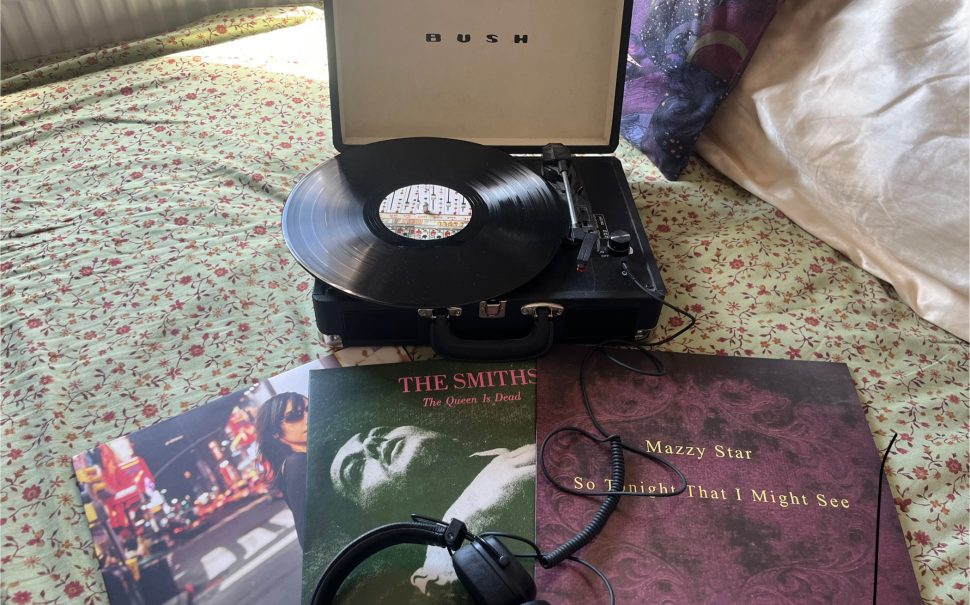
A collection suggests a sustained commitment to physical media, and this is the exact trend that Gen Z are bringing back.
‘Vinyl revival’ has come out of hibernation since 2007 and is now mainstream again, calling all music lovers to ditch streaming and savour music in its natural form. They’re no longer just aesthetic, collectable disks pinned up on walls next to posters of rockstars from Seattle.
Most of us will remember what vinyl is from our parents, grandparents, or cool older siblings, so it goes without saying that the longing for nostalgia plays a massive part in conjuring those memories.
It’s a unique experience. You remember what you were wearing and who you were with when you picked out your favourite album from the vinyl market or Rough Trade – an excitement no streaming platform can offer.
Aly Gillani, founder of First Word Records, said: “Vinyl is actually, in some cases, part of that move away from that reliance on digital media and actually real-world interaction.”
“What I like about putting a record on is it makes me stop doing other things, because I have to get up every 20 minutes and turn it over. I think that fosters an engagement with the music that you don’t get from streaming.”
Earlier this year, an online trend called 2026 physical media movement gained popularity amongst Gen Z audiences who were engaging in a new challenge: going analog. A massive section of this craze is fueled by music.
As a fellow Gen Z myself, this is a generation that craves the pre-internet era we never got to experience, a time when music was a full-time hobby, a physical manifestation of the art, and collecting albums truly meant supporting the artist.
A rebellion against social media phrases such as ‘doomscrolling’ and ‘brainrot’ that’s rooted in supporting grassroots music and indie artists.
However, not surprisingly, a Forbes research concluded that 85% of the music industry’s revenue is generated from streaming services. This of course makes sense, given the convenience we have at the tip of our fingers to skip as many songs as we want.
A 2025 Gen Z-focused report by Vinyl Alliance that surveyed over 2,500 people around the world found that 76% of Gen Z vinyl fans buy records at least once a month. The study goes further by suggesting the psychological benefits of engaging with vinyl, such as cultivating a community and connecting with like-minded people over shared interests.
There’s also a big emphasis on young buyers viewing purchasing records as a way to support musicians, especially compared with streaming, which often pays the artist very low per stream.
In the wider context, owning a physical object, whether it be a CD, a disposable camera, or a magazine, gives people a sense of ownership. You’re in control of how and when you choose to use it, and become less reliant on the neverending media development. Additionally, investing time in knowing exactly what you like and purchasing it can help people establish their personalities.
Mike Hicks, the head of sales at Key Production, said: “Vinyl is expensive now, which makes it a real commitment, but as a real music lover, you can buy with confidence because you’ve heard the album and know it’s worth it.”
“A lot of people, myself included, use Spotify as a research tool before actually buying the real thing and hearing the album in the order the artist intended. An album in its original form is an artistic statement.”
The resurgence of vinyl is not solely driven by nostalgia, it is also linked to a desire for authenticity and tangible experiences.
Joshua Smith, a 22-year-old music content creator under the name Ginger J, dedicates his content to music from the 70s, 80s, and 90s and has a collection of over 70 vinyl.
“To me, music nowadays seems slightly manufactured just for the sake of generating money, rather than creative people getting together to truly make a meaningful art form,” he said.
He started his content creation journey last September and has since attracted a diverse demographic of 22,000 followers on Instagram. His first post was a parody related to Kurt Cobain, the frontman of Nirvana, which attracted 15 million views – making Joshua an overnight sensation.
Sustainability is a big thing for Gen Z and we’re often faced with the argument that questions just how sustainable a vinyl truly is. Ironically, this is a misconception as the carbon cost of streaming is frequently overlooked.
Streaming depends on energy-intensive data centres, servers, and networks that run continuously. A 2019 research piece from the University of Glasgow found that digital music consumption through streaming produces significant greenhouse gas emissions, showing that streaming is not a completely sustainable alternative.
On the bright side, the diverse world of social media has opened doors for independent, up-and-coming artists.
According to TikTok and Luminate’s 2025 Music Impact Report, 84% of songs that entered the Billboard Global 200 in 2024 went viral on TikTok before reaching the chart. The platform has also helped introduce younger listeners to older music originally released in the vinyl era. Examples include “Running Up That Hill” by Kate Bush, “Linger” by The Cranberries, and “Dreams” by Fleetwood Mac, all of which experienced renewed popularity among younger audiences through social media.
Additionally, TikTok users were more likely to discover new music than average users of short-form video platforms.
In 2022 alone, 5.5m vinyl were bought in the UK, the biggest amount since 1990 when Phil Collins was dominating the charts.
In a recent survey conducted by the SW Londoner with a focus group of 37 participants, 65% said that if an album was special to them, they’re more likely to purchase it in a physical form. This enables them to hold the memory that’ll be there forever, as opposed to skipping to the next song.
Young people are eager to escape the algorithmic environment and the renaissance of vinyl is here to offer a rich plethora of possibilities – allowing them to refine their unique music taste and personality.
Featured image credit: Antonia Vlad