Since 2001, Brits have tuned in en masse to watch household names, unpopular politicians and B-listers eat animal genitalia in return for meals that… aren’t rice and beans.
I’m A Celebrity, Get Me Out Of Here sees a group of celebrities live together in a jungle camp with few luxuries, competing in ‘bushtucker trials’ to win food and survive public votes.
At its peak in 2018, the hit reality TV show averaged more than 12 million viewers per night, according to ratings tracker BARB.
But how does a celebrity’s race, gender and industry influence their chances of success on the show? And what does reality TV say about society beyond the screen?
Note: This article does not include data from the all-star series.
Race
Overall, non-white celebrities made up 17% of the contestants, compared to 82% of white celebrities (which is broadly in line with the UK’s population).
So why have there only ever been white Kings and Queens of the Jungle in the show’s 25 series history?
Of the 293 contestants, only three non-white contestants have reached second place: footballer John Fashanu in series two, singer Myleene Klass in series six and series 23’s boxer Tony Bellew.
Series 18 saw the highest proportion of non-white celebrities, with singer Fleur East, actress Sair Khan and actor Malique Thompson.
Even though the percentage of non-white contestants increased by 10% from series 1-13 to series 14-25, the success rate of non-white contestants (if they placed 2nd or 3rd) fell by 40%.
This is largely down to television audiences, who vote each evening to save their favourite celebrities from elimination, until the final when they choose a King or Queen of the Jungle.
Audrey James is a psychotherapist and founder of Restore Black, a company which supports Black mental health.
She said the findings on I’m A Celeb reflect a reversal in tolerance for British people of colour, especially since Brexit.
James said: “People are becoming more transparent about their feelings. They might have hid it before but now racism is blatant. We’re going back instead of forward. Racism is becoming more visible.”
Dr Hannah Hamad, an expert on celebrity culture, said: “The slight rise in the proportion of people of colour participating in the series could suggest that there has been an intervention made at the level of production and that cultures of production have moved in the direction of diversity.
“But audiences’ consistent practice of choosing white winners and finalists suggests that society is not keeping pace with culture and/or policy in these regards.”
Dr Jilly Kay, a senior lecturer at Loughborough University, added: “It’s really depressing but it doesn’t surprise me.
“People of colour are more visible on our screens. But that doesn’t translate into meaningful structural change.
“Since the mid 2010s, there’s been a rise of right-wing populism and increasing resentment towards racial minorities. We have to be careful of making claims of causal factors but its undeniable context.”
Often debates from outside the jungle play out on our screens, in turn triggering discussions back home.
For example, series 23’s Reform leader Nigel Farage and social media influencer Nella Rose clashed over cultural appropriation and immigration.
And in series 25, the only non-white contestants, footballer Alex Scott and comedian Eddie Kadi, were the first two to be voted off, sparking conversations back home about audience responsibility.
James said: “We’re being bombarded and reminded that at times the UK can feel very unsafe for us as a people.
“In films, the Black person gets killed first. When it happens, we’re like ‘there we go’. It doesn’t surprise us.
“When we enter an all white space, we’re very conscious of how we are seen or perceived. Contestants will be very conscious of tropes like the angry Black man and woman.”
Dr Kay is also part of the ReCARE TV project which investigates the working practices and duties of care in British reality TV.
The team are interviewing 30 former contestants from a variety of shows and formats.
Non-white contestants have consistently shared that they feel part of a system where the odds are stacked against them from the beginning, especially when audience participation determines their progress on the show.
Dr Kay said: “It’s not the kind of format of racism that gets taken seriously. It’s an insidious kind of racism. There’s something very problematic in British society that is perpetuated in these shows.”
Gender
Overall, there has been an almost equal gender split among contestants, including 10 of the 25 series. Of the remaining 15, there were three series with more women and 12 series with more men.
Male celebrities from the sports, politics, radio and comedy industries were over-represented. Yet female contestants were over-represented as media personalities, relations of other celebrities, models and reality TV stars.
In the industries where men were over-represented, they had an average age of 48 compared to female-dominated industries which had an average age of 32.
Dr Kay, who specialises in feminist studies, said this was reflective of broader trends. Men tend to be represented in the media as professionals and experts, whereas women are more likely to be presented as ordinary and culturally relatable people.
She said: “In celebrity culture, where women are over-represented, there tends to be a devaluing of their labour and activities.”
Dr Hamad added: “Longstanding cultural hierarchies align masculinity with physical strength, gravitas and high culture.
“In contrast, femininity is associated with frivolity and low culture, hence the tendency for them to have attained celebrity status as reality television stars or as media personalities unmoored to a defined and specific professional practice.”
Gendered labour division has repeatedly sparked debates on the show itself.
For example, during series 15 of I’m A Celeb, boxer Chris Eubank took issue with women carrying the firewood.
He said: “I don’t think women should be given strenuous work when men are around.”
But fellow camper Brian Friedman hit back, saying: “I don’t like the sexism. I fell like we’re going back to an archaic time where we feel like women should only do one thing and men should do the other.”
Again in series 24, Loose Women presenter Jane Moore sparked a debate on a gendered chore split. When allocated washing up, Jane responded: “Is that because we’re women?”
Industry changes
Women made up all 15 models who featured on the show, who were all white and had an average age of 28.
However, there haven’t been any models since series 14.
Dr Kay said this reflects the declining prevalence of models in popular culture, where women are no longer famous simply for their beauty. Rather, she suggested, “the influencer has taken over the model”.
Four influencers have headed into the jungle: Jack Maynard, Nella Rose, GK Barry and Angryginge. This is an equal gender split , despite women making up 65% of the industry.
Dr Kay said: “In sectors where women are over-represented, that’s not necessarily represented on the shows.”
Dr Jacob Johanssen, an expert in media and psychoanalysis at St Mary’s Twickenham University, said: “25 years isn’t that long. It takes longer for things to actually change.
“These are examples of the way reality TV is still an industry where sexism happens.”
Reflection on society
While the reality TV genre may superficially be realistic, multiple factors are at play shaping how the show is consumed.
Production teams are responsible for selecting contestants, and therefore how diverse a series cohort might be.
Audience participation, voting for which celebrities do challenges or go home, influences their success on the show, but editing also warps what audiences see and then how they make their decisions.
Dr Johanssen said: “Audiences consume this stuff which is often problematic or cheap entertainment. But that doesn’t mean viewers aren’t critical.
“Over the last 30 years, consumers have become more critical and it may open up conversations between friends and families. That could be a good thing.”
Yet, audiences can be part of perpetuating problems.
Dr Kay said that, while audiences might campaign for greater diversity on the screen, they often vote along problematic lines, like when series 25’s only non-white contestants were voted off first.
Similarly, she said, production teams face huge pressure to obtain good ratings which means ethical decision-making can slip, especially during the editing process.
More broadly, Dr Johanssen suggested that reality TV offers a “mirror” of social shifts.
He said: “Reality TV is a competition where you are your own brand. There are fewer communal support systems. You need to fight and do whatever it takes to win. We live in a society that works like that.”
Whether it’s winning ‘Dingo Dollar’ challenges, sleeping in the open-air jungle, or facing Australia’s wildlife, I’m A Celeb has no shortage of challenges in store for its contestants.
But when it goes beyond the curated jungle trials, how does I’m A Celeb (like many other reality TV shows) reflect and shape our society? And who is really responsible for bringing about change?
A show spokesperson said: “Since its launch in 2002, I’m A Celebrity… Get Me Out Of Here! has always featured a diverse cast from all areas of public life.
“As we approach our 26th series we’ll continue to ensure our line up is varied, dynamic and features celebrities from all walks of life, including actors, singers, sports figures, and content creators.
“Throughout the series the public has the opportunity to engage with the show and vote (for free) for their favourite celebrities via the official app.”
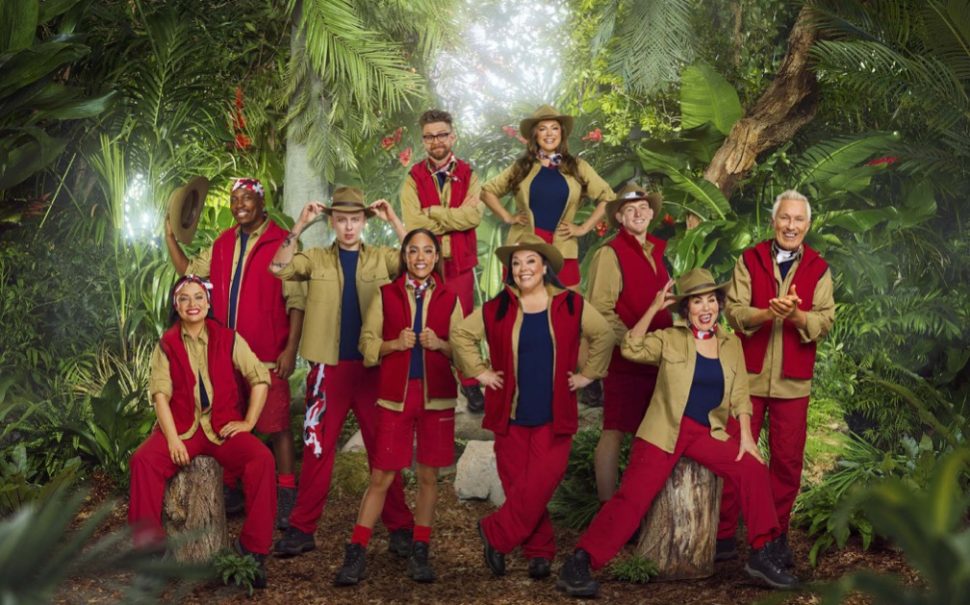
Featured image credit: I’m A Celebrity… Get Me Out Of Here!