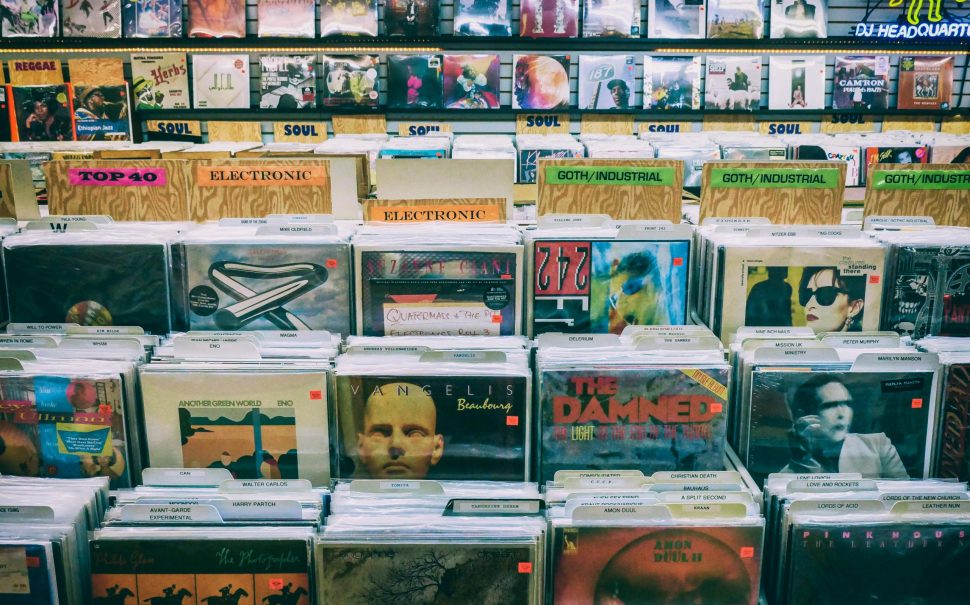
With the rise in popularity of owning physical media, like vinyls and DVDs, the question arises: Is it better for the environment than digital media, like streaming services, in the long run?
According to the Digital Entertainment and Retail Association (ERA), in 2025, UK entertainment sales exceeded £13billion in 2025.
Physical music sales grew to 11.5% to £368.1million, propelled by an 18.5% increase in vinyl revenues and a 95% increase in other physical formats to £4.6million.
Physical formats increased their share of music revenues to 15%, their highest share since 2021.
ERA also reported that physical video formats, including DVD and Blu-ray, declined 4.7% after an 8% decline in 2024 to £148.9million, their slowest rate of decline since 2010.
Blu-ray (inc 4K UHD) reinforced its position as video’s strongest physical format with sales of £84.2million compared with DVD’s £64.7million.
There has been a sharp rise in popularity when it comes to owning and investing in physical media, but why is that?
A HMV spokesperson said: “In today’s fragmented world of streaming and subscriptions, customers want to buy physical products to own a piece of their favourite media through a tangible purchase.
“Classic artists, films, and TV shows are still a big driving force in physical media sales as collectors continue to build and complete their collections, while contemporary media and artists are driving physical media sales amongst younger customer bases as they want to get their hands on unique and collectable physical products that they can own forever.”
However, ERA also reported streaming services and retailers grew UK revenues from music, video and games by 7.1% in 2025 to a new all-time record of £13,257.3m.
This was more than four times the 1.5% GDP growth predicted for the UK economy by the Office for Budget Responsibility and marks a sharp upturn in growth for the music, video and games sector compared with 2024.
Streaming revenue still dominates the sector, accounting for the most revenue compared to physical media.
ERA CEO Kim Bayley said: “This result vindicates the transformational role of streaming services and retailers in driving the entertainment sector to new heights, thanks to a potent combination of technology, investment and innovation.”
Consumers play a key role in shaping how media is produced and consumed, determining the market for physical media, streaming services, and hybrid options.
When people demand instant access, companies invest heavily in digital media, and when nostalgia hits, physical discs make a comeback.
But is one form of media better for the environment than the other, and does investing in physical media have a positive impact on the environment?
Andrew Brown, emeritus professor of education and society at UCL Institute of Education, said: “Once a book is produced, there’s no environmental cost after that.
“All the water and power that needs to be used has all been used – it’s over, and I can work out the environmental cost of that book.
“But if it’s digital, you’re constantly online, downloading, using server storage, so, if this stuff is all stored on a server and then kind of relayed to your phone, then there’s water and power being used.
“Unbelievable amounts of power are being used, and it’s infinite – it doesn’t stop.”
Brown further explained that, for example, photos on phones are also stored in data centres which are constantly running and consuming electricity and water.
He said: “Every time I look at it on the phone, I’m using battery power on the phone, the screen, the signal is going to the data, up to the cloud, then to the data centre, then back again.
“So, every time I view it, there’s an environmental cost.
“On the one hand, you’ve got a physical thing, I can look at it a million times, it’s never going to cost any more than it costs to produce.”
Physical media, such as CDs, DVDs, and vinyl records, still have significant environmental impacts throughout their life cycles.
From resource extraction to disposal, each stage contributes to pollution, resource depletion, and waste.
According to data, manufacturing a single CD or DVD generates approximately 172 grams of CO2, and vinyl production emits 2.2 kg CO2 per unit due to its heavier materials.
However, that stops once production has finished, while streaming or digital media services continuously use energy 24/7 from data centres.
It has grown at 12% per year over the last five years.
The source of this energy significantly influences carbon footprints as data centres powered by non-renewable energy contribute to greenhouse gas emissions.
While digital media reduces the need for physical materials and transportation, it still introduces environmental challenges through energy consumption and e-waste.
The shift from physical to digital media changes the nature of environmental impacts rather than eliminating them entirely.
Ultimately, while both forms of media pose environmental challenges, digital media continuously impacts the environment, as energy and water are used 24/7 rather than being finite.
And while physical media formats like vinyls have made a comeback, the digital vs physical split is still disproportionate, with digital media accounting for 94% of revenue.
As consumers, being aware of the environmental impacts of media consumption is key to reducing carbon footprints and encouraging sustainability, whether that’s investing in quality items which can be used and owned for years or downloaded for offline access.
Feature image: Free to use from Pexels