A London festival featuring emerging artists tackling difficult topics has returned to the capital for the fourth year running.
From 1 to 19 September, Brixton House’s Housemates festival will stage seven new productions from emerging artists, with the lineup tackling a range of issues from race to women’s healthcare, told through marginalised perspectives.
Housemates Festival was launched in 2022 as an initiative to help independent creatives break into the performing arts industry. Each year, artists submit their work to an online call-out. Successful submissions gain a place on the festival’s programme, offering them a space to develop and test new work with local audiences, bridging what Brixton House’s Executive Creative Producer, Ruth Hawkins, describes as an “opportunity gap”.
“Access to the time, space, resources and professional networks that creatives rely on to develop isn’t always available,” Hawkins said. “Housemates Festival responds to this opportunity gap.”
For independent artists, the tasks of funding and managing the logistics of a production often fall on the artists themselves. While this has always been the reality, dwindling theatre funds – caused by factors like government cuts and the cost-of-living crisis deterring audiences – have made it harder for creatives to shift their ideas from script to stage. Brixton House relieves them of the pressure to be self-sufficient.
Hawkins added: “We offer all the technical and production support so they have a real solid infrastructure around it, and artists can focus on their work.”
A lack of theatre funding has also led to more risk-averse programming. The Royal Court’s annual report in 2023 stated that “the business model which has supported the right to fail alongside success is no longer sustainable.”
Brixton House responds to this by establishing its space as a “place of play” for shows on Housemates’ bill “to take risks with their work”, said Hawkins.
“You want the end result to be polished, and an artist will want it to be the best version they can present, but I think it’s also really important to offer artists space to explore where their work goes.”
Lara Grace Ilori, writer, music producer and actor of the show ‘Runner Girl’, notes the value of this specific support.
She said: “To give us the opportunity to share our work is one thing, but the investment in giving us space to actually shape it is incredibly valuable. This allows us to make work with less pressure, and get out of our bedrooms with story ideas and into a studio.”
Beyond practical support, artists point to Brixton House’s enthusiasm for new work as an advantage for hosting their shows there.
Abir Mohammad, writer of the sold-out show ‘We Can’t Be Friends’, said: “We did have other offers from places wanting to host our show, but Brixton House just felt like they were offering something that was right for the play. The people who read it seemed like they really cared about our concept. It’s been so nice working with a team that just loves what they do.”
This year saw artist submissions triple, highlighting a growing need for assistance. As a result, Brixton House increased support for both shortlisted applicants and local creatives by offering an expanded series of events alongside the main shows.
Throughout the second week of the programme, shortlisted artists will deliver ‘A Week of Readings’, reading their scripts aloud to audiences.
On 3 September, the first Housemates panel will bring together artists, producers, theatre-makers and industry leaders for a thought-provoking discussion on contemporary theatre. On 9 and 16 September, Brixton House will extend the stage to local creatives with open-mic nights, providing a space for artists to share work and build community.
“Growing the additional activity is really exciting for us”, Hawkins said. “We’re thinking about how we can grow the festival year on year, and how to increase funding to be able to present more artists’ work.”
“The ambition is growing year on year.”
List of Shows
SUGA by Max Hyner (1-5 Sep)
A lyrical, surreal and comic critique of survival through late-stage capitalism, rooted in the cockney rhyming slang of the writer’s own South London upbringing.
Tube Chronicles by Razak Osman (1-5 Sep)
A hilarious and touching journey through the London Underground. The autobiographical solo show is about the sacrifices we make to chase our dreams alongside the daily grind.
We Can’t Be Friends by Abir Mohammad (8-12 Sep)
We Can’t Be Friends explores the individuality of faith in parallel stories. Two queer Muslim characters seek connection, belonging and the right to reach their own interpretation.
Pressure by Danny Bailey (8-12 Sep)
Pressure follows a Brixton family through three generations of uprisings. Drenched in music and drawing on the rich history of Black Britain, the play asks where revolution begins.
Goodbye by Alejandra Chamorro Cuevas (15-19 Sep)
A darkly comic love story from Colombia – a two-hander set in London’s first assisted suicide clinic, where dying with dignity turns out to be surprisingly complicated. Starring Samuel Anderson (BBC One’s Amandaland).
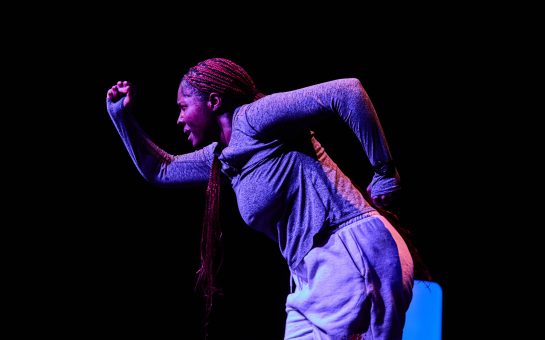
Runner Girl by Lara Grace Ilori (15-19 Sep)
Runner Girl follows a young Yoruba woman and her journey to understand her mind and body on her own terms. Explored through spoken word, the piece blends movement, original music and prayer.
Stomach by Ariana Xeno (15-19 Sep)
Stomach was inspired by a recent government survey which found that 80% of women feel unheard by healthcare professionals. Three stories offer hopeful avenues to open up conversations on the gender health gap, sisterhood and female relationships.
Image credit: Courtney Nathan Phillip