
A mechanic replacing a worn drill, an electrician buying new hand tools and a plumber keeping a kit ready for the next call-out all face the same question: who ultimately pays for the equipment?
For tradespeople across south-west London who buy their own tools, the answer may depend partly on whether they claim the tax relief available for work expenses. The rules are worth checking in 2026, particularly if several years of purchases have gone unclaimed. Tax relief does not normally return the full price of a tool, but it can reduce the tax you owe or produce a repayment of tax already paid.
The real cost of keeping a London toolbox ready
Tools wear out, break or become unsuitable for the work at hand, and replacing them can put pressure on a household budget. If you are an employee, HMRC may allow relief for eligible costs you paid yourself to do your job, provided your employer has not reimbursed you. Buying something useful is not enough on its own: the expense must meet the rules for your work and the type of equipment involved. Keeping those distinctions in mind makes a claim to HMRC for tool expenses more useful than simply adding up every purchase from a hardware shop.
The financial benefit is a reduction in tax, not a cheque for every pound spent. For example, £60 of qualifying expenses would generally save £12 for someone receiving relief at 20%, assuming they have paid enough tax to benefit. That distinction matters when you weigh up the value of searching for old receipts or paying someone to handle a claim. The amount any individual can claim depends on their employment status, purchases and tax position.
Which tools and equipment actually qualify?
For employees, HMRC’s guidance on work clothing and tools covers the cost of repairing or replacing small tools needed for a job, giving an electric drill as one example. This small-tool rule can cover repairs or replacements of qualifying hand tools and power tools such as an electric drill, but larger equipment may be subject to separate capital allowance rules. An electrician replacing worn tools and a mechanic repairing equipment should focus on what they paid, why the item was needed and whether the employer covered any of the cost. If an employer reimbursed only part of an eligible expense, it is the amount you paid yourself that needs examining.
A substantial piece of new equipment calls for a different check. HMRC says equipment needed for work may qualify under capital allowance rules for employees, rather than the rules used for small tools. The equipment must be needed for the job and used for work without significant private use. Separating a replacement hand tool from a costly item of longer-lasting equipment in your records will make it easier to follow the right route instead of treating every invoice alike.
There is another distinction that can prevent a mistaken claim. Personal protective equipment, or PPE, is not an employee tax-relief expense: if your job requires it, your employer should supply it free or reimburse you for buying it. Specialist clothing such as overalls may fall under different rules, so it should not simply be put in the same category as a respirator or other PPE. Check what an invoice actually covers before including it among work equipment expenses, especially when one order contains tools, clothing and protective items.
Flat rate or actual costs: which route pays more?
Eligible employees can choose between claiming an agreed flat-rate expense for their occupation and claiming qualifying actual expenditure. The flat rate is a fixed annual amount on which tax relief is calculated, not an annual cash payment of that amount. It is useful when you have paid for eligible work items but do not have receipts for every purchase. An actual-cost claim requires evidence of what you paid, yet it may be better when documented qualifying spending exceeds the applicable flat rate.
HMRC’s occupational flat-rate expense list includes £120 a year for specified categories covering garage motor mechanics, electrical workers, and pipe fitters and plumbers. Your job title alone does not settle which entry applies: check the description of the occupation and work against the list. At a 20% tax rate, relief on a qualifying £120 flat-rate expense would generally be £24 for the tax year, provided enough tax was paid. That example shows why a tax rebate for mechanics, electricians or plumbers should not be confused with repayment of the entire flat-rate figure.
The choice becomes clearer when you compare one tax year at a time:
- Flat rate: Check that your occupation qualifies and use the agreed amount if it suits your circumstances. You do not need receipts to establish the amount of the flat-rate expense.
- Actual costs: Total the eligible expenses you personally paid in that year and keep receipts or other evidence of payment. Compare that total with the applicable flat rate before deciding what to claim.
When assessing tax relief for tools and equipment, do not add the flat rate to actual costs for the same expenses. A large bill for a tool does not automatically make the actual-cost route the better choice, because the item must qualify under the relevant rules first. Equally, defaulting to a flat rate could mean overlooking higher eligible costs that you can prove. A folder of digital receipts can turn that comparison into a straightforward calculation rather than a guess made at the end of the tax year.
Check your status, then claim within the time limit
Before completing a form, establish how you are taxed. The employee flat-rate list is for employed workers; it should not be applied automatically to a self-employed plumber or a mechanic working as a CIS subcontractor. Self-employed tradespeople use the business-expense rules relevant to their work, while people who file Self Assessment generally claim eligible expenses through their tax return. A tradesperson who has both employment and self-employed income should keep the records for each role separate, so that a purchase is considered under the right rules and is not claimed twice.
For employee tool claims, HMRC allows the current tax year and the four previous tax years to be considered. As of 20 November 2026, the current year is 2026/27, so that look-back reaches 2022/23. A claim relating to 2022/23 is time-sensitive: the four-year deadline measured from the end of that tax year falls on 5 April 2027. If you have never claimed, checking older purchases first can protect an opportunity that will expire while you continue to collect this year’s receipts.
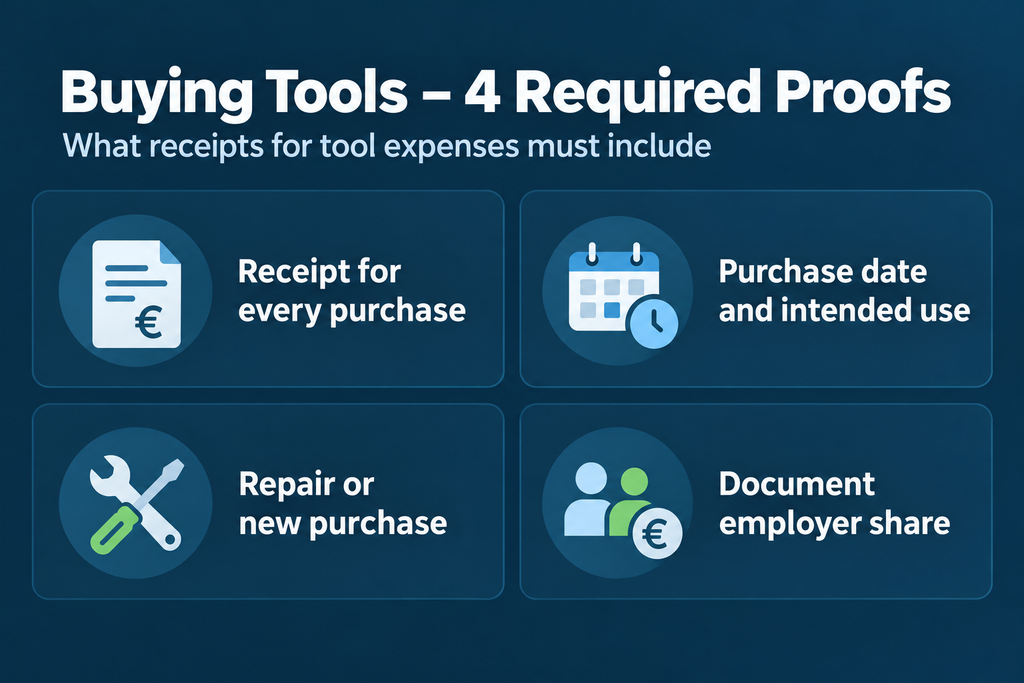
Make a separate record for each tax year rather than submitting one undifferentiated total. A practical file can contain:
- Receipts, invoices or other evidence showing what you paid for each item.
- The purchase date, the job it was needed for and whether it replaced or repaired a small tool.
- Details of any employer contribution, so you can identify the cost you bore yourself.
Photos or scans help preserve paper receipts that may fade before you make a claim. If you claim actual costs through HMRC’s employee service, you must provide copies of receipts or other evidence of payment. For a flat-rate claim, checking the correct occupational category matters more than reconstructing every individual tool purchase.
Many PAYE employees can use HMRC’s online job-expenses service, while form P87 provides a postal route where appropriate. HMRC’s P87 postal guidance says that total job expenses of more than £2,500 in a tax year must instead be claimed through Self Assessment. That threshold concerns total expenses for the year, not just the price of one tool. Check which route fits your circumstances before sending a claim, particularly if you already complete a tax return or have several types of work expense.
File it yourself or use specialist help?
You can claim directly through GOV.UK without paying a tax agent. For a PAYE employee with a clear occupation, an applicable flat rate and straightforward tax records, doing it yourself may be the simplest option. Someone comparing several years of receipts, different jobs or substantial equipment purchases may prefer help checking what belongs in each claim. Whichever route you take, keep copies of what you submit and check the figures against your records before agreeing to them.
Taxpro is a digital-first tax consultancy offering an alternative to a traditional agent for people who want their claim managed. It provides a named specialist who can be contacted through WhatsApp and operates a no-refund, no-fee model for its rebate service; a successful claim involves a fee, whereas the GOV.UK direct route is free. That makes the decision a practical one about how much support you want and what it will cost, rather than a condition of receiving relief. Start by identifying your employment status, separating eligible tool costs by tax year and checking the oldest year before its deadline passes.





Join the discussion