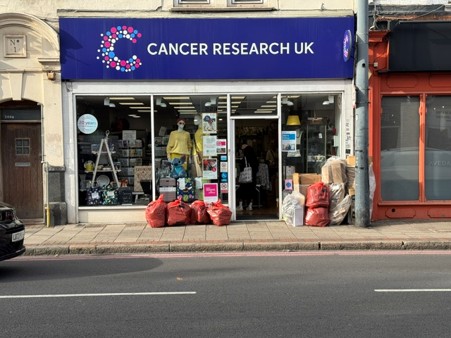
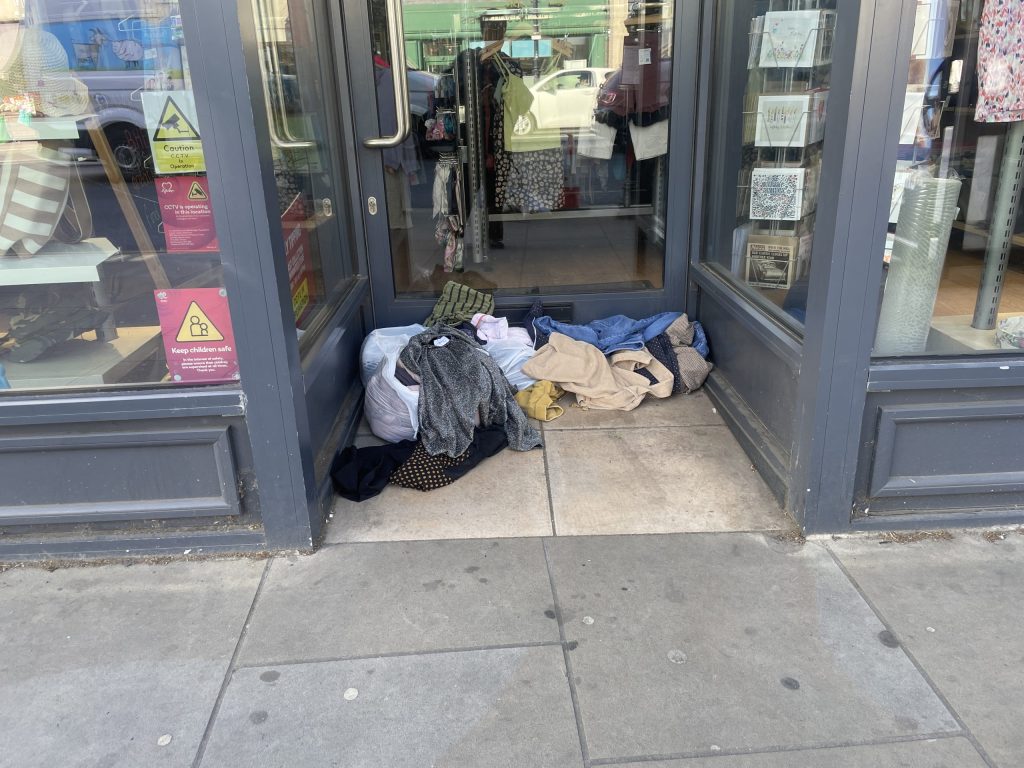
Charity shops across the country are suffering from the effects of receiving unsuitable donations, often received through fly-tipping, and this means less money goes to those who need it the most.
Both Oxfam and Princess Alice Hospice have said the increasing number of unsuitable, unsellable, or poor-quality items costs charities both in time and money, as volunteers spend more time sorting through donations before they get on the shelves, and the items must be disposed through proper avenues.
However, there is another part of this ecosystem that feeds from the unfortunate disposals: dumpster divers who go through the bins of charity shops after-hours.
“I would say 99.9% of donations are done genuinely, but then there are your fly-tippers,” said Chris Jones, retail operations manager at Princess Alice Hospice, a Surrey-based charity that supports families in times of illness and bereavement.
“It’s a cost issue, first and foremost, as fly-tipping costs us 180-200 pounds per removal each year, and every penny we spend on that is something else we don’t give back to the community.
“For example, the staff of a furniture charity shop may arrive in the morning and find two or three sofas, or a wardrobe, and sometimes these could be in good condition.
“Someone has done this thinking that we, the charity, will pick this up and move it into the shop.
“You can put something down at 6 o’clock at night, and we’re not back again until we open the shop the next morning, so it’s a long time for the item to be sitting there.
“What they don’t factor in is weather, rodents, refuse, other people. People can put more things on there that are waste, and then it becomes one big fire risk.”
Fly-tipped donations can also negatively impact the character of an area.
Jones continued: “We want to be good neighbours.
“In some of our smaller locations, they’re on quite picturesque high streets, and locals are walking up and down, seeing all this waste, and understandably get cross with us.
“The great irony is most people donate things in black bags, so if you’re then coming along in the morning, you see lots of rubbish—a black bag torn open.”
Fly-tipped items are not the only type of donations that cause problems for charity shops. The rise of platforms such as Vinted and Depop means that people can part with their items and directly benefit, and reserve their less attractive items for donating to charity shops.
Rachel Cosgrove-Pearce, retail director at Oxfam, said the rise of fast fashion and online reselling platforms has impaired their business.
She said: “In the past year, 34% of our shops reported an increase in poor-quality donations, up from 26% in 2023.
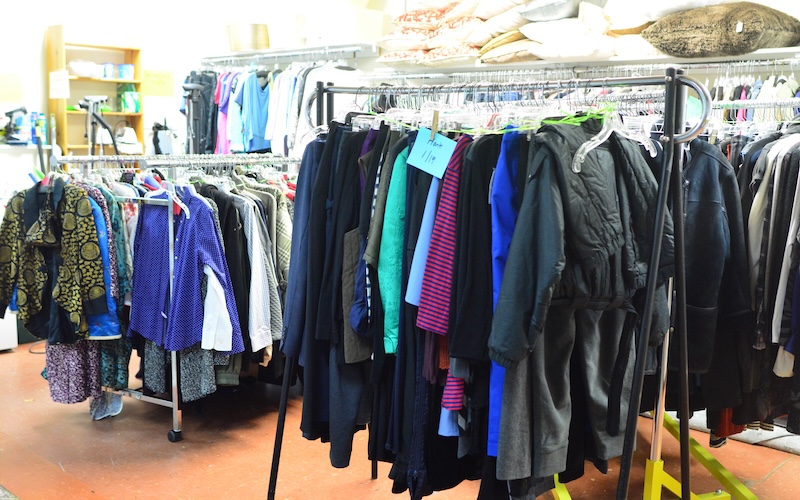
“We have long relied on and encouraged good quality donations, but with the rise of fast-fashion, alongside the popularity of online resale platforms, receiving increasing amounts of unsuitable, unsellable, or poor-quality items is a growing challenge for charity shops.”
Princess Alice Hospice has a robust system to try to maximise profits from donations, but even still, some end up going to waste.
Jones said: “we have a system where we rotate stock, and when the stock has been through three rotations it goes to a value shop.
What we’re trying to do by that is maximize the potential to generate revenue from someone’s donation, and then the final layer of that is it will go to a rag merchant.”
Despite all of this, many charity shops end up having to throw items away. Dumpster divers, at the other end of the charity shop ecosystem, may find things that an average person may have no problem with, but charity shops cannot sell for liability reasons.
One prolific dumpster diver, who did not want to be named, said that he was going through the bins of a Twickenham charity shop in order to find anything still usable.
He said: “I take anything that’s useful, but you don’t make a lot. It’s more of a lifestyle, a way of making money.
“Most of the stuff I find are things that they don’t sell. It can be anything, CDs, DVDs, all sorts of things.
“I find bags of jewellery–sometimes there’s gold in there, but it’s all tangled up.
“I also find bags of retro toys, all sorts of them. Some of the people I sell them to sell them on eBay.”
Dumpster diving often attracts the ire of local people, or causes problems for charities when waste is left strewn around.
However, Jones said: “I think for me, dumpster diving is not as much of a frustration as people who are fly tipping.
“I think the reason that we have issues with dumpster diving is because we’ve got issues in society where people need things.
“But there’s no two ways about it: when someone’s broken into your lockable bins and they’ve scattered your waste everywhere, it’s frustrating.”
Most of all, Jones emphasised that charities are grateful for all donations, and that donors will get the most out of their donations if they do it properly.
“Think about what it is that you’re donating. We are grateful for all donations, but check our website for the things we legally can’t take.
“There’s so many great things that you can buy that have been pre-loved.
“That’s why it’s a shame when things aren’t donated to us in the best possible way.
“My biggest experience of this is that people are rushing. Modern life’s hectic. If you just spare the extra five minutes, it’s not that we’ll just say no. We can often direct you to where is best to take it.”
“We’ll help you find where you need to put things, so just engage with us.”
Featured image credit: by Joe Mabel, CC BY-SA 4.0, Link