Most people in the UK do not believe they are at risk of flooding, despite official assessments suggesting millions of properties are vulnerable.
Just 7% of people aged 16 and over considered their area to be at risk of flooding, Office of National Statistics (ONS) data collected between January 7 and March 29 found.
However, the Environment Agency’s latest National Flood Risk Assessment (NaFRA) estimates that more than one in five properties in England were at risk in of flooding in 2024, with that figure expected to rise to one in four by around 2050 as climate change increases the likelihood of intense rainfall and surface water flooding.
Professor Hannah Cloke OBE and Regius Professor of Meteorology and Climate Science at the University of Reading, told the South West Londoner that the findings reflect what she sees in her work.
“This perception gap does not surprise me,” she said. “Time and time again people do not understand the risk of flooding.
“I call it the imagination gap – people find it difficult to translate research to daily life, to then know what action to take.
“It is very worrying that we can’t get this message out, in fact, it’s a massive problem.”
Professor Hayley Fowler, Professor of Climate Change Impacts from the University of Newcastle, was also unsurprised by the lack of public concern.
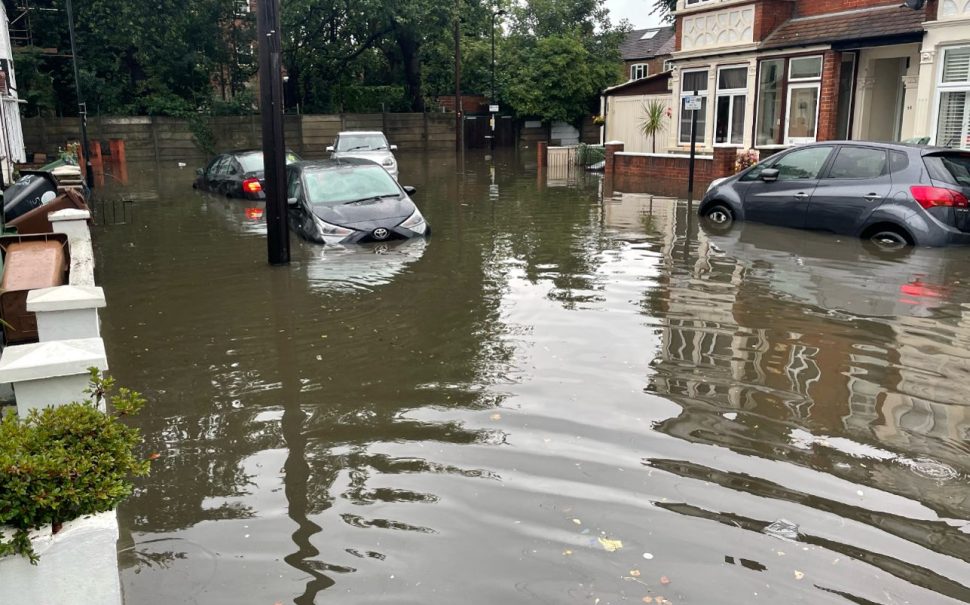
Fowler said: “People mainly think of flood risk as being associated with rivers, but of course the largest growing risk is from surface water flooding from heavy rainfall.
“Surface water flooding can happen anywhere, but has the biggest impacts in urban areas.”
The Environment Agency defines surface water flooding as flooding that occurs when rainfall overwhelms local drainage systems.
Heavy rainfall became a defining feature of England’s weather in 2024, with ten counties recording their wettest September on record, according to the Met Office.
The NaFRA found that around twice as many properties were at high risk from surface water flooding as from river and coastal flooding, underlining how flooding is increasingly extending beyond traditional floodplains.
The ONS also found the proportion of people who had made long-term changes to their home to reduce the impact of flooding increased by just one percentage point between 2025 and 2026, rising to only 2%.
Over-70s were 7% more likely than 16 to 29 year-olds to say they were not concerned about flooding where they live, although concern among younger people remained low at just 6%.
Tracey Garrett, chief executive of the National Flood Forum (NFF), said the findings reflected a wider challenge around public understanding of flood risk.
Garrett said: “People cannot be expected to act on risks they do not recognise or understand.
“For many households, flood risk remains invisible until they experience flooding directly.
“Effective flood resilience requires systems that make risk visible, meaningful and actionable before people suffer the impacts of a flood event.”
Garrett encouraged homeowners to check their flood risk area using official flood maps, sign up for flood warnings, and review their home insurance to ensure they are covered against flooding.
She added that improving public understanding of flood risk is essential if communities are to become more resilient as climate change increases the frequency of extreme weather.
Feature image: National Flood Forum