Latin American campaign groups in the UK have been fighting in another round for recognition from the Office of National Statistics (ONS) ahead of the 2031 census.
The Coalition of Latin Americans in the UK (CLAUK) is awaiting a response from the ONS after the consultation for additional ethnicity needs for the 2031 census closed in February this year.
CLAUK campaigned for recognition ahead of the previous 2021 census but the Latin American identity was not included.
Beyond this CLAUK and other groups have been leading support and community campaigns as numbers of Latin Americans in the country grow year on year.
CLAUK has been fighting for recognition since 2012, a year after a report titled ‘No Longer Invisible’ that was commissioned by Latin American Women’s Rights Service and Queen Mary University of London was released.
It showed that there were hundreds of thousands of Latin Americans living in the UK without official recognition.
Jacobo Belilty, a coordinator for CLAUK told the South-West Londoner that the report provided key information such as the numbers, composition and experiences of Latin Americans in the UK.
This brought about CLAUK as a way to provide a platform for a plethora of Latin American groups to come together on key issues, one of which was to have a recognised identity group in the ONS decennial census.
Belilty said: “What is not measured cannot be acted upon. So if you don’t appear in statistics, you cannot prove that there are particular issues that your community might be facing.
“You wouldn’t be able to know the extent to which Latin Americans face barriers to accessing public services at a national scale, unless you have a Latin American category as an ethnic group.”
He went on to explain that these barriers could be reduced for Latin Americans living in the UK if they were a recognised group because issues might be more readily identified and policies then put in place to address them.
Claudia Lopez, a teacher who also organises with CLAUK, moved from Columbia when she was 11.
She told the Londoners that when she arrived she struggled to get used to living in the UK.
She said: “I didn’t enjoy education, I didn’t enjoy living here and all I really wanted to do was go back home.
“The stereotypes and racism that I had to go through that I endured through school from students and from staff because of where I come from was horrendous.
“It also made me more Columbian, it made me more passionate about where I’m from.”
She explained that things had changed a lot since she was growing up in part due to the community growing in numbers.
Lopez said: “As a collective we sort of feel strongly enough to say we don’t want to be invisible anymore.”
Belilty also saw that understanding and knowledge around Latin Americans were shifting among British attitudes.
He said: “There is a big cultural appetite for Latin American things right now in the world, not just in the UK, but I think the UK is different to when I first arrived, people seem to be more aware that Latin Americans exist.”
The number of Latin Americans in the UK has been growing since the 1970s when refugees fleeing regimes such as Pinochet’s dictatorship in Chile, as well as others from Argentina, Ecuador, Bolivia and Columbia.
The numbers have steadily increased since the 2000s, with Brazilians making up the largest proportion of Latin Americans living in the UK.
Belilty said he could not give a precise figure of the numbers of Latin Americans in the UK because of the lack of data but reports such as the one in 2011 suggested that at that point there were at least 250,000 Latin Americans living in the UK.
He claimed that by now there may be at least 450,000 and possibly up to half a million.
Belilty also said that Latin American identities can get lost in census data which currently measures people by the place of their parents’ birth. For third generation families this can erase their identity as Latin American in official data.
Belilty said: “It does not give the full picture of Latin Americans, because you’re not only Latin American when you’re born in Latin America, you’re Latin American because it’s your heritage and that’s what we’ve been trying to communicate as well to public authorities.”
What else would the recognition help?
Lopez explained that Latin American identity is complicated, and there is a lack of cultural knowledge about Latin Americans living in the UK.
Belilty also told the Londoners that people’s complex backgrounds get missed when there isn’t a category that encapsulates this.
Latin America spans 33 countries and independent states, many languages including Spanish and Portuguese are spoken across the continent and people identify culturally in many different ways.
This becomes more complicated when you factor in diaspora Latin Americans such as in the UK who relate to their identity and came to the UK in different ways – many stayed in the UK after Brexit had been living here on Spanish citizenship.
Lopez explained that from her experience as a teacher in a school with many Latin American students identity can vary in between each one of them.
She said: “It’s a really personal decision, it all depends on the young person, their background, how they’ve been raised.
“I’ve seen a mix of everything, some that totally claim their Latin American identity, some that use British Latino, others that have different migration stories coming from Spain, some say they are Spanish, so I think it all really depends on the student.”
Fortaleza Latina are a group that supports Latina women facing vulnerable situations, isolation and complex migration issues.
Organisers from the group spoke to the Londoners about women in their organisation’s experiences living as a Latin American in the UK.
The women in the group said that to them being Latina American meant “Lots of colour, migration, being passionate, family, values, culture, and a feeling of belonging and community trust”
But that living in the UK meant for many of them “a lack of life and happiness, there is a lot of stress.
“There is more of a need to connect with their community but it is difficult to trust people here.”
Many of the women that they work with also faced exploitation in their work and housing.
The women had not heard of the census campaign but they understood the need for a new category.
For those in Fortaleza Latina, they wanted a place where everyone was accepted, felt listened to, and somewhere they could find information and support in a trusting and familiar environment.
Lopez wanted campaigns to bring better representation and understanding of the community.
She said “We are not small and we are not invisible, we are a vibrant and diverse community. We bring a lot to this society.”
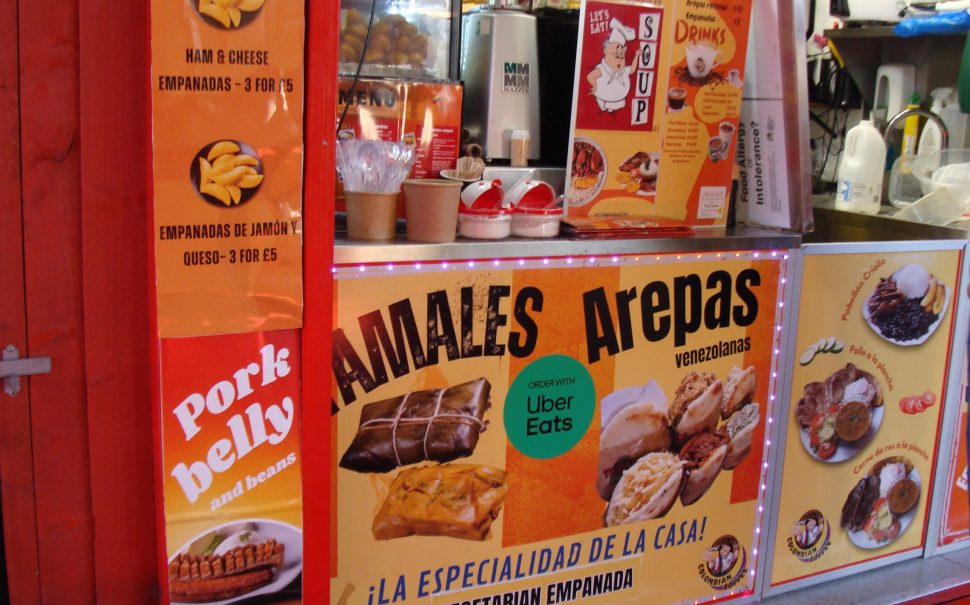
She added: “You love our food, you love our music so be an advocate for our community as well.”
Feature image credit: Lucy Giles