A negative split at London Marathon is the running holy grail: and a decade of data proves that 19 in every 20 participants succumb to the fade in the second half.
Chip timing from London Marathon Events tracked more than 320,000 runners’ journeys from Greenwich Park to The Mall between 2015 and 2025, tracking their timings every 5km.
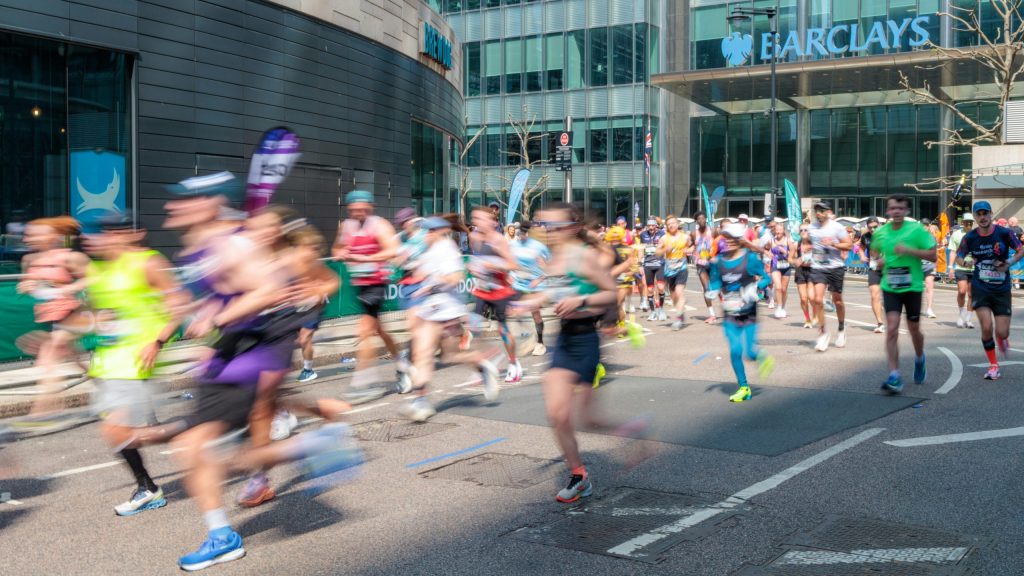
A cursory glance at this data paints a picture of fade: after 16 weeks of training, the field sets off too fast – the average pace for the opening stretch, down to Thames-level from Greenwich, is 5 minutes and 39 seconds per km.
That’s 10.4% quicker than the pace that ultimately proves sustainable across all 26.2 miles.
Ksenia Dugaeva lined up for her first London Marathon this year with 750 training kilometres in her legs.
Until she crossed the timing mat at 25km, her pace was consistent: 5:50/km throughout the opening section of the race, putting her on track for a solid finish time of 4:06.
But 10km later, she was running along the Embankment at 6:51/km.
Ksenia said: “By 15k I kind of knew I couldn’t keep going at this pace. It was really hot, and there were so many people.
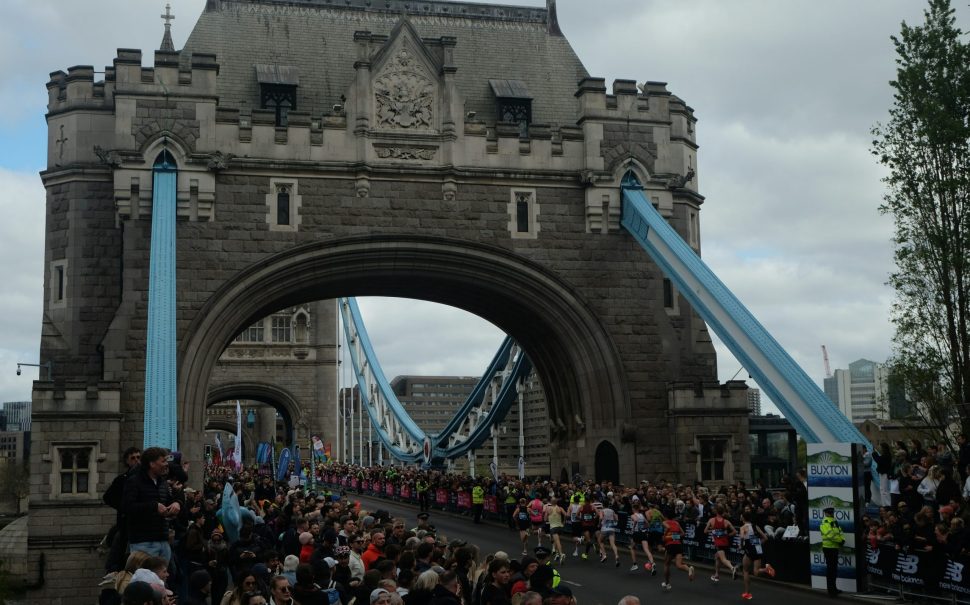
“I got to Canary Wharf and I just got so confused. I didn’t know where I was or how many miles I’d done. I knew I wouldn’t recognise any landmarks until I got back to Tower Bridge.”
Ksenia crossed the line in 4:19:46 – after a second half that was 13% slower than her first.
This fade was just all but bang on the median: across the 320,000 runners analysed, the typical second-half slowdown was 12.6%.
Cracks in the races of most runners began to show at the 25km mark.
After slipping just 4% off the pace from the opening 5km by the halfway point, by 25km the gap increases to 8%… and continues to slide.
12% at 30km.
19% at 35km.
As 19 runners in every 20 fall off their pace, a small number achieve the seemingly impossible on tired legs: they speed up.
The elusive negative split made Sebastian Sawe the first man in history to run a sub two hour marathon in London this year.
Sawe ran his first half in 01:00:29 and second in 00:59:01 – around 2.4% quicker.
As an elite, his time is not included in the mass participant data from 2015-2025, but it does speak to a trend born out within it: the quicker the runner, the more likely the negative split.
George Grassly came first in the 2026 London Marathon out of the mass participants.
His performance sits between the record-smashing effort from Sebastian Sawe and the steady slide of the rest of the field – he ran his first half in 1:05:15, then slowed by 4% to a 1:07:39 second half.
George said: “I knew there were a couple of elite pacemakers going through halfway in 65:30, and I thought my ideal pace was to go through in 66:30, about a minute slower, and target a 2:13.”
Despite a slight slip, he crossed the finish line in 2:12:47.
Where Ksenia described the overwhelm of the crowds, noise, and runners flagging in the final kilometres, George was up ahead.
He added: “It was completely solo from Canary Wharf all the way home. I passed one person right at the end, on the Mall, but other than that it was completely solo.”
The 2015-2025 period included in this dataset spans the Covid period: London Marathon was cancelled in 2020, then held in October in 2021/2022.
Despite the global disruption of the pandemic, year-by-year analysis of the mean slowdown reveals that it was not a major contributor to knocking marathon runners off pace.
The biggest % slowdown came in 2018 – the hottest London Marathon on record at 24.1°C, according to Met Office data.
While this data adds empirical heft to some marathon running aphorisms (‘don’t set off too fast’, ‘the race really starts at 30k, etc.), it is limited to those runners that finished the race.
The data cannot see those who set off too fast and ended up with a DNF: these results would only sharpen the general picture of decline.
For those who avoid a DNF and push through the fade, crossing the finish line brings a mix of exhaustion and introspection.
Ksenia added: “I couldn’t have pushed myself physically any further, but mentally I could have been more present.”