New data has revealed that almost half of Premier League fans can’t afford to buy authentic team shirts.
The website FootyComps.com has combined statistics from Premier League and English Football League (EFL) fans which uncover hiking costs that threaten fans’ ability to rep the team they support.
Simon Pilkington, co-founder of FootyComps.com, said more supporters are opting for cheap replicas that could pose hidden risks.
Pilkington said: “The prices of football kits today are astonishing, so it’s no wonder that fans are choosing to buy fake shirts.”
An authentic Manchester United home shirt costs a whopping £120 on the club’s official website.
Meanwhile, a home jersey from Championship club Bristol City is priced at only half that – £60 on the website.
However, the difference in affordability between the top division and the Football League are marginal.
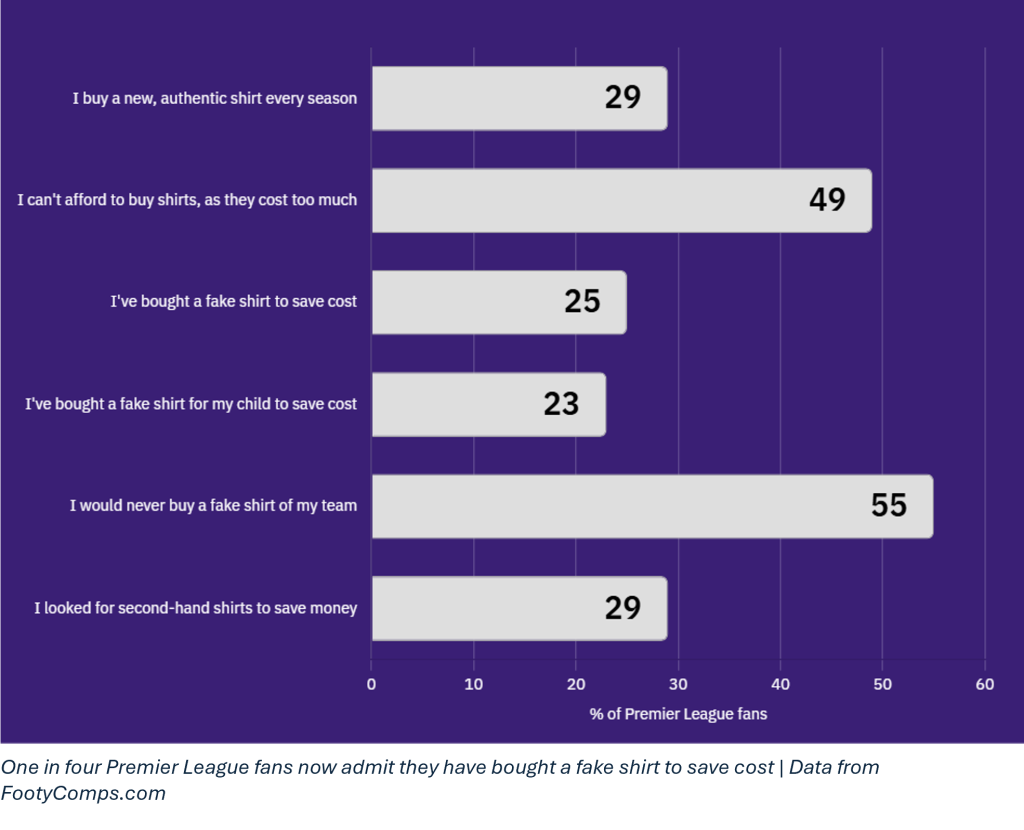
Findings show that 49% of Premier League fans cannot afford an authentic team shirt, as well as 46% of EFL fans.
For the upcoming 2026/27 season, eight Premier League clubs have increased their shirt prices.
Due to price hikes like this, less than a quarter (23%) of respondents now purchase a new, authentic shirt every season, decreasing to less than one in six among EFL fans.
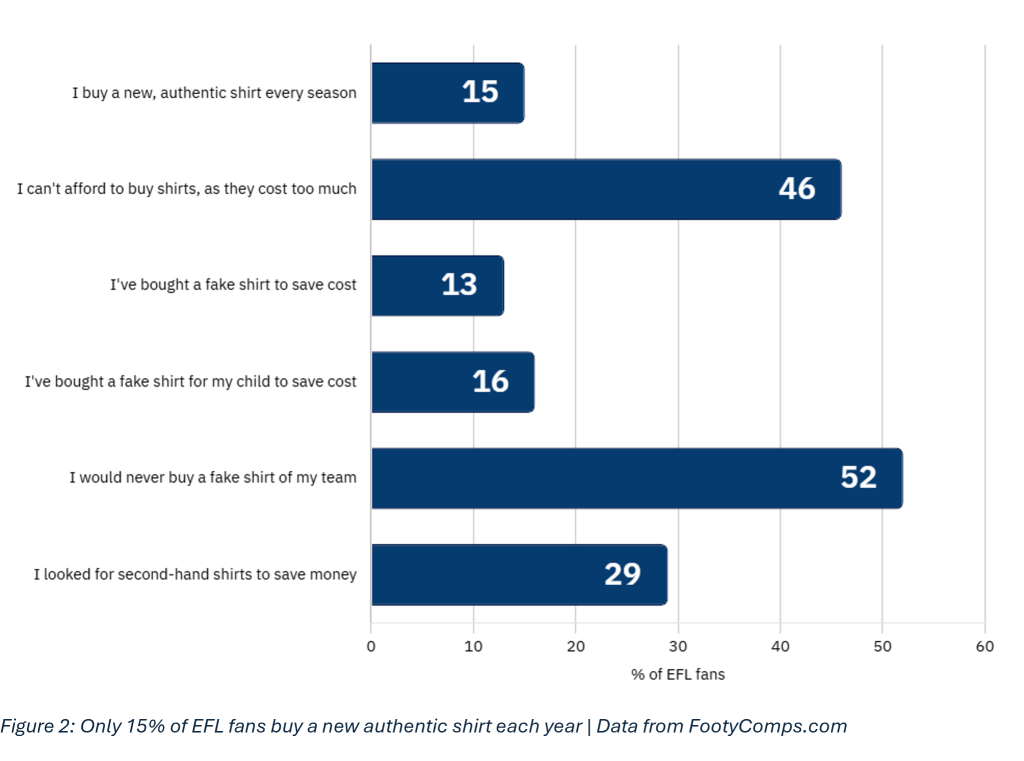
However, FootyComps.com data shows that more than half of both Premier League and EFL fans still claim they would never buy a fake shirt for the team they support.
Instead, they are more frequently looking to unofficial websites and second-hand sellers like Vinted for shirts – many of which are fake replicas or from earlier seasons.
Over a quarter of Premier League fans say they bought a fake shirt on holiday, seeking to avoid the skyrocketing RRPs of official club shirts.
However, this more cost-effective consumer behaviour can pose unforeseen risks.
“Prices are low for a reason,” Pilkington warned, calling fake shirts a “fire hazard”.
“Buying one is simply not a risk worth taking,” he said.
Police and fire services have warned against the dangers of counterfeit shirts, including harmful dyes and highly flammable polyester.
Risk of harm to skin is heightened among children, yet a fifth of those polled have reported buying a counterfeit shirt for their children.
Pilkington added that checking locally-based websites for cheaper replica kits could be a safer option.
Production is subject to UK regulations and are less likely to contain dangerous materials.
He also suggested looking for shirts from the previous season at a discount or waiting until midway through the season to allow prices to fall before purchasing.
Featured image credit: James Kirkup on Unsplash