Overcrowding at a south London prison worsened by nine per cent in 2025, even as its average population fell.
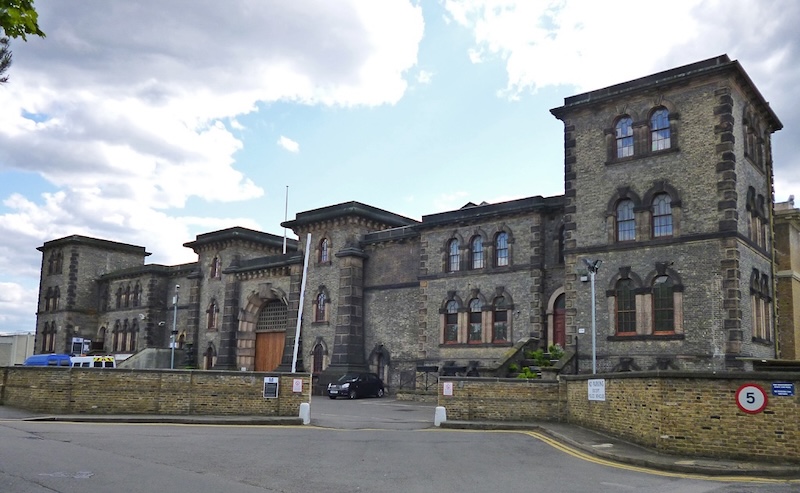
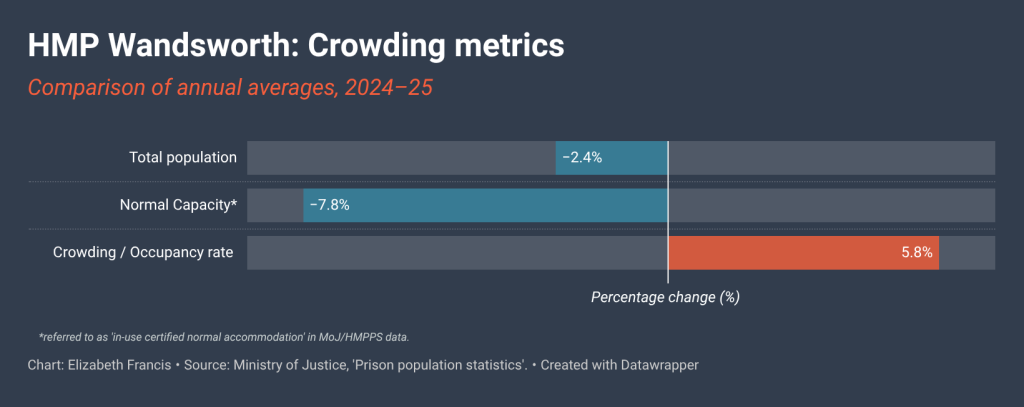
HMP Wandsworth’s occupancy rate rose to 166% last year despite holding fewer prisoners, Ministry of Justice figures show.
The apparent paradox was driven by a 74-place fall in normal accommodation, meaning crowding levels increased because of capacity loss rather than population growth.
Former prison governor Vanessa Frake-Harris explained simple percentages blend population growth and cell closures into one number.
She said: “The driving factor completely changes how you interpret prison crowding.
“Headline figures absolutely risk obscuring the operational context behind increases in crowding.”
Accommodation at HMP Wandsworth
The Ministry of Justice did not respond to questions about why Wandsworth’s normal accommodation fell, but the reduction came shortly after refurbishment work began on the prison’s Trinity Wing.
Refurbishing cells requires them to be taken out of use, often increasing pressure on remaining accommodation.
This is particularly true in Victorian-era prisons like Wandsworth, where single-occupancy cells give governors less flexibility when redistributing the population.
Their proximity to cities also means high demand for places but little room for expansion.
Prison overcrowding, which the UN recognises as a serious human rights issue, has been linked to poorer safety and security outcomes.
At Wandsworth, successive inspection and monitoring reports have recorded high levels of violence and self-harm.
However, a 2025 report from the Independent Monitoring Board still called for refurbishment, warning: “Unless fundamental changes and upgrades are made to the prison, it will remain inhumane and unfit for purpose.”
‘Appalling conditions’
Living conditions at HMP Wandsworth have long been a cause for concern.
A startling 2024 inspection found the prison was dilapidated, dirty and vermin-infested, with cramped and ill-equipped cells.
Wandsworth was placed under special measures after the inspection triggered an urgent notification, one of the strongest interventions available to the prison inspectorate.
HM Chief Inspector of Prisons Charlie Taylor said: “The appalling conditions at Wandsworth did not appear overnight.”
Similar neglect can be found across the prison estate, which has been left to deteriorate for more than a decade.
In 2024, the maintenance backlog for HM Prison Service reached £1.8billion, while just 2% of prison buildings were rated “good” on fabric, mechanics and engineering.
Hundreds of millions of pounds are being invested to improve conditions estate-wide, according to a Ministry of Justice spokesperson.
Difficult trade-offs
HM Prison and Probation Service (HMPPS) says one of the main reasons maintenance work remains outstanding is a lack of spare capacity.
In recent years, the prison system has come so close to running out of space that an independent government review found it had repeatedly been within days of collapse.
There were fewer than 100 places left in adult male prisons at one point in 2024.
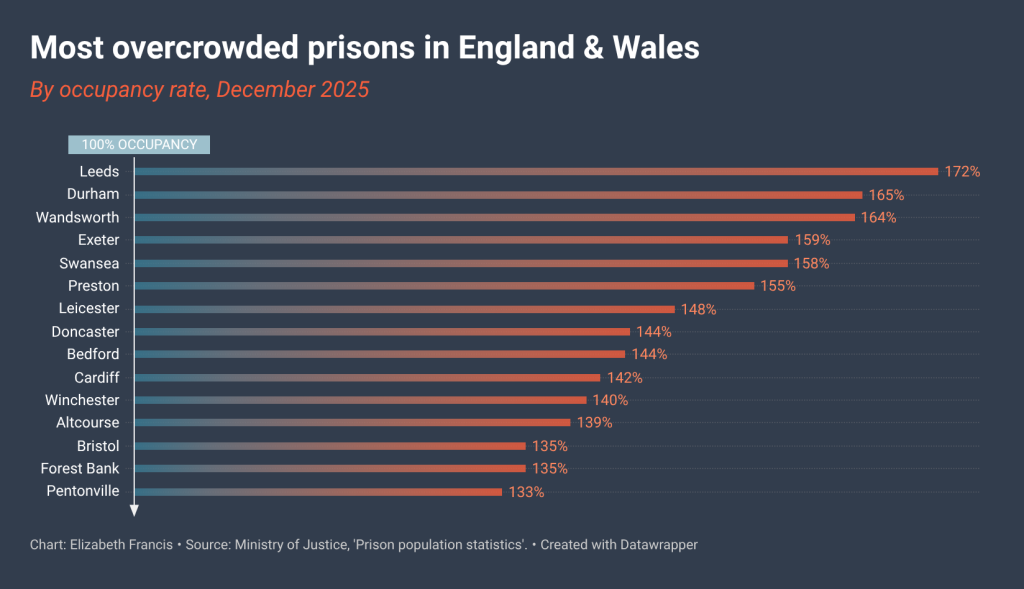
The wider capacity shortage helps explain why 67 prisons across England and Wales were operating above 100% occupancy in December 2025.
HMPPS considers these prisons crowded because their average population exceeds their certified normal accommodation (CNA) — the number of inmates a prison should ordinarily hold.
Where refurbishment risks additional crowding, Frake-Harris explained prisons are faced with the choice of leaving deteriorating cells open to keep crowding levels down or taking accommodation offline for repairs, which causes an immediate spike in crowding.
She said: “It’s a brutal, daily operational trade-off between short-term safety and long-term sustainability.”
This operational trade-off can become especially acute in Victorian-era prisons, as ageing infrastructure collides with chronic overcrowding.
Neilson said: “In many ways, the crisis the system is currently experiencing is made most visible in the Victorian prisons.”
Beyond headline figures
Amid the higher levels of crowding, there are signs living conditions at Wandsworth have been improving.
For Trinity specifically, these improvements were ‘considerable’, according to the Inspectorate’s April 2025 progress review.
Chief Inspector Taylor also noted the positive impact this had on prisoner-staff relationships, as well as the block’s overall atmosphere.
Following a 2026 tour of the site, Wandsworth Prison Improvement Campaign (WPIC) reported that all boilers and some of the showers on K Wing had been replaced.
WPIC also found that all cells on Trinity’s Addison Unit, an NHS-run mental health ward, had been fully refurbished.
Wandsworth’s 2025 crowding figures may therefore reflect the short-term cost of carrying out long-delayed work, rather than a straightforward decline in performance.
However, Taylor and WPIC acknowledged there is still a long way to go before the whole site is up to standard.
Prisons remain accountable for the day-to-day impacts of crowding, even where higher levels are linked to efforts to improve living conditions.
Taylor has previously said that even the most overcrowded and squalid Victorian prisons can maintain decency, citing leadership, culture and purposeful activity.
Featured image credit: Robin Webster CC BY-SA 2.0 via Wikimedia Commons