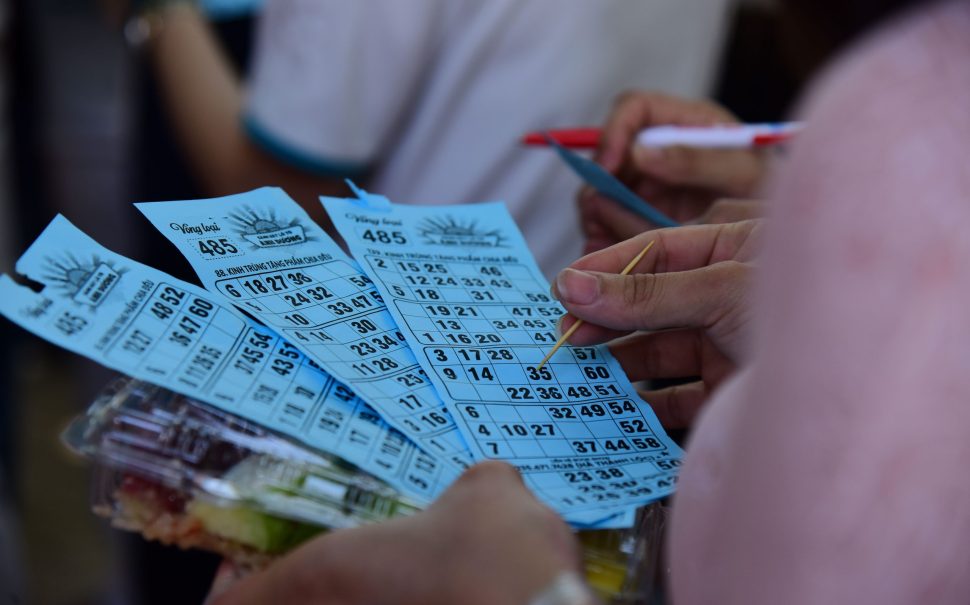
There are around 42,000 internet searches for the term “bingo” in the UK every month, and the game shows no sign of losing its grip on the national imagination.
But where is bingo fever actually running hottest? New data has mapped search interest right across the country, and the results make for some surprising reading, particularly if you live in the south.
The study, carried out by WhichBingo, home of the best new casino sites, analysed Google Trends data for six bingo-related search terms across locations throughout Great Britain.
Each location received a combined score based on search volume relative to its population size, giving a true per-capita picture of bingo obsession rather than simply counting raw numbers.
Tipton takes the top spot
The West Midlands town of Tipton came out on top with a Combined Google Trend Score of 330, the highest of any location in the country.
It topped the chart for relative search volume on the phrase “bingo” and registered strongly across all six terms.
It is a small, post-industrial town with a tight-knit community feel, and that sense of local social life seems to find a natural home in the game.
In second place is Burton upon Stather, a North Lincolnshire village with a population of fewer than 3,000.
Despite its modest size, its residents appear to search for bingo-related content at a rate that puts most cities to shame, recording a cumulative score of 324.
Third is South Shields in Tyne and Wear, with 314 points, a coastal town that registered a consistent score across every single search term rather than peaking on just one or two.
Hartlepool and Blyth, in County Durham and Northumberland respectively, round out the top five.
The pattern across the full top 20 is striking. Almost every entry comes from the Midlands, the North of England, or Scotland.
County Durham and Tyne and Wear each place three locations in the top 20, with Northumberland, Lincolnshire, West Yorkshire, North Yorkshire, and Lancashire each contributing two.
So where does that leave London?
The capital does not feature in the top 20 at all. The first location that could reasonably be described as part of the South of England is the Essex village of Mistley, sitting all the way down at number 25.
For Londoners, and particularly those in the south-west of the city, this is either a mild source of civic embarrassment or, perhaps, an opportunity.
The absence of London from the bingo rankings does not mean the city lacks interest in the game.
It is more a reflection of how densely populated the capital is and how the per-capita methodology works.
Spread the same absolute number of searches across a population of eight million and any location looks modest.
The interest is there. It just gets diluted by the sheer size of the crowd.
The broader picture: Bingo in 2026
Part of what the data captures is a genuine shift in how people engage with bingo.
The game has moved well beyond the traditional bingo hall, with online platforms now allowing players to join games at any time without leaving home.
For urban players in particular, that flexibility matters. Commutes are long, evenings are busy, and the idea of heading out to a dedicated hall on a Tuesday night competes with a lot of other options.
Online casino and bingo sites have expanded rapidly in recent years, and the Gambling Commission has introduced significant new consumer protections alongside that growth, including a 10x cap on wagering requirements for bonus offers that came into force in January 2026.
For anyone exploring the space for the first time, that regulatory context matters. The landscape is more closely supervised than it has ever been.
In the meantime, bingo continues to thrive as a communal activity in the parts of the country where it has always been strongest. For a game that started in village halls and working men’s clubs, its staying power is remarkable.
Whether Tipton holds on to its crown next year, or whether a south-west London borough finally makes a push for the rankings, remains to be seen.
Feature image: Free to use from Pexels