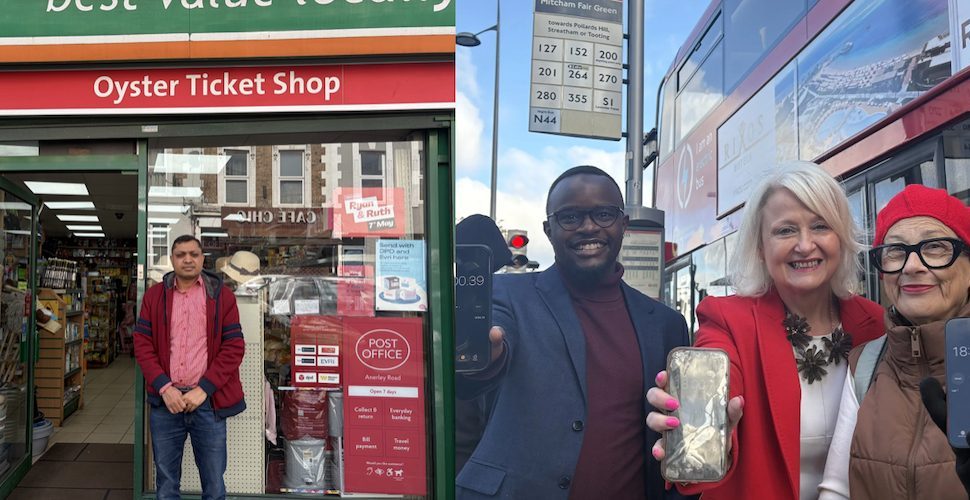
Local communities in London are rallying to keep connected to the financial world amid the steady decline of high street banks, with banking hubs popping up as a possible solution.
The number of bank branches in the UK has been decreasing since the 1980s, a process that has sped up since 2015.
Between 2012 and 2022 the number of banks branches in the UK decreased by 39%, with London slightly ahead of the curve with 41%.
The loss of bank branches impacts some people more than others, including the elderly, disabled digitally excluded and rural communities.
While most parts of London are not considered rural, the effects can still be felt.
What is a banking hub?
A banking hub is a shared site to help maintain physical cash services that has a representative from a different major high street bank each day of the week, determined by what banks are popular in the area, in a space that already exists.
However getting one of these banking hubs is a competitive process, with assessments needing to be carried out to determine the need for a hub.
Anerley
An example of this can be seen with Jignesh Patel in Anerley, who has run the high street shop, later turned counter-top post office since 2002.
Jignesh noticed that for a range of reasons, his community of businesses and residents in Anerley were missing access to local services in order to bank their cash and discuss financial matters.
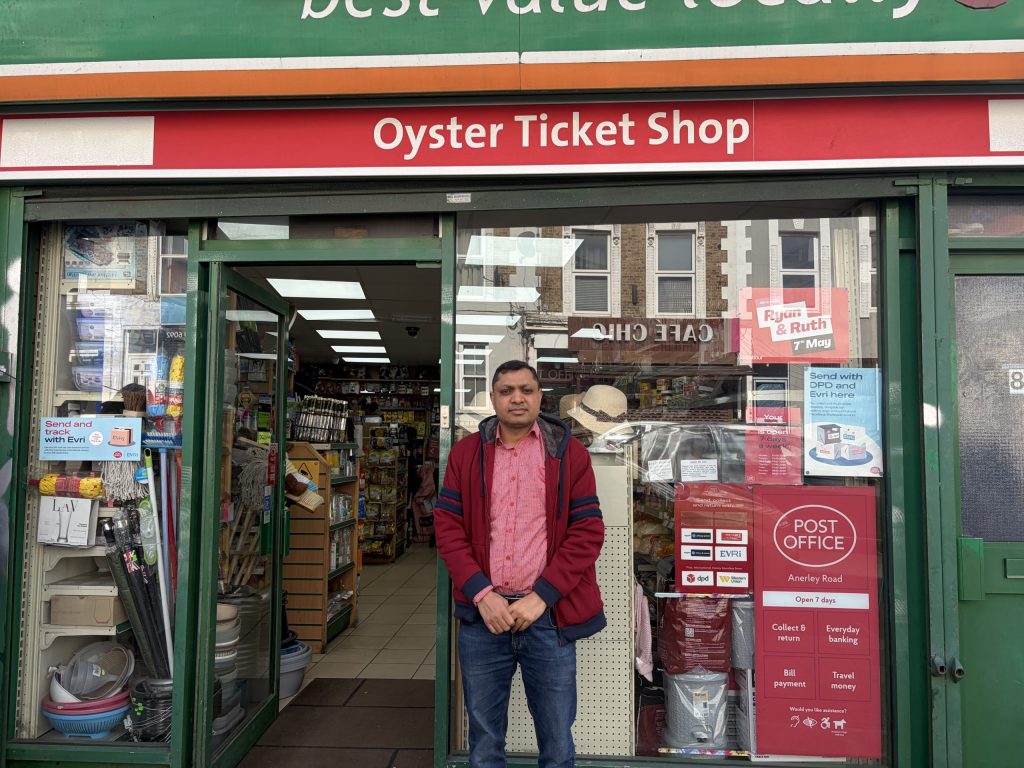
He said: “It is a necessary for local people, for day to day routine and life everyone needs bank access and many, many banks are now shutting and closing down.
“Anerley and Crystal Palace have been my home for over 25 years. The people here are not just customers, they are my neighbours and friends.
“With banks closing their doors, a Banking Hub at Anerley Road Post Office would ensure residents still have somewhere they can walk in, be recognised, and get the help they need. I am committed to making that happen for this community.”
Anerley councillor Ryan Thompson added: “Anerley deserves the kind of local services that help communities thrive. A community banking hub would provide exactly that – essential face-to-face banking services for residents that ensure nobody is left behind.”
There has been a flurry of closures in the main commercial hub of Crystal Palace triangle, which is also located up a steep hill from Anerley making it difficult for the elderly and disabled to reach the services they need.
Impacted groups
One group who is disproportionately impacted by the loss of high street banks is the elderly.
This is likely from a generational preference for cash and in person banking as well as accessibility issues reaching branches if they are far away.
Some areas in London, as the above map demonstrates, have significantly higher elderly populations, particularly around the outskirts, which are also areas which have less banks per 100,000 adults and have seen a steep decline in recent years.
Some parts of London have substantially less banks than others, including Waltham Forest, Barking and Dagenham and Merton.
It is clear that there is a link between boroughs which have higher percentages of elderly populations and those with less bank branches.
On top of those, research into digital exclusion conducted by LOTI with GLA and London councils, mapped areas of which residents are more digitally excluded than others.
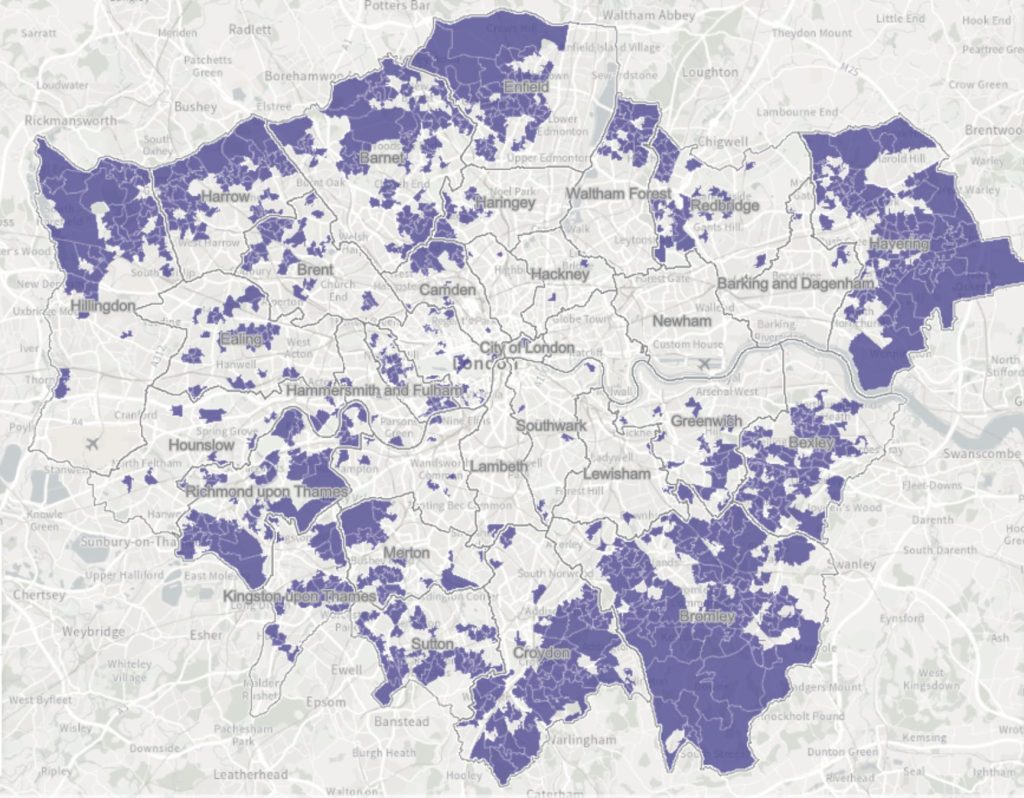
The map highlights that the majority of digitally excluded people are located in outer boroughs.
Mitcham
Another example of a community need, and subsequent drive, for a banking hub can be seen in Morden and Mitcham.
When the last local bank closed in January 2026 it was recognised that a banking hub was needed so that residents did not have to travel to Tooting for basic services.
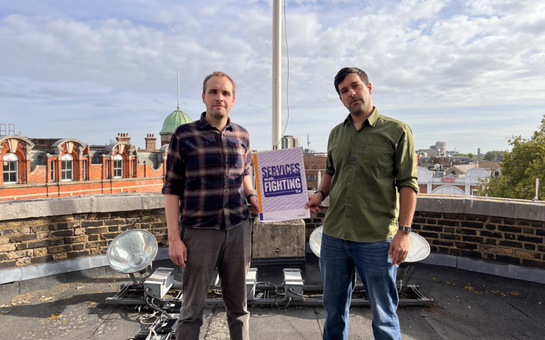
The campaign, which involved Siobhan McDonagh MP travelling with LINK Chief Executive John Howells on the local 270 bus, demonstrated the communities need for these services specifically the elderly vulnerable and disabled.
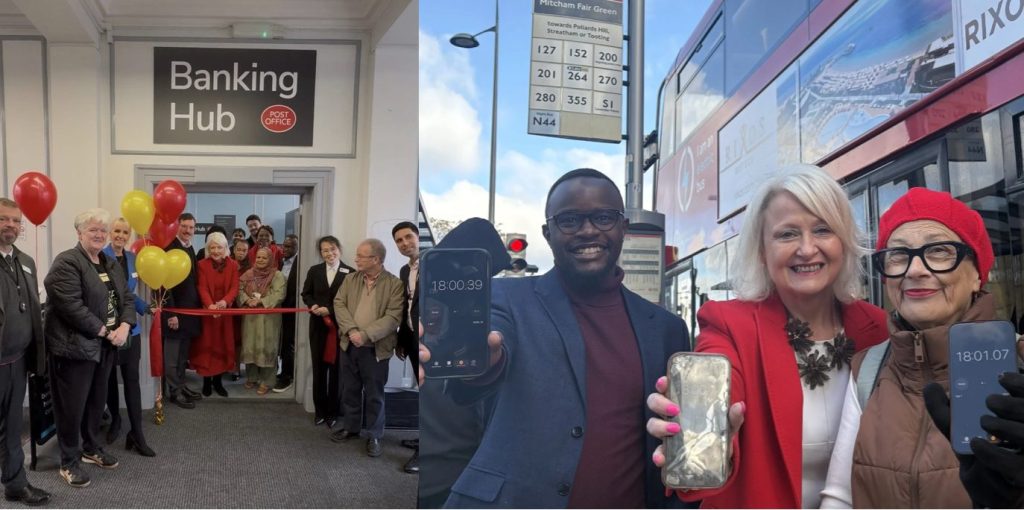
They managed to secure the banking hub, which opened in February 2026, making it the first in South West London and the fifth in London overall.
Siobhain McDonagh MP said: “Mitcham losing its last bank would have been a profound loss for our town centre, particularly for older residents, disabled people, small businesses and those who still depend on face-to-face banking services.
“What made this campaign so powerful was the determination of the community itself. Residents signed petitions, organised social media campaigns, shared their stories and worked together to prove that access to banking is about far more than just access to cash.
“I am incredibly proud that Mitcham became the first Banking Hub in South West London. It is proof that when communities come together and make their voices heard, they can achieve real change.”
The assessments for a banking hub are carried out by LINK, who work together with Cash Access UK which is a not-for-profit company funded by major high street banks to ensure services are delivered.
Cash Access UK Gareth Oakley: “The first hubs opened five years ago and it’s brilliant that we now have 237 hubs open across the country including several across Greater London with more set to open in the coming months.
“We know the way that people bank and pay for things is changing. But we also know how important access to cash and basic banking is for consumers and businesses.”
It is clear that the decline of the high street bank is not slowing down, and with the number of banking hubs opening and communities expressing a need for one, the geography of London banking is rapidly changing.
Featured Image Credit: Ella Nichols and Mitcham and Morden Labour Party