An independent film producer aims to challenge preconceptions about Brixton in an upcoming documentary on its housing crisis.
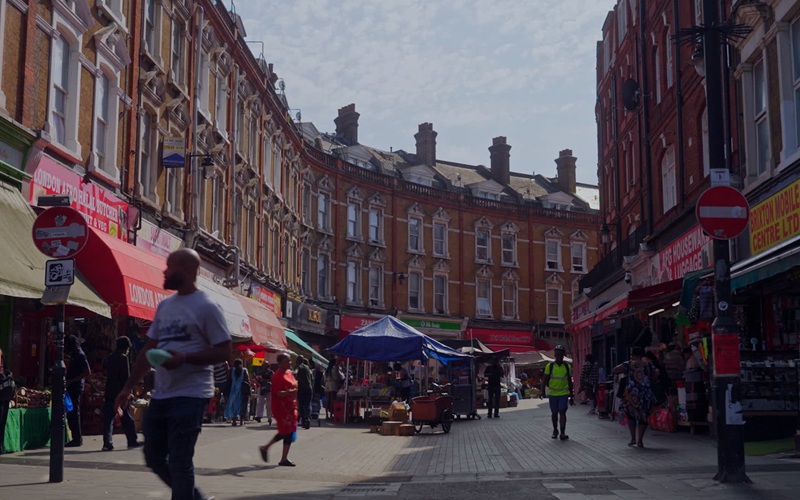
In some ways, the south London community is changing in exactly the same way as other inner city neighbourhoods. Independent fruit stalls, takeaways and pawn shops are being replaced with edgy microchains offering ‘small plates’.
Katherine Nathan, the producer of Beyond Brix & Mortar, which is to be released later this year, acknowledged this, but noted that “everyone thinks they know about Brixton.” She wants to change this.
She didn’t have a strong connection to the community before embarking on the project in 2023. Instead, she was approached by co-directors Daniyal Harris-Vajda and Charlie Rollins, who did. The former grew up in the area, whilst Rollins’ grandmother was one of the Windrush generation who came to live there.
Nathan’s production company Ratchet mainly creates short-form content and TV adverts. So this is a new kind of project for the company, but one that she felt was right for her. So right, in fact, that Ratchet is funding 80% of the cost of making it.
Her motivation? “A lot of these people are becoming disenfranchised from the place that they call home, and I can see that the same is happening in lots of communities up and down the country,” she said.
“And this just so happened to be on our doorstep, and to do with a community that was close to our hearts.”
Brought up in Southall, Nathan felt a kinship with Brixton, known for its long-established black and Caribbean presence.
“People think they know what the communities stand for, and for a certain generation, they just think that both are synonymous with violence,” she said.
“But if you’ve ever been to either of those places, they’re nothing like that.”
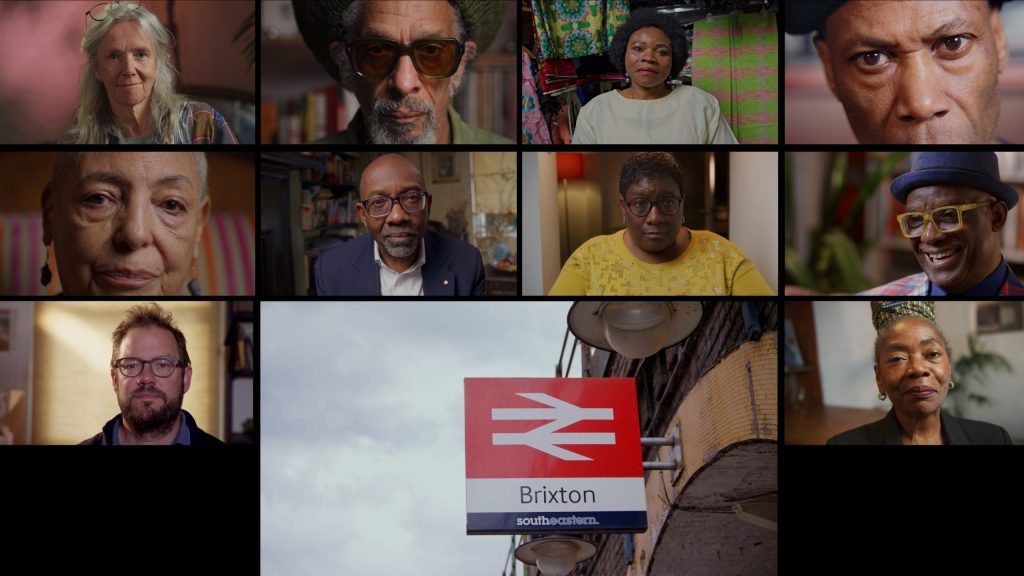
But rather than telling the story in the present tense, the film will look back at Brixtonians’ personal histories through the eyes of traders, community workers, activists, councillors, and planners.
The interviewees she chose were those who don’t normally get much screen time. Some were hesitant, fearing potential repercussions on their rent. The filmmakers went through critical moments in their journeys with them, waiting until interviewees felt they could speak freely. But besides that, “everyone was desperate to talk”.
For the producer, the causes of housing inequality are clear and deep-rooted, going back to Thatcher’s right to buy policy which allowed councils to sell off social housing without reinvesting in it.
Nathan said: “The ideology of the Tory party under Thatcher was that if you owned your own home, somehow you then got the ability to rise up the ladder, and then apparently all the world’s ills would disappear.
“Well, I think we can safely say that four decades later, that hasn’t actually happened.”
These days affordable housing — as defined by the government — is at 80% of the market rate, another reason why London is becoming overpriced for locals. On top of this, the capital needs 88,000 new homes annually. But housebuilding in the private sector is lagging far behind.
Whilst she asserted that property developers must be held to account, Nathan stressed she wanted her audience to draw their own conclusions.
Addressing the documentary’s historical angle, she said: “What distinguishes us from animals is that humans should be able to learn from our past experiences.
“Given how meticulously we record and document everything, it’s really vital that we actually do learn from the past.”
But just a couple of days before speaking with the filmmaker, locals rallied behind Brixton Plaza businesses who were facing eviction with only four weeks’ notice. The medley of businesses, from Ethiopian food spots to henna artists to Brazilian restaurants, was rumoured to become an Aldi. Gathering outside Lambeth Town Hall, they protested against the plans for internal demolition.
Lambeth Council has stated they were not involved in notice periods given by the landlord, and public consultation on the planning application was properly carried out.
Ruby Bukhari, who runs an advice centre and has been an active campaigner on behalf of the Brixton Plaza traders, says that losing the businesses would put the area’s diversity at risk.
“I think Brixton is such a cultural capital, not just in the UK, but around the world. All these businesses are in the high street where they deserve to be. But if they were to not be there, it would show our local community they don’t belong there,” she said.
Nathan agrees. “If we carry on like this, we’ll be eroding all the pockets of creativity and the rough edges and the things that aren’t quite what you would expect in places,” he said.
Currently, the tenancies of Brixton Plaza traders have been secured thanks to a High Court injunction. But other London tenants in recent months have faced Section 21 eviction notices, including in Islington and Richmond.
And this is something Nathan recognises. She holds a magnifying glass up to Brixton, inviting viewers to look closer, then to look around at their own communities.
She tells me the challenges they’re facing at the moment with raising money for a voiceover artist and an archive for the film. But it’s apparent how immersed Nathan has been in the making of this film.
She speaks with admiration about one contributor named Sonia, whose life threads itself throughout the film, from moving to London as a child of the Windrush generation to her becoming a councillor for Lambeth.
“I learned loads in the making of this. And I will forever be grateful for that,” she said.
“Everyone thinks they know about Brixton. But if all goes well, perhaps everyone will know a little more.”
Featured image credit: RATCHET