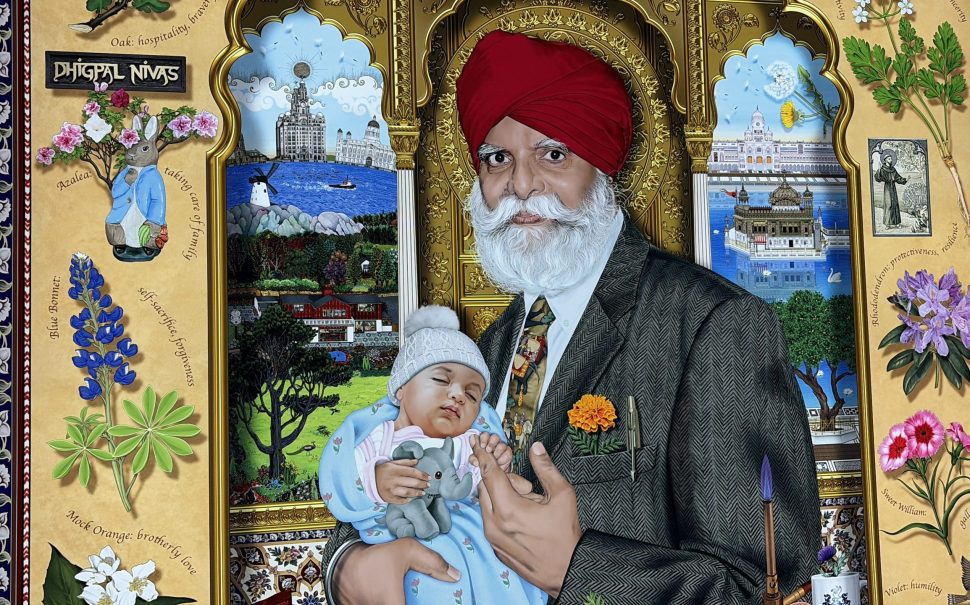
An acclaimed exhibition at Kew Gardens blending botany, trade and history is coming to a close.
At Kew’s Shirley Sherwood Gallery of Botanical Art, an exhibition called ‘Botanical Tales and Seeds of Empire’ by artist duo, The Singh Twins, is going to be displayed for the last time up until 12 April.
The exhibition closely looks at the interwoven relationship between the history of botany with the business of empire and colonialism and its impact on politics, racial attitudes and culture, through their art form of Indian miniature painting with Western art influences.
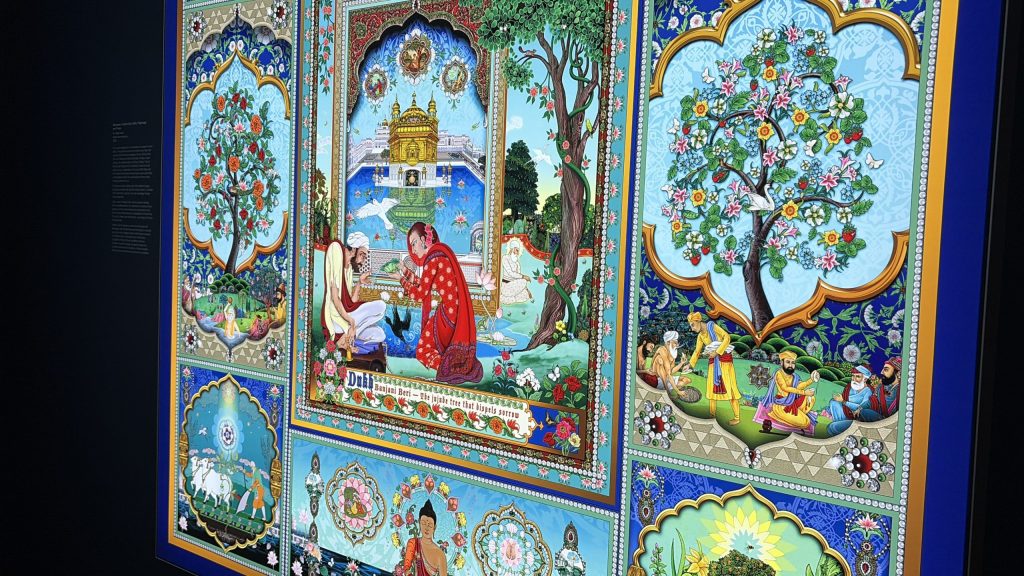
The British-Indian artists spoke about the fusion of traditional Indian art techniques with contemporary issues.
They said: “Our use of Indian miniature techniques is a political statement that asserts the validity of non-European and traditional art forms within modern practices.
“This is our way of challenging the prejudice we faced from art tutors who told us that Indian miniatures were ‘backward’ and ‘outdated’ and had ‘no place in contemporary art.”
The twins were appointed Member of the Order of the British Empire in 2011, the third highest ranking award in the Order of the British Empire, signifying their contribution to bringing community together.
Discussions around the subject and consequences of colonisation and imperialism of the empire is at the heart of their art, which they describe as ‘essentially commercially driven entities built on the ruthless exploitation of people and natural resources’.
One specific part of their artwork at the exhibition focuses on the history and trade of tea through the piece called ‘Dying For a Cuppa’, which reveals links between colonial trade, the forced production of opium in India and the negative effect that this had on farmers and people.
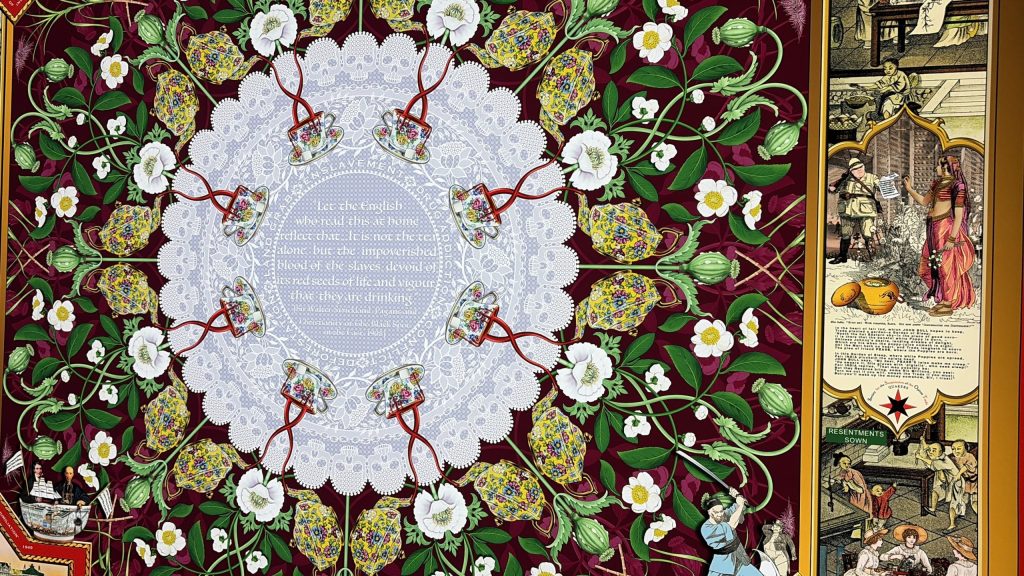
It highlights Britain’s control over tea production in China, forcing them to take opium which farmers were forced to grow in India under foreign rule.
They said: “These actions not only impoverished Indians and caused environmental damage through mass deforestation but devastated Chinese culture and society.”
Upon being asked about their intentional move behind adding minute details woven into small parts of each piece, they said: “We consider art to be one of the most powerful mediums of social, political and cultural documentation.
“Every detail is essential, enabling viewers to connect the dots between those stories and offering us a way to represent multiple layers of meaning and interpretation.”
The artists’ emphasised that their culture and heritage, as well as being British born artists of Indian and English origin, has been extremely important in shaping their art.
They said: “The themes that we explore resonate directly with and reflect our sense of belonging to, interest in, and understanding of that dual heritage.
“Our strong affiliation with and pride in our Indian heritage in particular, coupled with the prejudice we’ve experienced as British Asians is what motivated us to become professional artists, and shaped many of the themes that seek to defend and share that heritage.”
This structure of their art encourages viewers to delve deeper into the debates of colonisation and the symbiotic relationship between history and the effects it has on the modern world.
The artists wish that this exhibition sparks more discussions around the debate of colonialism.
“We hope the exhibition will encourage deeper, more honest and open conversations around the nature of Empire and colonialism and its modern day legacies,” they said.
“Conversations around race, identity, conversations that encourage a greater appreciate and respect for nature and our environment and conversations about the power of art to communicate important themes, issues and debates in a way that is accessible and inclusive.”
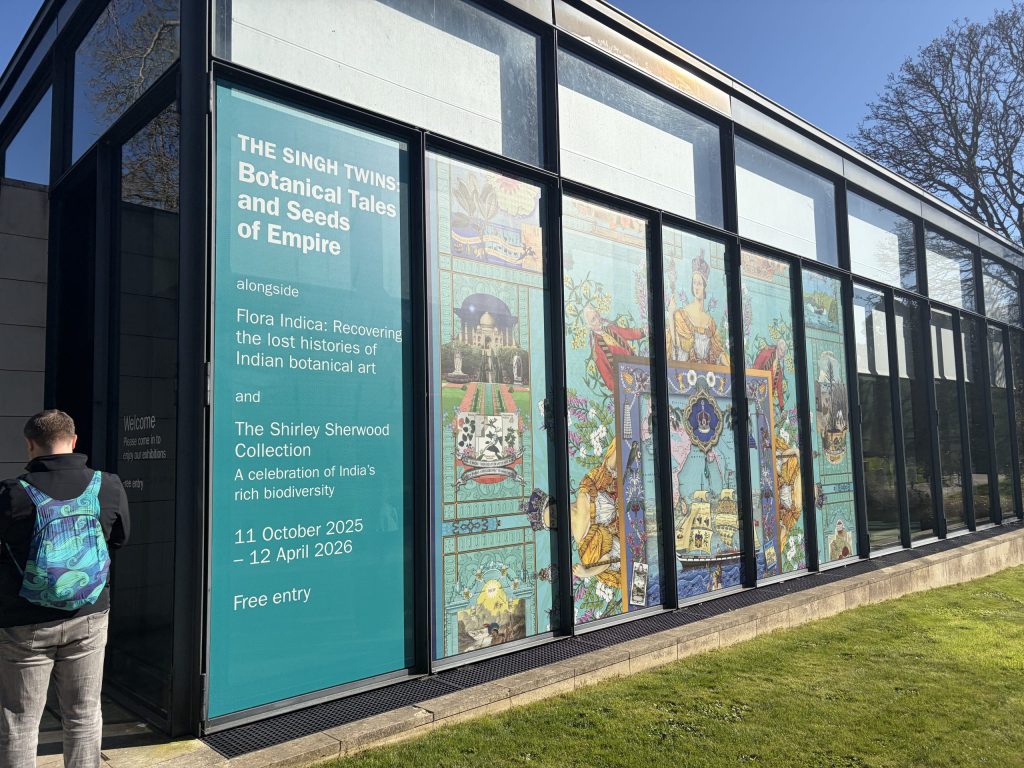
Alongside this exhibition at the gallery, another exhibition called ‘Flora Indica’ is going to be showcased for the last time up until 12 April.
The exhibition is open from 10am to 5pm.
Visit Kew Gardens’ website to find out more.
Featured image credit: Aishani Johal