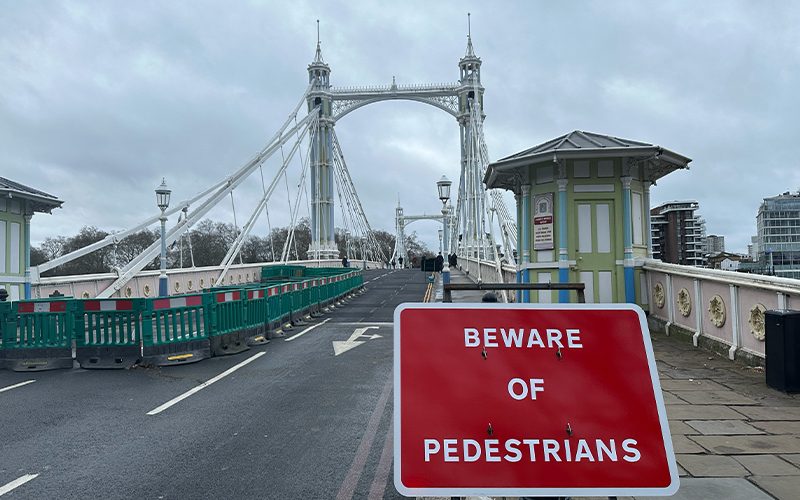
The historic Albert Bridge was closed off to motor vehicles earlier this February by the Royal Borough of Kensington and Chelsea (RBKC).
The decision was made after a crack in a cast-iron component was found during routine inspection, and has been previously closed twice in the last two years for maintenance.
This is the second English Heritage Grade II* listed structure to ban car traffic in South West London, after Hammersmith Bridge in 2019. The RKBC warns the closure may last up to a year, impacting motor traffic in local and nearby boroughs.
Neighbouring Wandsworth Council said: “We recognise how heavily local people rely on Albert Bridge as a key route in and out of the borough, particularly at a time when travel is already strained by the long‑term closure of Hammersmith Bridge.
“We are taking steps to reduce disruption as much as possible.”
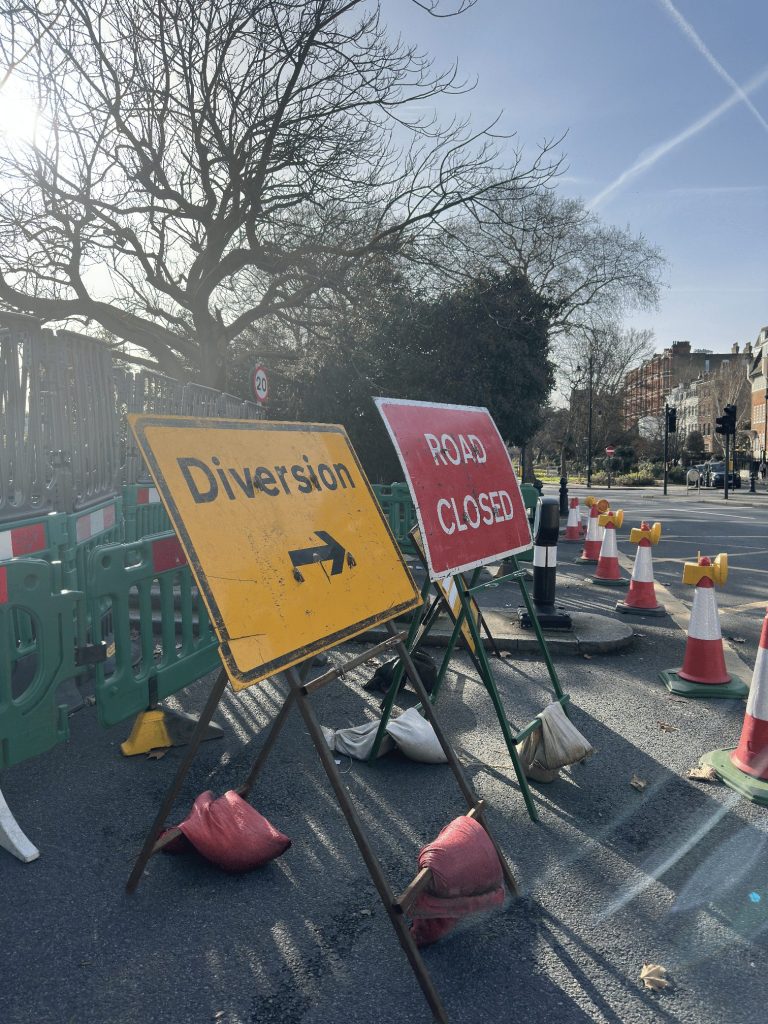
Affected by the closures is a London cab driver under the alias Mark Davies. As a driver for 31 years, he shares his frustration at the increasing number of roadworks and traffic rulings.
According to Davies, the restrictions force motorists onto one road, either getting stuck in dense traffic jams every day or taking riskier detours to avoid them.
“It really is a pain when any bridge is shut… It’s like trying to fit into a tighter pair of trousers — and bridges are no different,” he said.
“The council and highways commissions really do need to speak to people driving, like cab drivers, that understand the streets.
“They’re not getting firsthand experience from guys like us, from professional drivers who know where we’re going and know how to navigate. It’s just getting more and more impossible.”
However, he acknowledged some may benefit from the new traffic order. Shortly after, Davies picked up a man residing in Oakley St, the road beside the 150-year-old landmark, who said he enjoys the reduced noise and fume emissions in the area following its closure.
These sentiments are shared by those of the Hammersmith Bridge is Open campaign. The local advocacy group, which recently held a rally at Hammersmith Bridge last January, believes that historic landmarks like Hammersmith and Albert Bridge are not ‘closed’ since many pedestrians and cyclists use them.
However, concerns from both parties lie in finding alternative transport options for those who need motor vehicles to cross the river.
Davies points to women late at night or those needing to be rushed to the hospital.
“Not everyone can ride a bike, and [taxi drivers] are being banned on streets where we pick up more vulnerable people,” he said.
Keren Levy is a member of the Hammersmith Bridge is Open campaign. She, alongside the group, aims to repropose a shuttle pod system that can transport people from one end of Hammersmith Bridge to the other.
“We hope it can be a trailblazer, and a model for others,” she said.
Those for and against the closures both express a desire to be involved in solutions where local residents and professionals — who are affected by these traffic orders day to day — are consulted.
“You have to think about the heritage, the youth, the function of a bridge,” said Levy.
The RKBC plan to replace the existing emergency traffic order with a temporary traffic order. It is a precautionary measure that warns the bridge may be closed for up to a year, but not a confirmation.
The council has approached TfL on measures to improve traffic flow, including reopening banned turns along Chelsea Embankment.
Cllr Johnny Thalassites, lead member for planning and environment, said: “The early advice we have had following initial investigations suggests that we may be able to complete a permanent fix within a year.
“In the meantime, the investigative work continues. We are working with experts to find out if there are options to employ a temporary fix which I hope to update on as soon as we have the analysis. Our ambition remains to get this bridge open as soon as possible.
“I want to thank motorists for their ongoing patience, we know it is frustrating. But we know for now we have to close the road to avoid the risk of extra weight causing further damage that could make repair significantly more difficult, more lengthy and more expensive.”
Featured image credit: Sabine Batalla