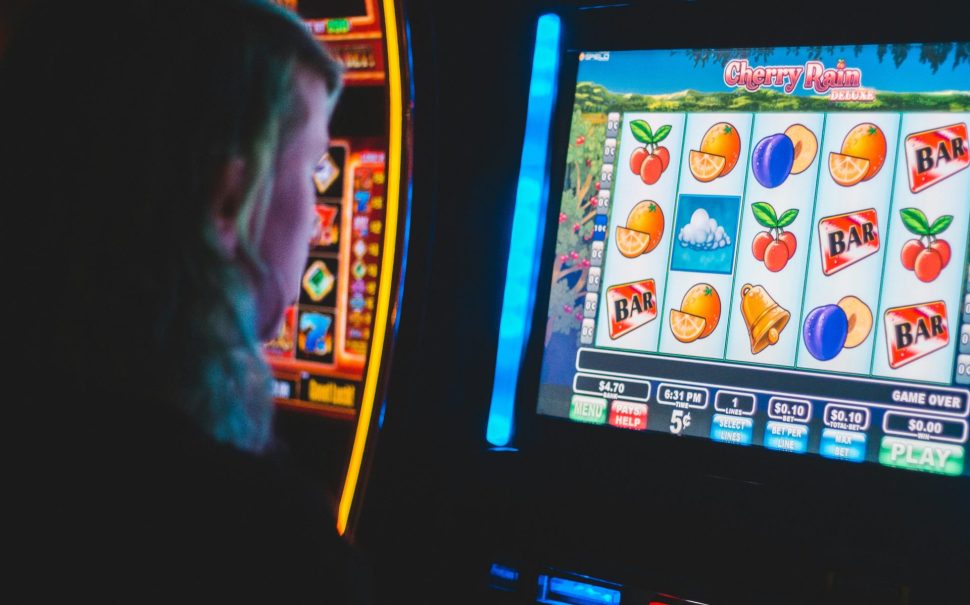
The florescent lights from fruit machines can be blinding and distracting at the best of times, but for someone who is five pints deep and feeling luckier than usual, the results can be especially destructive.
A tagline by bookmakers Coral says, ‘When the fun stops, stop’, however, when a gambling addiction follows you everywhere, like to the pub, ‘fun’ has the potential to never stop.
According to the Gambling Commission’s statistics land-based gambling sectors generated around £4.8 billion from April 2024 to March 2025, much of it from gaming machines in betting shops, arcades, casinos and bingo halls.
The Gambling Commission does not publish the revenue generated from machines in pubs, which means their true impact is hidden from the public.
This investigation uses FOI requests from London boroughs to discover that missing evidence.
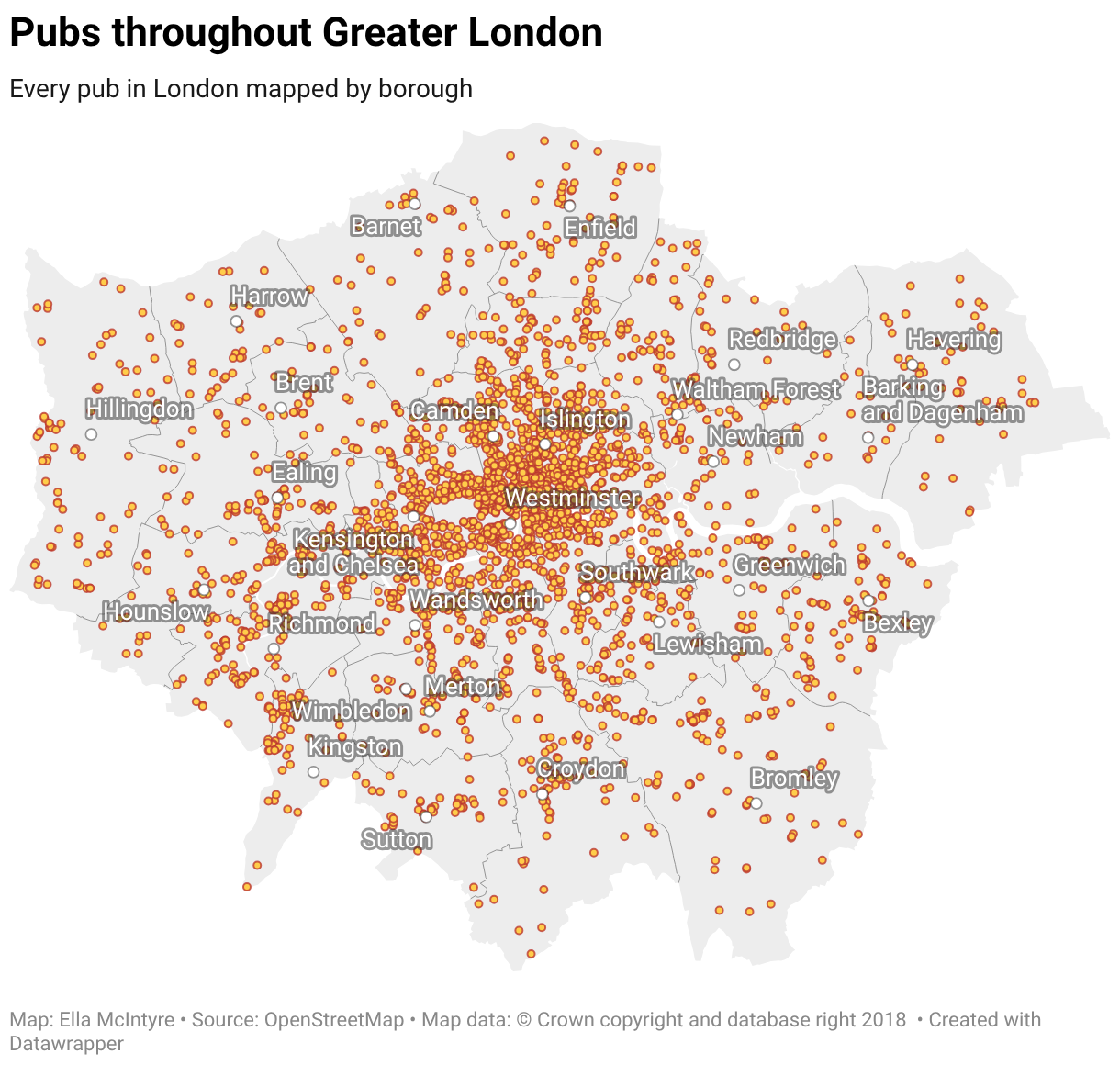
Caption: Distribution of pubs across London boroughs. All pubs are automatically entitled to host up to two Category C or D gaming machines.
A London pub manager, who asked to remain anonymous, said: “I do feel very guilty when I have to switch on the fruit machines of a morning, let alone giving alcoholics more alcohol it feels like a double burden, sort of encouraging people’s addictions.
“When I was younger, I lost a close family friend to a gambling addiction where they would play slots endlessly online to the point of extreme debt.
“This calms my conscience as I know that if people weren’t playing on the machines here, they would just get their fix elsewhere.
“Gambling can be accessed all around, at any time, but I don’t think that alcohol endued use is helpful in the slightest as it makes the practice more acceptable than it should be in our society and especially in pub culture.”
Pubs and other alcohol licensed premises have automatic entitlement to house two category C or D gaming machines without special permission – category C machines are the most common type in pubs with low stakes and designed for continuous play.
It is important to note that not every pub has to install the two machines they are legally entitled to.
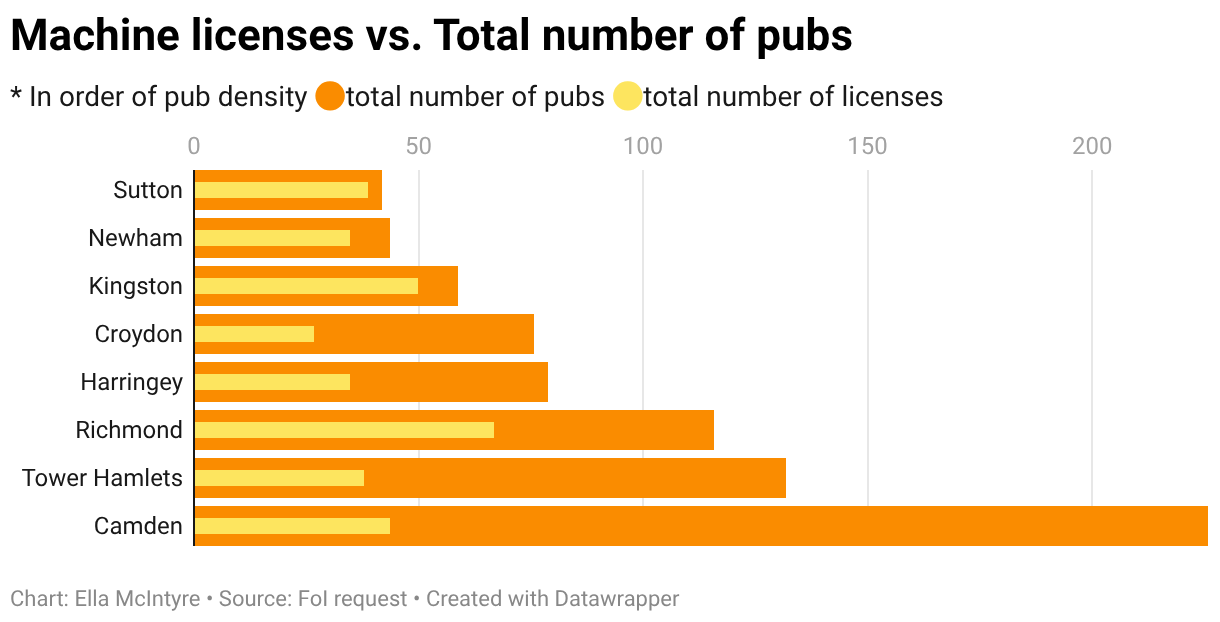
Caption: The amount of pubs with a gambling machine license out of the total number of pubs per select London borough.
Freedom of Information data shows how machine licences differ between the most and least deprived areas of London with an array of pub densities.
In Newham, which ranks highest in England for income deprivation, 35 out of 44 pubs (80%) are licensed to host gaming machines, almost four in five.
By contrast, Richmond, one of London’s most affluent boroughs, has licensed 67 out of 116 pubs (58%) making up nearly two-thirds of all venues.
We see higher numbers in some of London’s outer boroughs, with Sutton licensing 39 of its 42 pubs (93%) and Kingston 50 of 59 (85%).
Haringey sits closer to the middle, with 35 of 79 pubs (44%) as well as Croydon with 27 out of 76 (35%).
Further variation is mapped across Camden, which has just 44 pubs licensed out of 226 (19%) while Tower Hamlets has 38 of 132 (29%).
While the data does not explicitly imply pubs are fuelling the problem, it does suggest that machine gambling is more embedded in pub environments in more deprived areas.
According to the news outlet Novo Org, research shows that adult gaming centres are disproportionately concentrated in poorer communities and that approximately half are based in the most deprived 20% of areas in the UK.
In the borough of Newham alone, there are 66 betting shops according to the FOI data, which has one of the highest concentrations in London.
By contrast, more affluent boroughs typically host far fewer betting shops, according to council licensing data.
This raises questions about whether gambling machines are seen as more like a revenue source in areas where pubs have greater financial difficulties.
When speaking to members of the local London community, many shared similar negative views on these machines plaguing their society.
Jan said: “The machines are just there to earn money for the pub owner, the machine-owner and to part you from your hard-earned money.”
Chetna said: “Because they are so easily accessible in the high street, it definitely contributes towards problem gambling.
“When people have to travel to a proper casino, it takes the ‘ease of access’ out of it slightly.”
Daz said: “My mate used to pop into his local for a swift pint and spend the change in the fruit machine.
“Long story short he would end up having a good drink whilst trying to win back what he’d spent and often end up spending 3 figures and getting hammered.”
These comments exaggerate wider concerns repeated in treatment data, which show high levels of harm being associated with machine gambling.
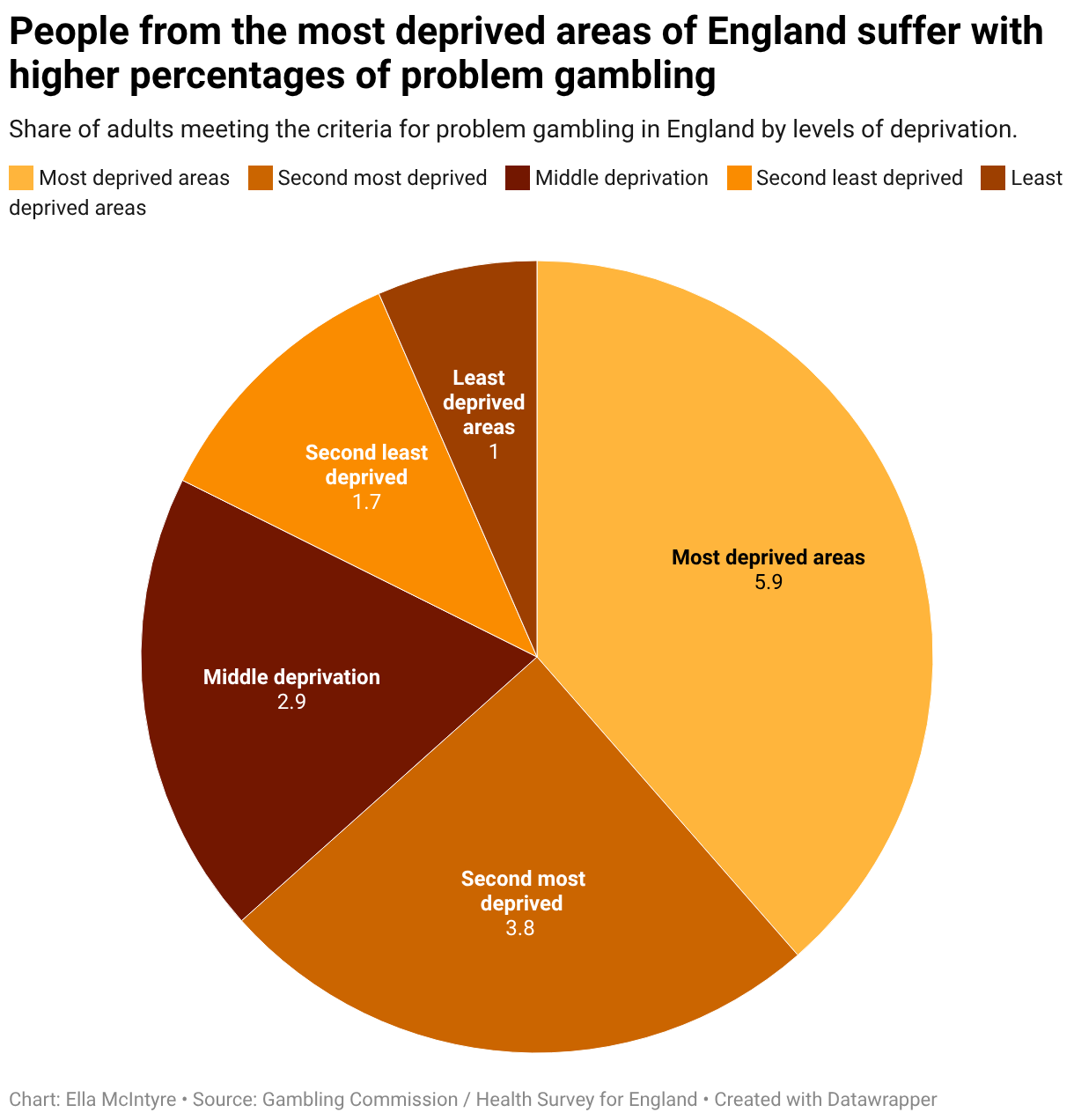
National gambling-harm data shows severe harm is concentrated in poorer areas, despite similar overall participation rates.
In the most deprived areas, 5.9% of adults meet the criteria for problem gambling, compared with just 1.0% in the least deprived, meaning people in poorer communities are almost six times more likely to experience severe gambling problems.
Perhaps the most shocking findings relate to mental health and the risk of suicide.
National survey data indicates that 12.6% of people who gambled in the past year (around one in eight) have thoughts of suicide or attempted suicide which 7.7% identified to be directly due to their gambling.
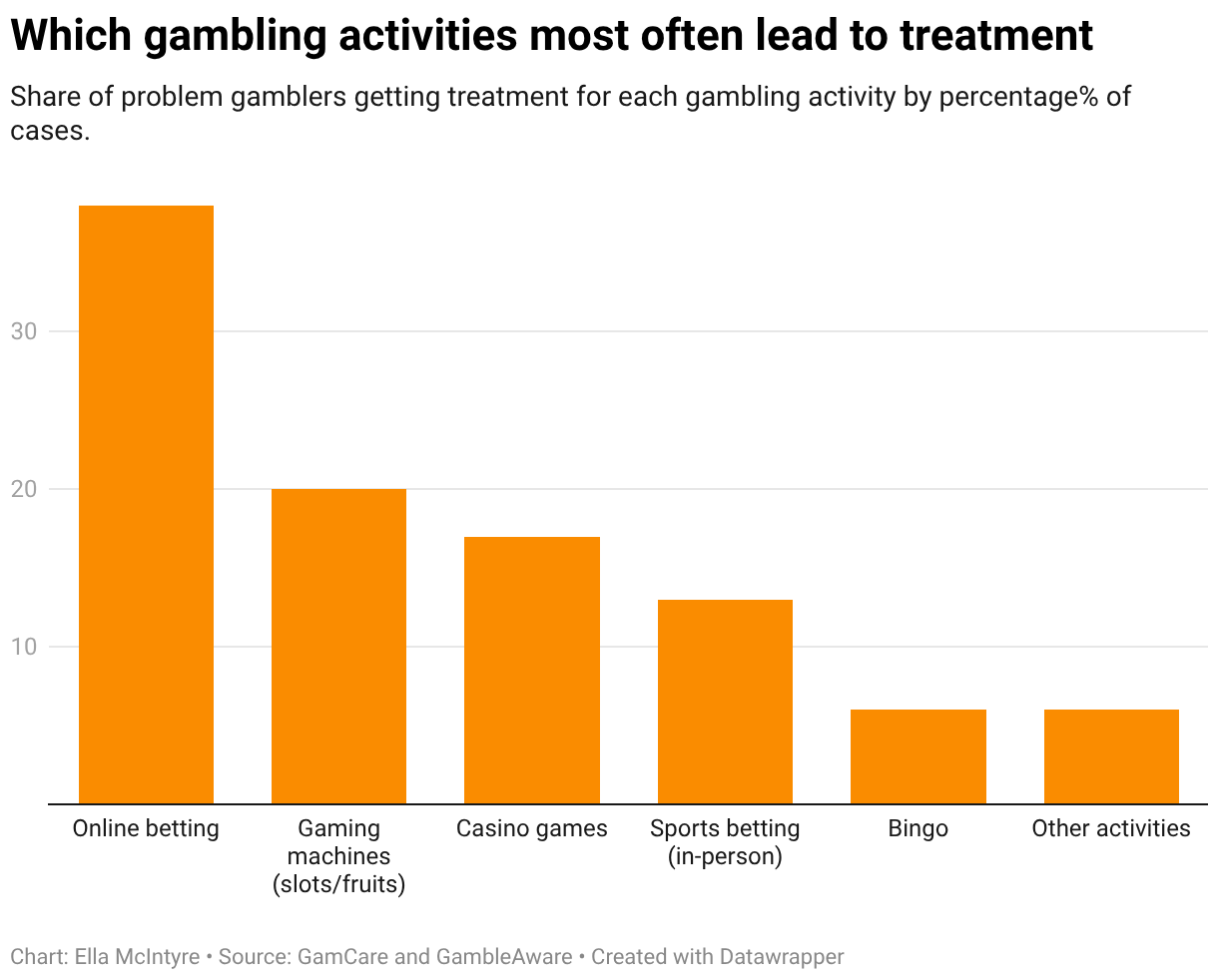
Treatment data from GamCare and GambleAware has consistently indicated that land-based gaming machines, including those sited in pubs, have been the driver for up to one in five of all people entering treatment.
According to the most recent annual report from GamCare, there was a marked increase of 25% in the number of contacts made to the National Gambling Helpline, with over 55,000 contacts in 2023-24.
Zoë Osmond, former Chief Executive of GambleAware, said: “Only by encouraging an open dialogue can we empower people to seek the support they need without judgement.”
As trends show, the wider pub sector in England continues to face intense economic strain with many pubs struggling to survive.
In a published report by the company by Wetherspoons in 2025, they ran £360m through every fruit machine in their pubs the country which made the chain a total of £90m in profits.
According to British Beer & Pub Association (BBPA) pubs are increasingly relying on secondary sources of income other than sale of alcohol to fill this gap.
They added that nearly 300 pubs closed in 2024 alone, about six a week, resulting in more than 4,500 job losses.
BBPA chief executive Emma McClarkin said: “Consumer demand is there, however profits are being wiped out with sky-high bills and pubs are facing yet more rates and costs.”
Pubs hold a special place within British life; they are communities, workplaces, and social spaces.
But they are also sites where gambling is normalised and embedded into everyday routines alongside alcohol consumption.
For those who are already vulnerable, this could be an especially deadly combination.
When pubs fight for survival and machines quietly plug the revenue gaps, the issue is not whether gambling exists, but who pays the price when it becomes routine, invisible, and impossible to avoid.
Until the true extent of pub level gambling data becomes visible, the true impact of fruit machines in Britain’s pubs remains unseen, even while their harm contribution slowly becomes harder to ignore.
If you or someone you know is struggling with a gambling addiction, confidential help is available 24/7.
The National Gambling Helpline, run by GamCare, offers free, confidential advice 24 hours a day on 0808 8020 133 or via live chat at www.gamcare.org.uk.
Support is also available through www.gambleaware.org, which provides information on treatment services, self-help tools and local support across England.
If you are in immediate danger or distress, contact emergency services or seek urgent medical help.
Featured image credit: Unsplash