London’s leading phone-free event, The Offline Club, is making waves as residents search for meaningful connection without the distraction of technology.
When The Offline Club launched in Amsterdam in 2024, its founders were clear about their aim: to create a social movement focused on disconnecting from phones and digital distractions.
What they did not anticipate was just how many people were craving the same escape, and by late 2024, having ironically gone viral online, The Offline Club made its way to London.
Laura Wilson, The Offline Club’s London city leader, said: “I wanted a space where I could do the things I love – reading, writing and drawing – while surrounded by people rather than alone at home.”
The London branch now hosts two-hour ticketed events several times a month in venues across the city, with tickets often selling out days in advance.
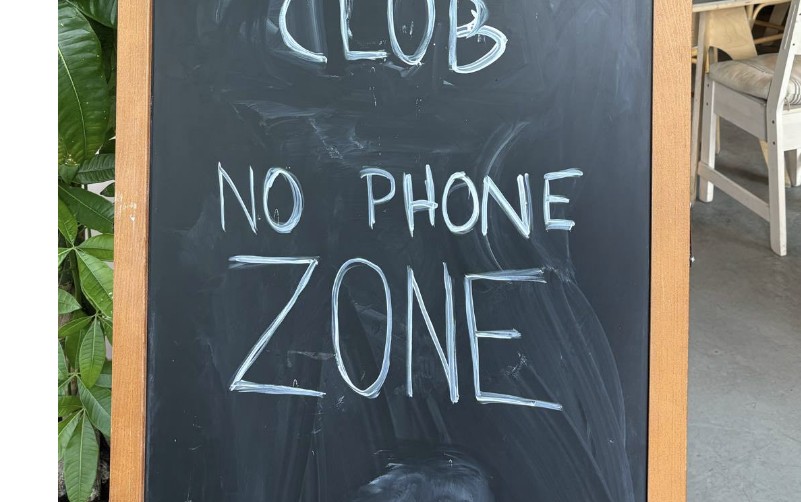
Upon arrival, phones are locked away safely, and everyone is given an hour to work on whatever they like – Wilson says letter-writing, journalling and life admin are among the most popular activities.
The second hour is more loose and social, with attendees encouraged to talk to one another without the interruption of buzzing notifications or incoming messages.
Wilson believes removing technology fundamentally changes how people connect.
She added: “It’s about having conversations with people that aren’t just small talk, but also aren’t ‘tell me the worst thing that’s ever happened to you’.
“It’s that middle zone, and I think that’s hard to find nowadays.”
The growing interest in phone-free spaces reflects a wider public unease about social media.
Despite more than 80% of Britons using social media, YouGov has found that a record 37% believe it negatively impacts mental health.
Another YouGov poll revealed that only 58% of Britons view Instagram positively, a figure that drops to 30% for TikTok and 24% for Snapchat.
The evidence points towards a clear conclusion: widespread use of social media does not necessarily mean people enjoy it.
The Offline Club’s rapid success suggests there is a group of Londoners actively seeking a life with less technology, not more.
Wilson hopes the club will eventually become part of everyone’s ‘tech-free health’, describing it as a gym for mental wellbeing.
Whether this idea can take permanent root in a city like London, where technology is largely accepted as the future, remains to be seen.
For now, The Offline Club offers a space for anyone seeking connections without screens.
Click here to find out more or get involved.
Featured image credit: Instagram – london.theofflineclub