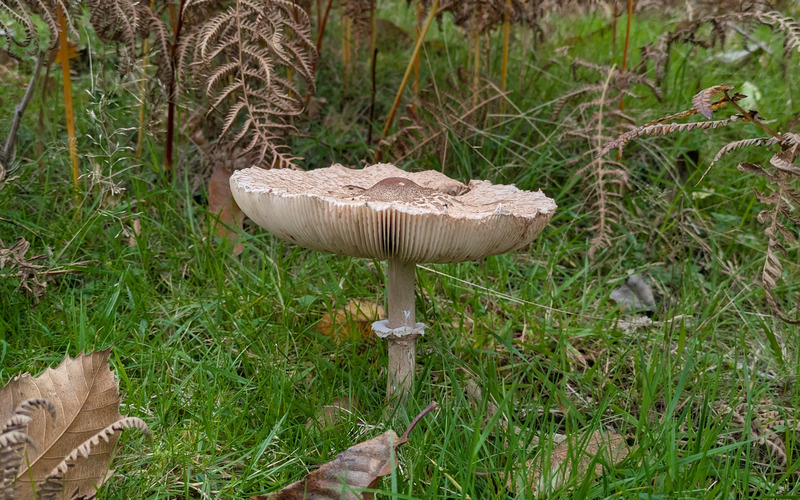
It’s a crisp autumn morning in the Kent countryside, and I’m crouched in the leaf litter, on hands and knees, hunting for mushrooms.
It isn’t something I typically do on a Sunday. But I must admit, there’s something quite enjoyable about it. And wild fungi are, I have discovered, really quite fascinating.
For some, they are a gateway to altered mental states through psychedelics; for others – especially following this year’s trial of Erin Patterson, who murdered her in-laws in Australia with a meal of death cap mushrooms – they are inextricably linked to poison.
And now, for a growing number in the UK, wild mushrooms, along with wild fruits, nuts, leaves and even seaweed, are becoming staples in a kind of extended larder.
Since 2006, Google search traffic for ‘foraging’ has increased by over 300 per cent in England, and popularity has only grown since the pandemic, even in urban centres like London.
Jesper Launder, an amateur mycologist and member of the British Mycological Society, said: “It’s been insane. And I think lockdown further reinforced that because people had time to dig deeper into things they find interesting.”
Now, despite a proliferation of foraging courses and walking groups in the city, you would be hard pressed to find one that isn’t booked up weeks or months in advance.
But when there’s a Lidl round the corner and a Tesco on the next street, it would seem city dwellers have no need to traipse through mud and bracken for their next meal.
So why exactly are they doing it?
The overriding answer from foragers, including Henrietta Fernandez, who runs mushroom forays and identification walks in Sussex, is that gathering food brings a deep sense of connection to nature.
Fernandez said: “It’s like going back to your roots. It’s a completely mindful thing and you just get lost in it. You don’t think about anything else and you’re just looking, looking, looking. And then, you know, the results are free food, so that’s a bonus.”
Like many professional foragers, Fernandez is a member of the Association of Foragers, a group founded in 2015 that promotes a responsible approach to the practice.
Part of this responsibility comes from following the law. As long as you aren’t foraging for commercial purposes, it is generally legal to pick the “four Fs” – flowers, fruits, foliage and fungi – on public land in England and Wales.
It is, however, illegal to forage on Sites of Special Scientific Interest, and some parks and woodlands have their own by-laws that ban foraging, so foragers must always be aware of the rules of the area they are in.
On private land, foraging is illegal without permission from the landowner.
As a general rule, said Fernandez, wherever you’re foraging, you shouldn’t take more than a third of what you see, and you should be careful that your harvesting method doesn’t damage the plant or fungus’s ability to keep growing.
Helena Kertesz has been foraging for two years and says it helps them connect with nature.
There are concerns, however, that not all foragers adhere to these kinds of ethical and legal guidelines.
In October, for instance, the Berks, Bucks, and Oxon Wildlife Trust was compelled to issue a public reminder that foraging isn’t permitted on its reserves, after reports of “gangs” of commercial foragers ripping up fungi.
Fernandez said she has personally seen some people with massive shopping bags full of mushrooms while out in the Sussex countryside.
For Launder, it is important to make a distinction between this sort of activity and foraging for personal use.
He said: “It’s tough because foraging does get a bad rap, but if they’re doing that, and if that is happening, that’s commercial foraging.
“Commercial foraging in England is illegal; the individual going out foraging on land, on public land, or land they have permission from the landowner, collecting modestly for their personal needs, is not an illegal act.
“One gets conflated with the other sometimes.”
There is also the matter of context. In the south of England, and particularly within London, there is far more pressure on land than in areas such as the north or Scotland.
This makes the green spaces that remain more ecologically vulnerable, and in need of greater protection.
The Royal Parks in London, for instance, are all designated as Sites of Importance for Nature Conservation through the Mayor’s London Plan and Borough Plans. And Richmond and Bushy Park are designated as Sites of Special Scientific Interest.
These parks are legally protected from foraging, and a freedom of information request to the Metropolitan Police revealed that 95 people were issued warnings for foraging in them between 2022 and 2024.
Charlie Linton, manager of Royal Parks’ Help Nature Thrive outreach project, said: “The parks provide a wonderful opportunity for everyone to soak up, experience and enjoy the natural environment and observe the parks’ biodiverse wildlife.
“We remind people to care for the parks and to respect the wildlife on their visit by following simple measures such as not taking anything away from the park and only leaving behind their footprint.”
And the Royal Parks offer plenty of alternative ways to connect with the natural world, including their fungi walks. On these, an expert leads a group around one of the parks and shows off the various species growing there.
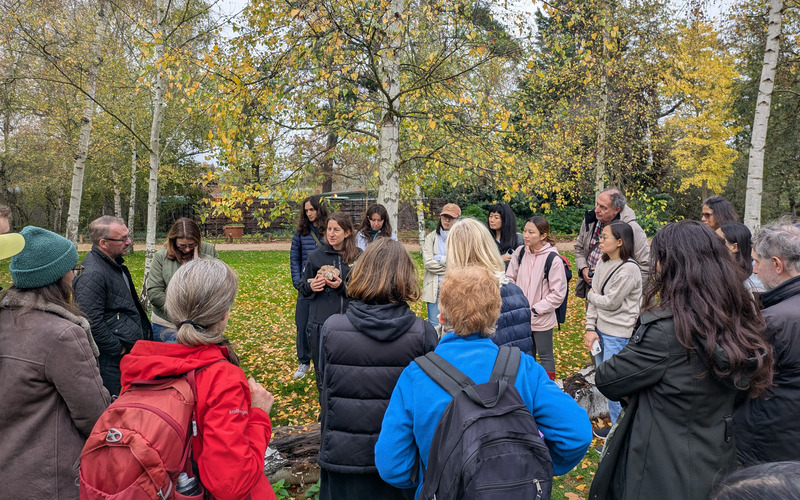
Linton said: “Mushrooms come in all shapes, colours and sizes, and they are fascinating to look at and learn about. They are a great gateway to engaging people in nature and encouraging them to learn more about the natural world and become more involved in protecting wild spaces.”
This, it seems, is where foragers and conservationists agree. More people going out into the natural world and becoming invested in its protection can only be a good thing. Foraging, when it is done knowledgeably and in places that can support it, is just one way route to that aim.
Launder said: “If you have got into foraging, what you’ll find soon enough is that actually what you’re experiencing is a connection to the natural world that maybe you didn’t have beforehand. And it’s not just about, oh, I might find loads of this mushroom here. It’s deeper than that.”
And there is some research to suggest that this attitude does result in a net positive for ecosystems, showing that, under the right circumstances, foraging can be sustainable and even beneficial.
For instance, in Berlin, allowing non-commercial foraging hasn’t resulted in over-harvesting, and foragers were instead seen to take stewardly actions like picking up rubbish and pruning the dead parts of plants.
It all comes down to being aware of the context you are foraging in, and being knowledgeable about what is there and what amount of foraging is harmful, said Fernandez.
She said: “If you’re starting out, you just go out with somebody who’s a learned forager, such as a member of the Association of Foragers, so you know that then you’re in good hands.”