Ten years ago, running a marathon was a triumph against physical limitations. Today, it feels like a mid-sized bucket list item, alongside learning to knit or perhaps picking up a new instrument.
This is runflation. A word used increasingly by the running and fitness community over the last year, runflation describes the skewed perception of your running achievements and progress due to the constant feed of information from those further down the road. Literally.
But runflation isn’t simply all in your head. According to SportsShoes.com, more than 40% of the UK’s population now runs at least once a week.
Around 9% more race times were logged last year and there has been a 5% jump in those running one to three times a week.
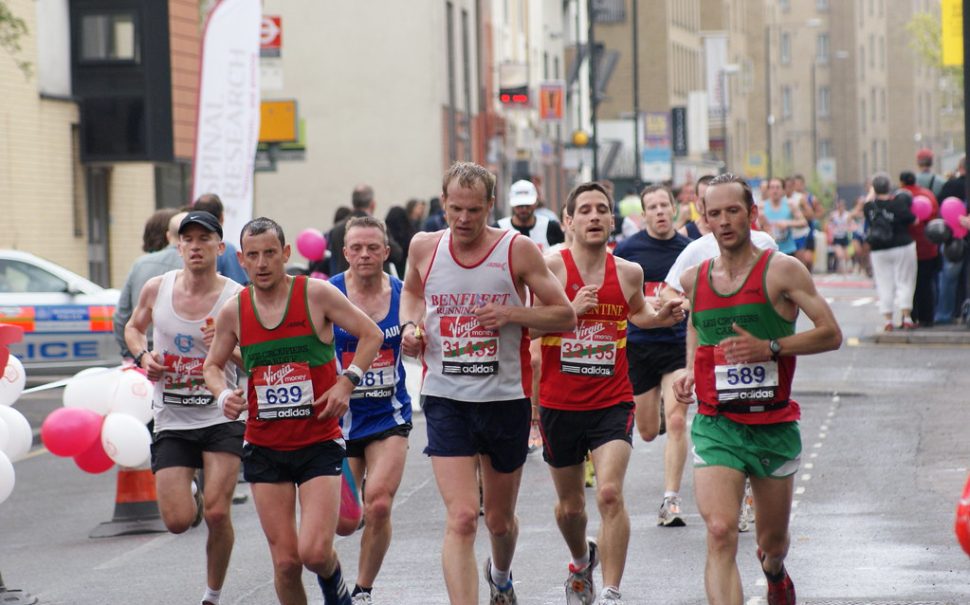
Perhaps the best place to analyse runflation is the country’s largest distance running event, the London Marathon.
In 2018, 39,096 athletes finished the event from the mass start (i.e. not the elite race), with a median time of 4hr49.
In 2024, there were 53,602 finishers with a median time of 4hr18.
Shaving half an hour off the median time whilst bringing almost 15,000 new entrants is a staggering statistic, though it seems to be a societal phenomenon, not a deliberate decision made by London Marathon organisers.
Data from the capital’s second-biggest distance running event, the London Landmarks half-marathon, shows the 2025 median time was 2hr09, 4.2% down on 2024.
Exeter University’s Professor Andy Jones worked on Nike’s Breaking2 project that saw Eliud Kipchoge break the two-hour marathon barrier using pacers, and he spoke to the Londoners from UK Athletics’ winter training camp in South Africa, where he is the chief scientific advisor.
He believes technological changes are behind runflation.
He said: “A large part of Breaking2 was that he was in energy-returning shoes. Those shoes then became available to the general public and they got faster too. For the same effort and oxygen cost they can travel that bit faster.
“You can do more now in those shoes as it’s not just effective when you lace them up at the start of a race.
“Those who train in them find they can run more miles and faster miles more often, so they get to that startline with better fitness, so there’s an elevation of conditioning in addition to the acute effect of the shoe on the day.
“Nutrition is another reason. You can take on more carbohydrates, and in events such as the marathon, if you run out of glycogen, you’re going to hit the wall and slow drastically, so taking on more carbohydrates makes a huge difference.
“People like Kipchoge have also motivated others to get involved more, too.”
But despite the influx of running influencers telling their followers how far, how quickly, and how regularly to run, Jones believes training hasn’t changed significantly for decades.
He added: “There is more knowledge about how to train but I don’t think there has been a revolution in training theory. The sort of training people do now is pretty similar to what was being done 30 or so years ago.
“Most people new to the sport can do more, up to a point of diminishing returns. Eventually, there comes a limit, and I am a big believer in the specificity of training. If you want to run a 5k in 15 or 20 minutes, running a hundred miles might not be as effective as running fewer miles close to your target pace.”
That might seem sensible, but even strict training blocks and dedication can leave runners agonisingly short of their goals, or injured.
Running influencer Mary McCarthy has become the latest victim in a spate of injuries amongst the community, suggesting her tibia fracture would sideline her for at least six weeks.
Durham University cross-country captain David Millar said: “I was a victim of runflation with the London Marathon’s good-for-age entry, as I had run a 2hr55 at the Edinburgh Marathon in 2024 and thought I was going to get in, as that was below the good-for-age entry threshold the year prior.”
The ‘Good for Age’ entry requirement, where you qualify for a starting berth based on running below a threshold time, set by age group, dropped to 2hr52 amongst 18-39 year olds in 2025, due to falling marathon times across the country.
And after his Edinburgh effort, Millar suffered from shin splints and is still on the road to recovery.
He said: “Entry standards are tumbling, and the biggest difference is carbon shoes, in my opinion. People are able to run at faster paces for longer, so training is improved as well as race day pace, and the large amounts of foam make recovery quicker, too.
“More people have discovered the sport too, so there is more talent.
“Improvements in training are a factor for the elites – they have great coaches, better knowledge, and are reaping the rewards of modern research in optimal training. Some people think it’s the same at the amateur level but I disagree.
“Everyone now runs with a Garmin, uploads it to Strava, and can see their training splits to the nearest hundredth of a second, but it doesn’t seem to me that people are training any better.”
But more people are running, and both Millar and Jones were at pains to point out that regular exercise of any form is a huge benefit to your health.
Even if you’re unlikely to become the next Eliud Kipchoge.
Featured image credit: Julian Mason via Flickr