Fish biodiversity in the Tidal Thames has seen an almost threefold increase in the last 35 years, but sewage spills into the river from storm overflows could impede its further recovery.
Data obtained from the Environment Agency shows an increase from seven unique fish species in 1989 to 19 in 2024. However, decreases in biodiversity correlate with spikes in sewage discharges seen in data gathered from Thames Water over a six-year period.
Increasing species variety in the Thames, which the Natural History Museum declared ‘biologically dead’ in 1957, is a marker of a healthy ecosystem, but care must be taken to ensure sewage does not negatively impact water quality and prevent the flourishing of fish populations.
Matthew Pope, the managing director of Esox Biologics Ltd., a water-testing biotechnology company that supports fish health, said: “Sewage remains an issue because it spikes nutrient levels in the water which can cause havoc for aquatic species.”
The highest recorded number of unique fish species, in the 95 miles of river between Teddington Lock and the Thames Estuary, was in 2019, when 40 different species were identified – almost six times higher than 1989 figures.
Notably this peak was accompanied by a steep 65% fall to only 14 unique species in 2021. Similarly, a recovery to 30 different species in 2023 declined to 19 species in 2024.
Similar fluctuations in fish biodiversity can also be seen in other decades. Thirty-three unique species in 2002 declined steadily over a four-year period to 15 in 2006.
Pope said: “We’ve come a long way in terms of river health. We see an increase in fish biodiversity because we respect the Thames more than we used to.
“An awareness of fish habitats, advances in microbiology and enhanced water testing and monitoring technologies have all contributed to this.”
Pope explained that technological developments have helped inform strict regulations on construction, boat traffic and the import of non-native species all of which help protect the Thames’ delicate ecosystem.
He said: “My biggest concern for fish in the Thames is any form of pollution, including sewage, that negatively alters the microbial composition of the river, as well as habitat destruction.”
The Environment Agency has requested that Thames Water record incidents of sewage overflows into the River Thames since 2017. Storm discharge sites are monitored from the upper Thames at Cricklade, Swindon, to the estuary at Dartford Creek in Bexley.
Sewage spills occur when sewers, operating at capacity due to high rainfall or flooding, overflow into river systems to prevent waste returning to homes and streets. Thames Water uses Event Duration Monitoring (EDM) to record the number and duration of untreated sewage spills entering the River Thames.
An average of 15,090 sewage spills were recorded along the Thames annually between 2019-2024. This was capped by a high, in 2024, of 23,061 spills with a low, in 2022, of 8,014.
When measuring the duration of each spill, 2024 saw sewage enter the Thames for the longest period: a total of 298,081 hours across the year. The lowest duration of spills with a total of 74,693 hours was in 2022.
Correlations can be seen between sewage spills and fish biodiversity. For instance, the second highest spill count recorded at 18,443 in 2020 coincided with a drop in fish species diversity from 40 to 14 between 2019 and 2021. Fish biodiversity data was not collected in 2020 due to the COVID-19 pandemic, according to GOV.UK.
Similarly, fewer sewage spills in 2022 correlate with an increase in fish species from 14 to 26 between 2021 and 2022, but an increase in sewage spills correlated with a subsequent drop in fish diversity from 30 to 19 between 2023 and 2024.
Pope said untreated sewage is rich in phosphates and nitrates which are essential nutrients for microorganisms and can spur the growth of oxygen consuming microbes in the river.
Speaking about this process, known as eutrophication, he said: “If microorganisms are consuming dissolved oxygen in the water at a rate faster than the oxygen is being replenished, the microbes will outcompete the fish for oxygen.”
He went on to explain that any sewage pollution to the river upstream of the Teddington Lock would negatively impact the downstream Tidal Thames, even if Londoners kept the lower part of the river in pristine condition.
Pope said: “That nutrient rich sewage will flow downstream, changing the physical and chemical properties of the water.
“Even if it does not immediately kill them, it may reduce oxygen, alter pH and negatively impact fish by increasing their stress.
“Stressed fish are more susceptible to disease just as we all catch a cold when we are run down.”
According to the Environment Agency website, poor water quality is a key contributor to declines in fish populations with problems most acute in summer months.
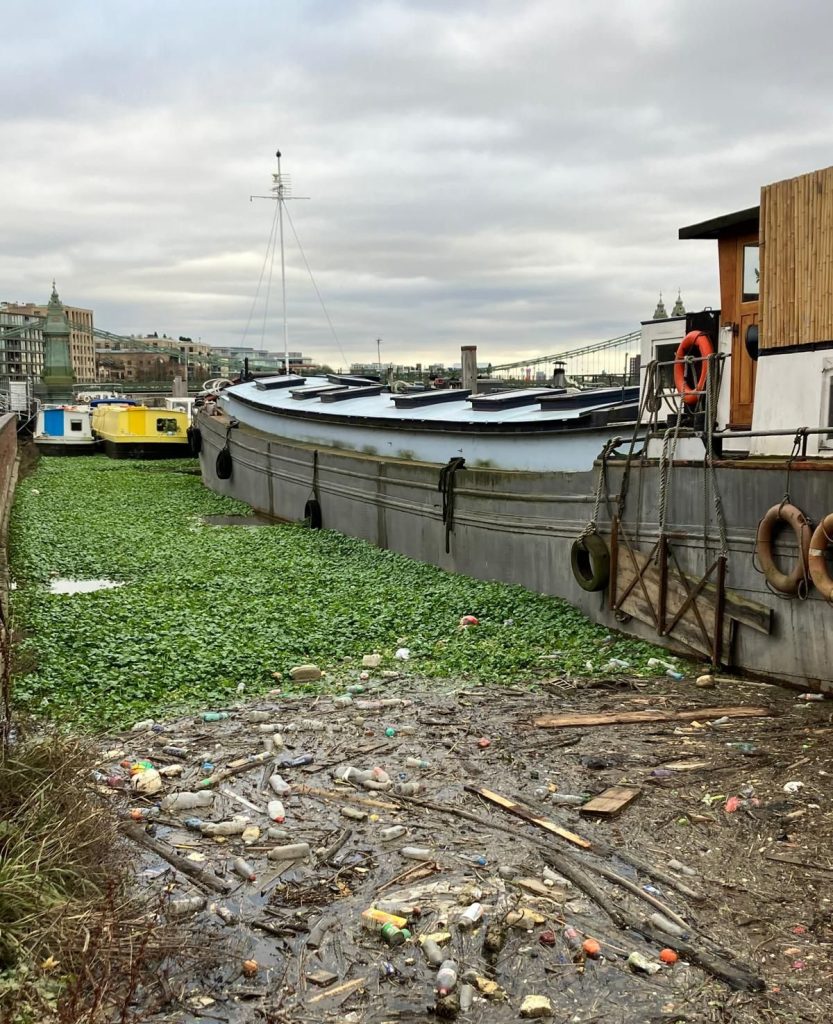
Rising water temperatures reduce dissolved oxygen levels while supporting growth of algae which also exploit the increased levels of sunlight to flourish.
Combined with sewage and agricultural runoff leaching nutrients into the water, summertime is particularly stressful for fish.
A 40-year-old angler, who has been fishing in the Thames since 2012 and has been a member of a South London angling club for over five years, said he had observed multiple temperature-related ‘killer events’ in recent years.
The angler, who requested to remain anonymous, said: “We had a really mild autumn a couple of years ago so there was an oxygen drop in the water. Lots of fish died.”
He explained that the impact of warmer weather is becoming of increasing concern among fellow anglers, and that he considered sewage and other forms of pollution to be key contributors in a ‘massive chain reaction’ of climate affected incidents.
The angler added that he believed private water companies were responsible for any failures to adequately address sewage spills in the Thames.
‘Care of the water needs to be government owned and regulated properly’ not ‘private companies and all those big guys sitting around doing nothing’, he explained.
A Thames Water spokesperson, however, said there are plans to invest £9.5 billion into schemes to increase sewage treatment capacity, reduce storm discharges, and manage the nutrient levels in the river over the next five years.
The Spokesperson said: “Transparency is at the heart of what we do, and we were the first water company to publish a real time data map on our website, before it became legal requirement to do so.
“We are committed to seeing waterways thrive, but we can’t do it alone. Farming, industry, road runoff, wildlife, and increasingly extreme weather also play a role in river health.”
They also explained the construction of the Thames Tideway Tunnel, which is in its final testing stage, and is the third component of a three-part system, will help reduce the volume of storm discharge entering the Thames in central London by 95%, and has thus far captured over 12 million tonnes of sewage.
The spokesperson said: “We understand that all untreated discharges, even when permitted, are unacceptable, however, it’s important to remember the sewage system was historically designed this way to prevent sewage backing up into people’s homes.”
The Environment Agency was contacted for comment.
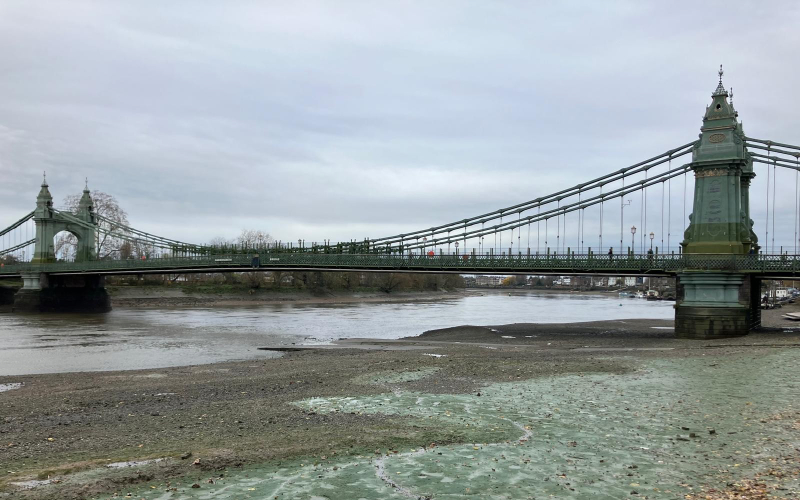
Featured image: GREEN RUG: Low tide at Hammersmith bridge unveils a healthy bed of algae. Credit: Athena Vlachou