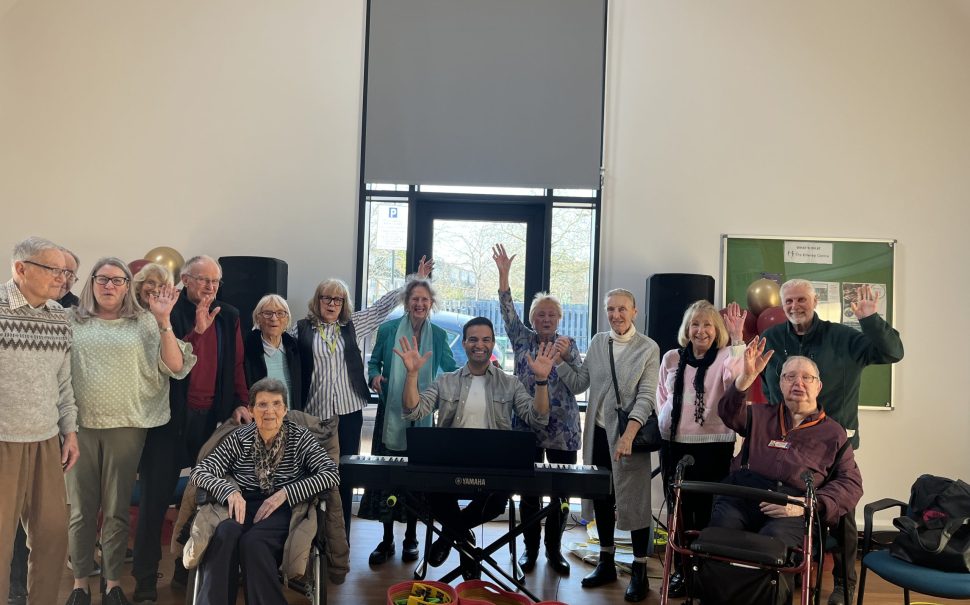
A weekly singing group in Teddington is striking a chord with those living with dementia and their support systems.
Led by Carl Speck, 43, the class focuses on what can be offered now for those living with dementia, which is routine, belonging and joy.
‘Singing for the Brain’, launched by the Alzheimer’s Society in 2003, is designed for people living with dementia, their carers and families.
With 55 million people worldwide affected by the disease and no cure currently available, this programme supports people and brings happiness.
Speck said: “The sessions are very welcoming, so inclusive, and sometimes a little bit chaotic, but it’s always good fun.
“It’s not just for those with dementia, it is also an outlet for their family members and carers to speak to others too.
“I ensure I know each attendee by name to help them to feel valued and welcomed. Providing consistency and opportunity is important and people get used to that.
“Lots of people that come, come with their spouses and those days could have been a, ‘my God what am I gonna do with him today?’ Actually, providing an outlet for a morning out is really important. In a life where things can often feel so unpredictable, that sense of structure is vital.
“Things are going to be a bit puzzling at times, but if I can be part of what makes them happy, that’s special.”
Participants arrive early for tea, coffee and conversation before being gently grounded by Speck in breathing exercises, and then a hymn.
The class follows the same reassuring structure of action songs, percussion instruments and onto well loved classics.
The song choices are carefully selected to unlock recognition and spark comfort for those attending.
A South West Londoner attended a session and witnessed some much loved classics being sung including; Come Fly With Me by Frank Sinatra, Can’t Help Falling in Love by Elvis Presley, and Let’s Twist Again by Chubby Checker. Whilst the class also created space for British and schoolroom favourites such as Maybe It’s Because I’m a Londoner and How Much Is That Doggy in the Window?
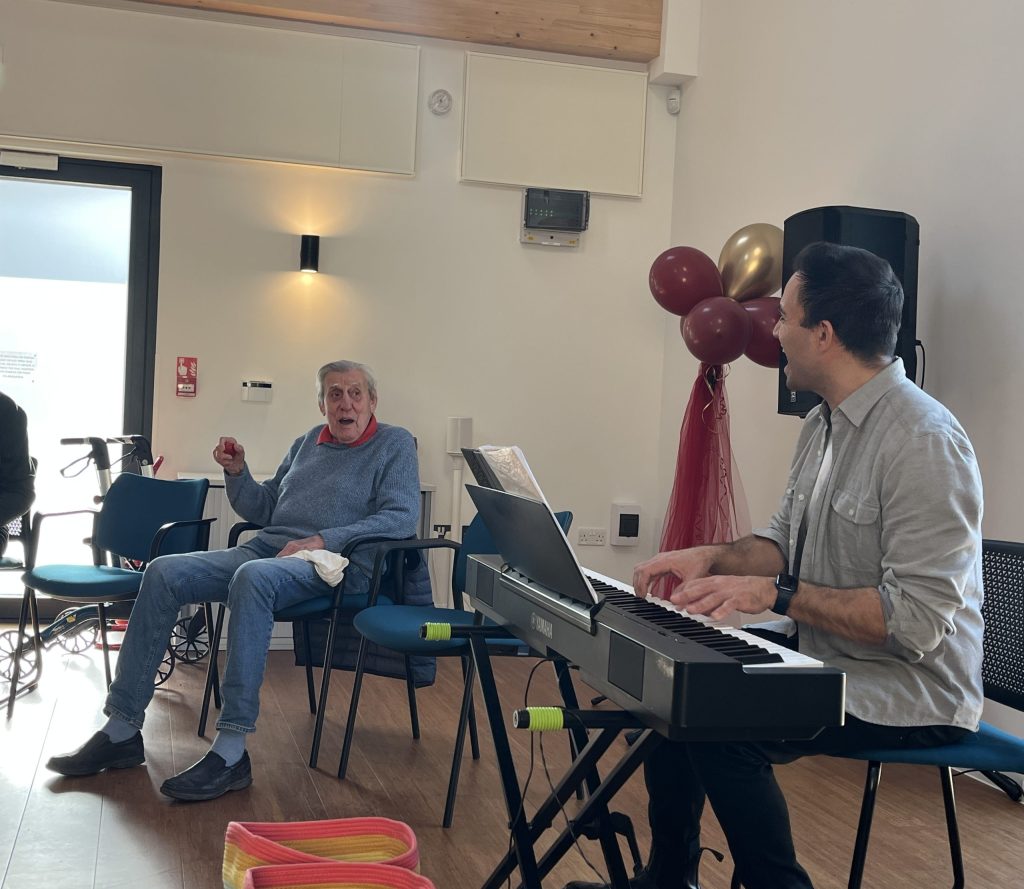
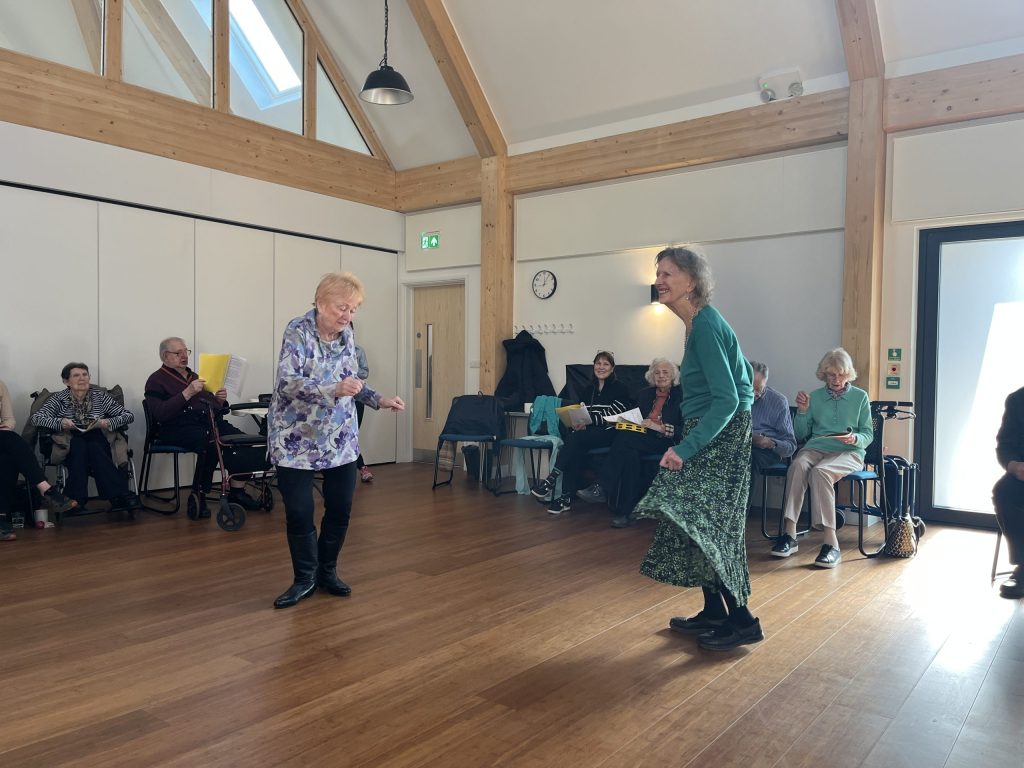
Members spontaneously burst into song, encouraging the rest of the room to fall into unison.
Isabel Peckett-Lopez, 23, a volunteer said that the beauty in the class is that it allows people to “express themselves freely”.
Research shows musical memory is often preserved until the later stages of dementia.
Singing activates neurons across both sides of the brain, which is why the class centres on songs with the potential to unlock memories and brighten the day of those attending.
Mariecar Lightwood-Clark operations manager for home instead Richmond, aged 41, said the impact is visible.
She added: “They sing to their hearts content, as do I, and it’s very rewarding to watch what a difference it has made too many through the years.”