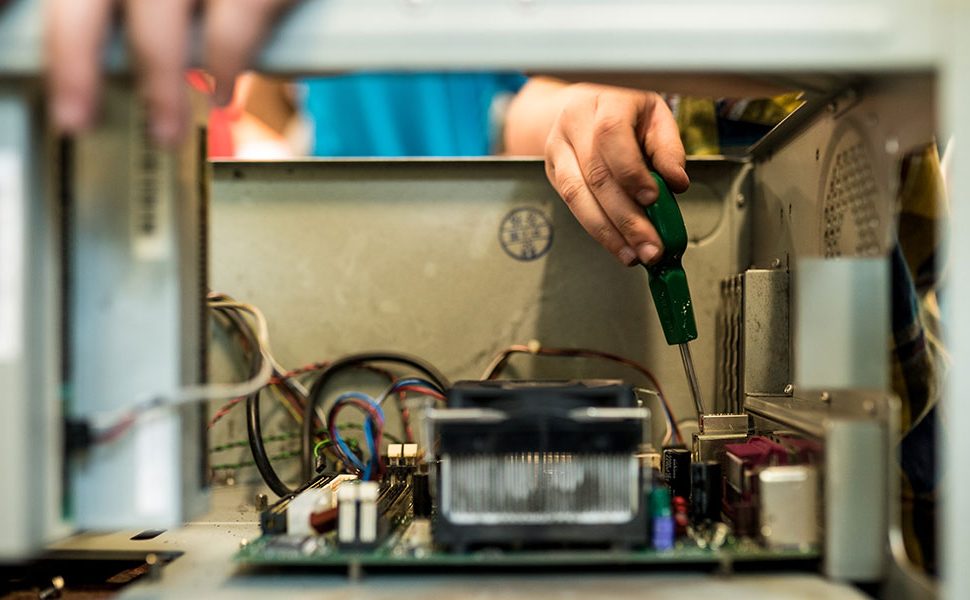
As today is Earth Day, we examine how fixing and reusing electronics may be better for us and the planet than simply recycling them and hoping for the best...
Electronic waste is the fastest growing waste stream, but encouraging businesses and people to fix and reuse products, rather than recycling them, would save money and reduce the environmental impact of this polluting industry.
Driven by high consumption, short product lifecycles, and limited repair options, e-waste is growing five times faster than recycling rates, and is often exported to the global south through illicit streams where its presence is causing environmental and human harm.
Yet 62 million tonnes of e-waste were produced in 2022 globally, a figure projected to reach 82 million tonnes by 2030, and the UK is the world’s second largest producer of e-waste per capita, after Norway.
Fiona Dear, repair advocate and co-director of the social enterprise The Restart Project, said: “We’ve ended up in a situation where it’s normal to buy new things and throw away the old ones as soon as they don’t work – that’s partly because of habits and partly because they break quicker and are harder to repair.”
Not only have electronic products entered every aspect of our lives from smart home appliances ranging from light bulbs to doorbells, to light-up shoes and vapes, but also many of these items are designed to break within a set amount of time – something known as ‘planned obsolescence’.
This, combined with the fact that manufacturers are making products harder than ever to fix by glueing components together, or discontinuing spare parts too soon, is tying consumers in an endless cycle of consumption.
“And then there are advertisements, constantly telling us we need to buy the next thing, even when there’s nothing wrong with what we already have,” said Dear, referring to a phenomenon known as ‘psychological obsolescence’. “So it means that we’re also throwing away stuff before we need to.”
But the tide of consuming and throwing away is not inescapable, according to Dear, and with the right policies and cultural shift we could reverse this trend by breaking down the psychological and physical barriers that are stopping us from using our electrical devices for longer.
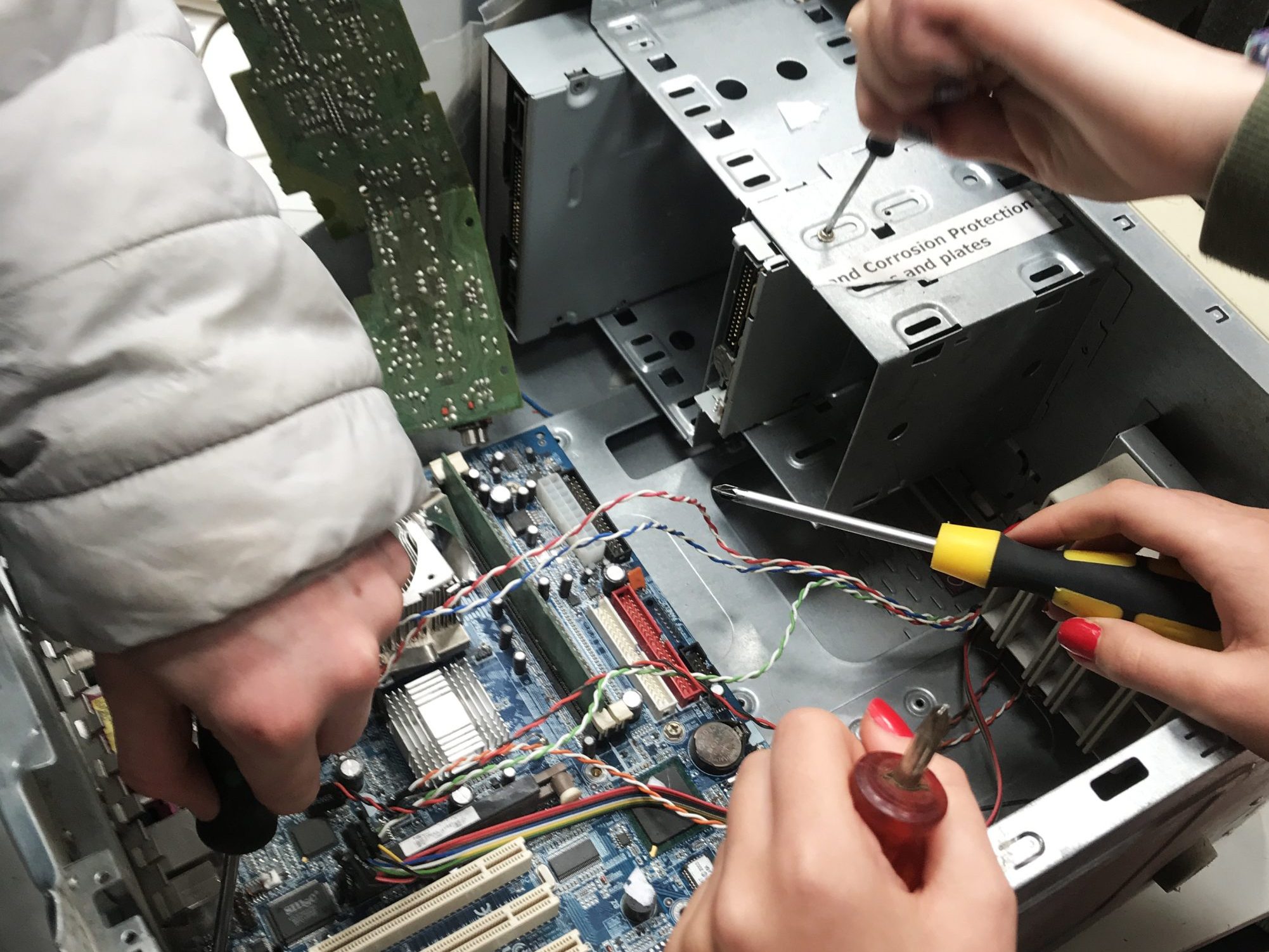
Recycling is not the same as reusing
Whereas recycling is brilliant for materials like glass and paper, which are going to be turned back into items made of the same material, it is terribly inefficient when it comes to complex electronic products. E-waste contains many different types of small and precious minerals and metals, which are hard and energy intensive to extract.
In fact, data shows that only about 20% of electronics sent for recycling in the UK actually get recycled in safe and regulated infrastructure.
Many of the products are instead shipped to poorer nations, often through illegal streams, harming human health, leading to contamination of local environments and impacting neonatal and infant mortality, as shown in a research study published in The World Bank Economic Review in 2024.
So surely as a nation we should be focusing more on fixing and reusing, rather than dumping our old electronics in the recycle pile and hope for the best?
Data collected by The Restart Project across 1027 waste facilities in the UK shows that when it comes to small items of electronic and electrical equipment (small EEE), only 18% of waste facilities in the UK accept this category for reuse. Of this 18% less than 2% are equipped to perform repairs.
When broken down by regions, England and Wales lead the way with the highest proportion of waste facilities offering reuse streams for EEE, but this number is still only at 22% and 25%, whereas the number drops to 8% and 2% for Scotland and Northern Ireland.
When the Restart Project looked into a recycling centre in West London, it found that in 2023 36% of EEE sent for recycling were perfectly functional, and 10% only needed light repair.
With so few reuse streams available for EEE, repair shops disappearing from our high streets, and the fixing skills of our grandparents being gradually lost, trying to recycle our old kettle may sometimes not look so different from burying it under a mountain of landfill.
From waste economy, to circular economy
In an attempt to curb the amount of e-waste produced, the EU adopted a new Right to Repair Directive in 2024, designed to empower consumers, extend product lifespans, and reduce e-waste. This law, which came into effect in January 2026, bans anti-repair tactics, mandates spare parts availability for 10 years, and extends the legal guarantee by 12 months if repair is chosen.
Although the UK is lagging behind Europe without an equivalent to the Right to Repair Directive, the government has committed to produce its own Circular Economy Strategy in 2026 that prioritises repair and reuse.
In the meantime, people have been taking the matter in their own hands and fixing is now trendy again. In recent years there has been an increase in the number of ‘repair cafes’ throughout the UK – places often run by communities or charities, where volunteers share their skills and tools, and teach people how to repair their broken possessions.
This movement, originally born in the Netherlands, is growing every year – with at least 425 repair cafes active across the UK in 2025.
It turns out that fixing, rather than throwing away, not only cuts waste, emissions and costs, but many find it a worthwhile and satisfying activity.
In London, as in many other cities, the demand for it is growing. The Restart Project and climate charity Possible, supported by National Lottery funding, already co-manage five ‘Fixing Factories’ in Haringey, Camden, Hackney, Barking and Victoria.
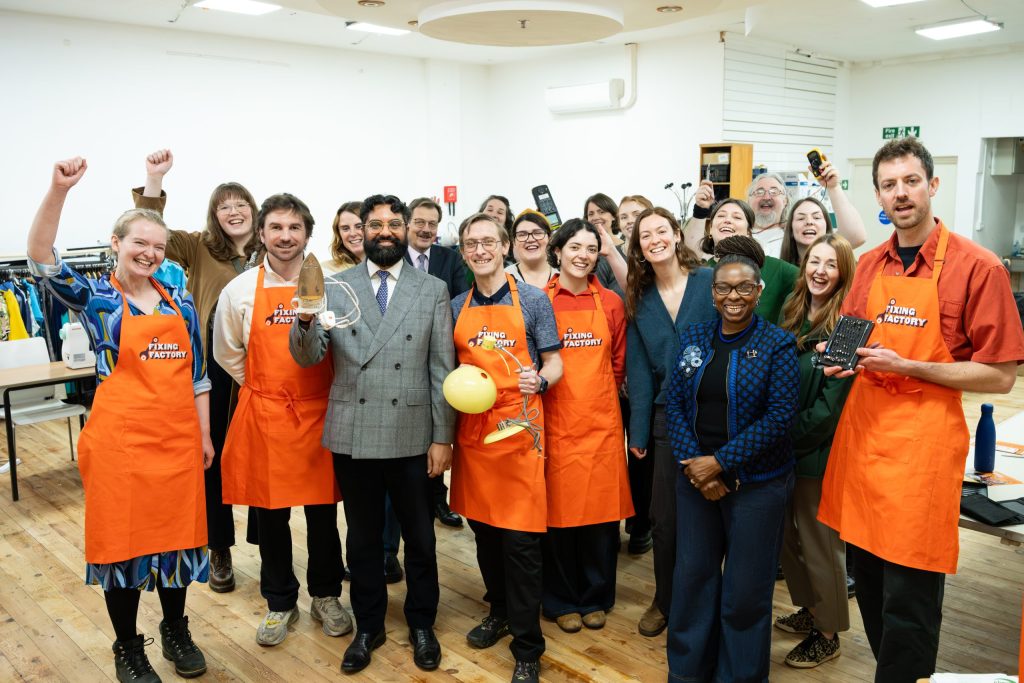
In 2025 they repaired nearly 1000 items of small electronics and in the last two years they repurposed over 1600Kg of electrical goods that were destined for landfill.
Fixing Factory lead Arthur Shearlaw said: “Our mission speaks to so many people on a community level – on a saving money level, on a sustainability level, on an activist rebellion level, so I think that is the joy of it.”
And what brings joy also brings people together which, Shearlaw said, is especially important in places like Hackney, where you have the Windrush generation living alongside younger affluent workers who have only recently moved to the area.
“These groups often don’t interact a lot, but when they come in with their broken items they get to know each other, have discussions about capitalism and why manufacturers are building things that are programmed to break.”
Shearlaw, who inaugurated two new Fixing Factories in Barking and Victoria last month, is hoping that this model will keep expanding and become replicable in other cities, as a desire for a more circular economy is present – now we just need the policy to support it.
Featured image: electronic waste (Credit: Greta Santagata)