ADHD self-reports have risen by more than 40% in 10 years, but official diagnoses have not kept up, according to NHS England data.
Data from The Adult Psychiatric Morbidity Survey shows positive ADHD self-report screenings in adults have rised from one in ten in 2014 to one in seven in 2023/24.
However, official diagnoses have not risen as significantly according to a study from The Lancet Regional Health Europe and only 1.2% of people in England have an ADHD diagnosis.
ADHD – Attention Deficit Hyperactivity Disorder – is a neurodevelopmental disorder which affects a person’s abilities to concentrate, control impulses and manage time.
The annual dataset publishes information from the Adult ADHD Self-Report Scale (ASRS) which assesses ADHD characteristics – shows that positive screenings have increased from 10% in 2014 to 14% in 2023/24.
The ASRS is a series of questions where the answers are used to find out whether someone should be referred for a more in-depth ADHD assessment.
But a score of four or more on the ASRS however does not necessarily mean that someone has the condition.
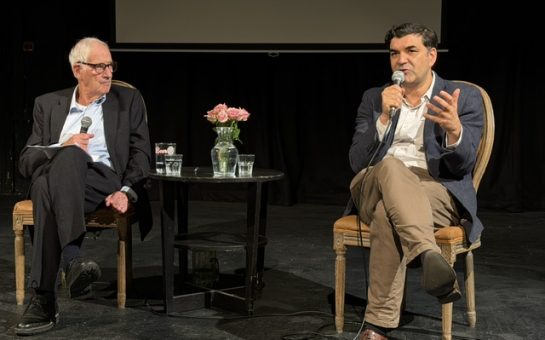
Cognitive neuroscientist and researcher Maria Niedernhuber believes long waiting lists for formal diagnoses and awareness of ADHD symptoms on social media have contributed to the rise.
She said: “Diagnoses can be a messy process. It is also possible that someone might have a high score on the Adult ADHD self-report scale but not end up being diagnosed with ADHD.
“In general, the waiting lists impact the mental health of people with ADHD negatively as they delay access to therapy and medication. ADHD is linked to things like higher rates of traffic incidents so untreated ADHD is a public concern.”
Questions on the ASRS assessment include ‘How often do you have difficulty remembering appointments or obligations?’ and ‘When you have a task that requires a lot of thought, how often do you avoid or delay getting started?’
The East of England has seen the lowest percentage increase in positive ADHD screenings, only increasing by 6%, compared to the North East which has increased by 141%.
London is the second lowest, with just a 25% increase in the last decade.
Giorgia Bondi, 24, was advised by her therapist to get an ADHD diagnosis last year but was told to go private to avoid the three-year waiting list.
She said: “I sort of gave up on the NHS and considered going private but I couldn’t justify the price.
“I do think the large volumes of people trying to get the diagnosis made me feel like I wasn’t an issue or priority.”
Giorgia has now given up on getting a formal diagnosis despite medical advice.
Giorgia is in the age group reporting the highest number of positive screenings, as women aged 16-24 saw 18% more than men of the same age in 2023/24.
One possible reason for that is that social media has played a huge part in increasing understanding of ADHD and neurodiversity for younger people.
There are many neurodiverse Instagram and TikTok influencers that have opened up about their experiences about being diagnosed later, helping dispel stereotypes about ADHD.
One of these includes Jamilah, a 26-year-old London-based content creator who focuses on wellness and neurodiversity.
She was diagnosed with ADHD this year and uses her platform to show the ways that ADHD exhibits itself in women.
She said: “I use my content and my social media to tell a story.
“I have had a couple of people message me saying they I’ve shared things they relate to but don’t have a diagnosis so it’s sparked the thought of them going down the diagnosis route.
“There is a fine line between people thinking that they have ADHD because it is ‘trendy’ on social media, but my content isn’t [promoting] that – it is there to spark conversation and awareness.”
The Adult Psychiatric Morbidity Survey 2023/24 was commissioned by NHS England and carried out by the National Centre for Social Research, University of Leicester, and City St George’s, University of London.
Featured image credit: Tara Winstead on Pexels