Palestine solidarity activism has been kept in the public eye in the last few weeks, however, the large scale protests and meaningful court rulings only reflect a partial reality of how the movement operates.
Hundreds of thousands of people attended a pro-Palestine demonstration in London on 31 January, days before the High Court ruled that the government’s ban on the activist network Palestine Action was unlawful.
However, Leo Pettit, who conducted his master’s research on different types and methods used in Palestine solidarity activism, said: “If I was to sum up the movement at the moment, I would say that the key points are visibility and the community.
“We’re seeing a shift away from large scale protests being seen as being effective.
“The more effective thing now is the community.
“We are facing a time where protest is being increasingly criminalised and challenged, and people are constantly wondering if what they’re doing is effective.”
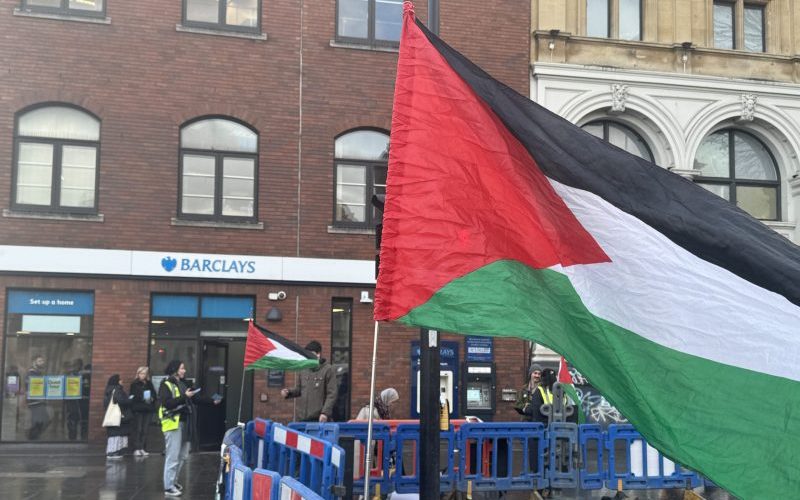
Days before the demonstration on 31 January, Palestine Solidarity Campaign (PSC), the biggest activism group in the UK for pro-palestinian activism, organised a nation-wide boycott of Barclays.
According to a report by PSC, the bank holds over £2 billion in shares, and provides £6.1 billion in loans and underwriting to 9 companies providing Israel with weapons components and military technology.
In reaction to this, on 17 January, 22 local events took place all over England, each of them gathering between 10 and 100 activists at Barclays branches, distributing leaflets and advocating to people in the street.
Sybil Cock, chair of the Tower Hamlets branch of PSC, thought the gathering in Whitechapel was a success, even if it gathered around 10 activists.
“It is a very public place, and we are aiming to raise awareness among customers and passers by,” she said.
“I think we’ve done that today.”
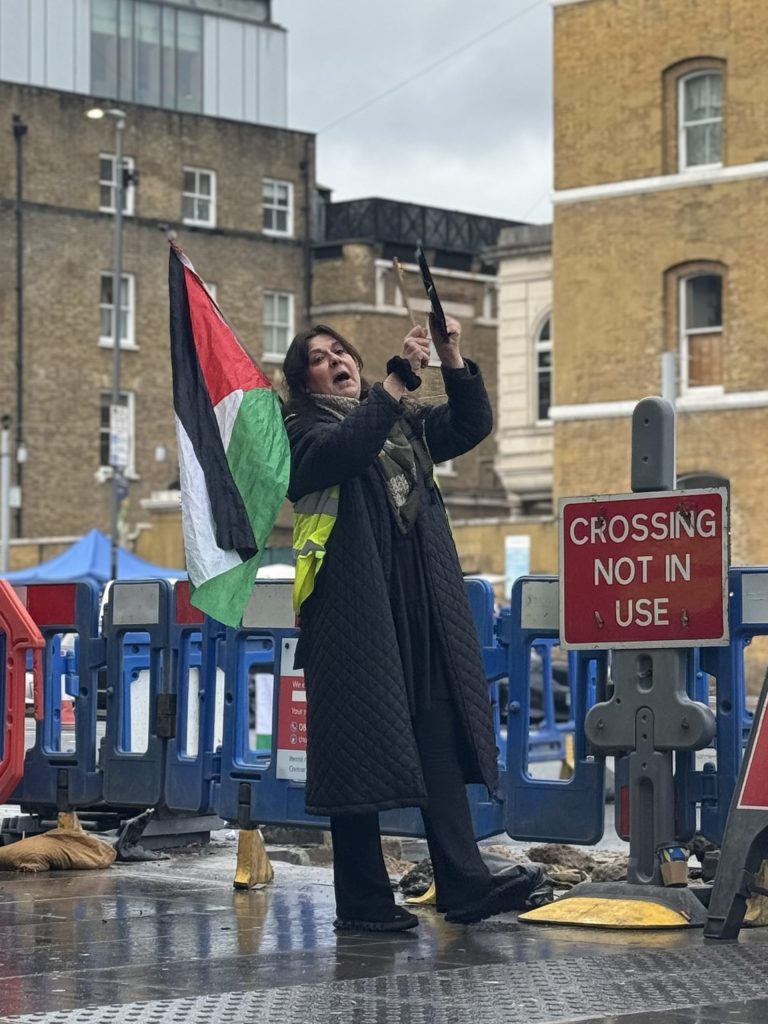
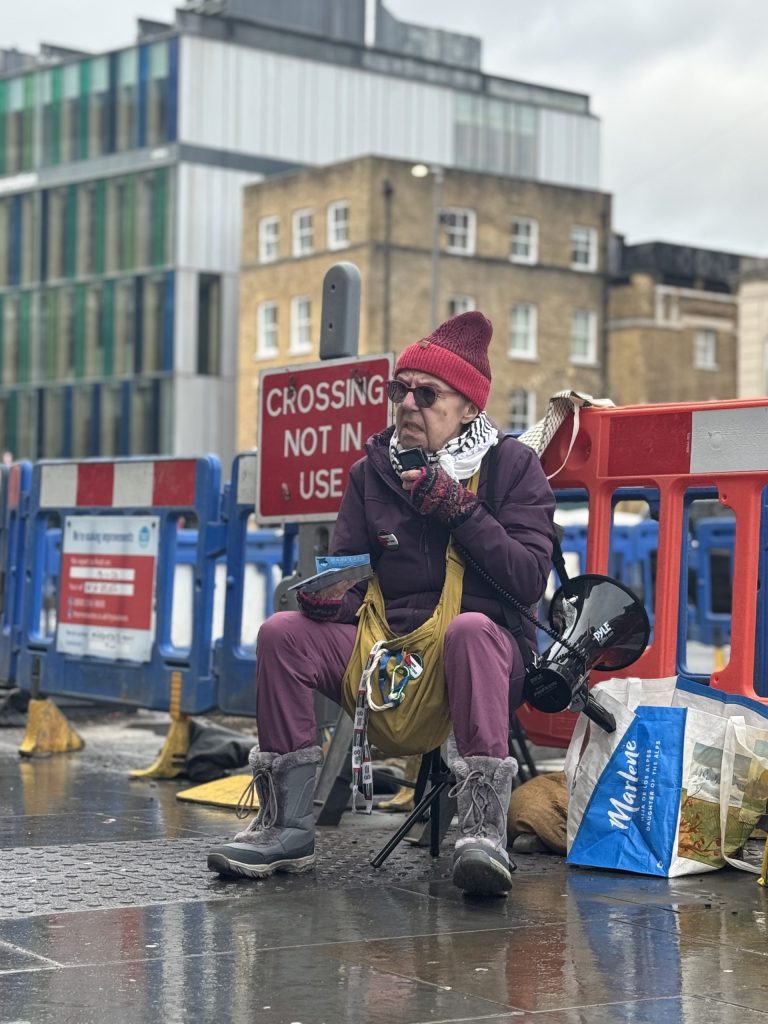
Lewis Backon, campaigns officer at PSC, said: “Those actions, even with 10 people, are incredibly important.
“Because just being there as a visual presence on the high street, being able to have one on one conversations with people about actions they can take to support Palestine is really important.
“Barclays has already been forced from all of its music festival sponsorships in the UK because bands refuse to perform at Berkeley sponsored events.”
This type of activism, while less eye-catching, has proved to be effective before.
In December 2023, Puma, a German sportswear apparel manufacturer, was forced into dropping sponsorship of the Israel Football Association, after an international campaign which used the same tactics as Boycott Barclays.
In an online statment adressing the criticism, Barclays said: “We have been asked why we invest in nine defence companies supplying Israel, but this mistakes what we do.
“We trade in shares of listed companies in response to client instruction or demand and that may result in us holding shares.
“Whilst we provide financial services to these companies, we are not making investments for Barclays and Barclays is not a ‘shareholder’ or ‘investor’ in that sense in relation to these companies.”
Featured image credit: Alexandra Herlaut Reinhardt